

Wet vs dry cat food comes down to one biological fact: cats evolved in arid environments and have a naturally low thirst drive. Wet food provides 70–80% moisture per serving and closely mirrors the composition of a cat’s natural prey. Dry kibble contains only 8–10% moisture, meaning cats eating exclusively dry food must drink significantly more water than their instincts drive them to—which most do not. For most cats, wet food is the healthier primary choice.
That said, dry food is not harmful when chosen carefully, and many owners successfully combine both. What matters most is understanding the nutritional and hydration differences so you can make the right decision for your specific cat’s needs, life stage, and health status.
The wet vs dry debate is one of the most important decisions in feline nutrition—but it builds on a foundation of understanding what cats actually need biologically. Our cat nutrition guide covers the complete picture of obligate carnivore nutrition, label reading, and life-stage feeding before you decide on food format.
Table of Contents
The Core Difference: Moisture Content
The most important difference between wet and dry cat food is not protein content, price, or palatability—it is moisture.
| Elements | Wet Food | Dry Kibble |
|---|---|---|
| Moisture content | 70–80% | 8–10% |
| Protein (dry matter basis) | High | Moderate–High |
| Carbohydrates (dry matter basis) | Low | High (often 30–40%) |
| Calories per gram | Lower | Higher |
| Cost per serving | Higher | Lower |
| Shelf life (unopened) | 1–2 years | 12–18 months |
| Shelf life (opened) | 2–3 days (refrigerated) | 4–6 weeks |
Understanding moisture on a dry matter basis matters because raw percentages on a label are misleading. A wet food listing 10% protein with 78% moisture is actually 45% protein on a dry matter basis—far higher than it appears.
To compare wet and dry food fairly, always calculate dry matter basis:
Dry matter % = (nutrient % ÷ (100 − moisture%)) × 100
Why Hydration Is the Central Argument
Cats are descended from desert-dwelling ancestors who obtained almost all their moisture from the prey they consumed—not from standing water. Their kidneys evolved to concentrate urine efficiently in water-scarce conditions. This adaptation works well in the wild. In a domestic setting where the primary food source is dry kibble, it creates a chronic low-grade dehydration that most owners never notice until a health problem appears.
💧 The health consequences of chronic dehydration in cats:
Kidney disease is the leading cause of death in domestic cats—and chronic insufficient hydration is one of the strongest contributing factors. Studies consistently show higher rates of kidney disease in cats eating primarily dry food.
Urinary tract problems—crystals, blockages, and infections—are significantly more common in cats eating exclusively dry food. Male cats are particularly vulnerable to urethral blockages, which are life-threatening emergencies.
Constipation is frequently linked to insufficient moisture intake, especially in middle-aged and senior cats.
(🩺 Vet’s Note: “In my clinical experience, the single most impactful dietary change most cat owners can make is increasing moisture intake. Even adding one wet food meal per day to a dry food diet makes a measurable difference to urinary and kidney health over time. Cats are not designed to drink their water separately from their food”—LovingPetsGuide Veterinary Advisor.)
📰 Kidney disease as the leading cause of death in domestic cats, and its connection to chronic dehydration, is documented by the American Veterinary Medical Association (avma.org) and the Cornell Feline Health Center (vet.cornell.edu/departments-centers-and-institutes/cornell-feline-health-center). Both sources emphasize moisture intake as a modifiable risk factor for feline lower urinary tract disease.
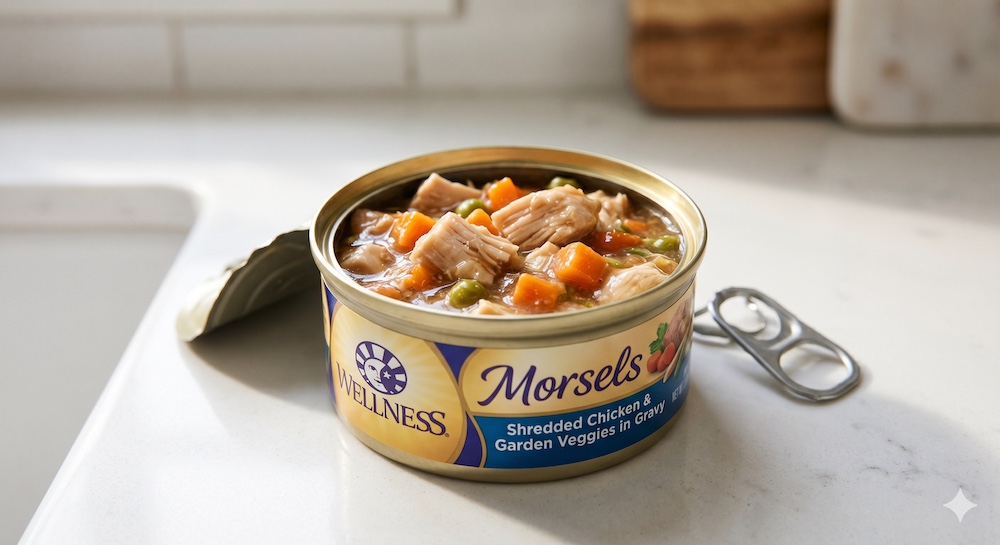
Wet Cat Food: The Full Picture
High-quality wet food shows real, identifiable ingredients—no mystery meats, no fillers.
(💡 Warming wet food slightly intensifies the aroma—a simple trick that dramatically increases acceptance for picky cats.)
👍🏼 The Case For Wet Food
Superior hydration: The most compelling argument. Each meal delivers substantial moisture, passively supporting urinary and kidney health without requiring your cat to drink additional water.
Higher protein, lower carbohydrates: Most wet foods contain significantly more animal protein and fewer carbohydrates than dry kibble on a dry matter basis. This better reflects the natural prey diet of an obligate carnivore.
Better for weight management: Wet food is more filling per calorie due to its high moisture content. Cats on wet food diets tend to maintain healthier body weights than those on unrestricted dry food.
Highly palatable: The aroma and texture of wet food is closer to fresh prey. This makes it ideal for picky eaters, senior cats with reduced appetite, and cats recovering from illness.
Beneficial for dental health concerns: Contrary to the common claim that dry food is better for teeth, the evidence does not strongly support this. Purpose-made dental diets or dental treats are far more effective than standard dry kibble at reducing plaque.
Wet food is particularly beneficial for sensitive cats. Our sensitive stomach cat food guide covers the top formulas and why wet format matters.
🐾 Purina Pro Plan Adult Wet Cat Food 🐾
💧 Purina Pro Plan (Wet Cat Food)—70–80% moisture per serving, named protein first, AAFCO feeding trial approved. The single easiest dietary change to support long-term urinary and kidney health—even one wet meal a day makes a measurable difference.
👎🏼 The Case Against Wet Food
Cost: Wet food costs more per calorie than dry kibble. For multi-cat households or large cats, the difference is significant.
Storage: Open cans must be refrigerated and used within 2–3 days. This requires more planning than free-feeding dry food.
Less convenient for travel and boarding: Dry food travels better and requires no refrigeration.
Dental health: Some veterinary dentists argue that the lack of mechanical chewing with wet food allows more tartar accumulation—though this is debated and regular tooth brushing remains far more important regardless of diet.
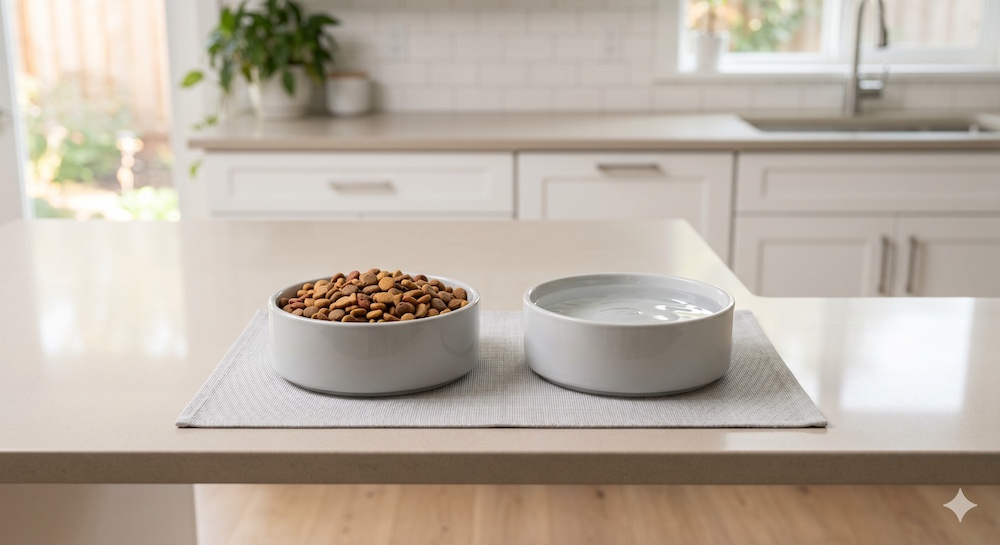
Dry Cat Food: The Full Picture
Dry food requires cats to drink significantly more water than their instincts drive them to—a water fountain helps bridge the gap.
(💡 Store dry food in an airtight container away from heat and light—kibble exposed to air goes stale within weeks and loses palatability fast.)
🐾 Cat Water Fountains 🐾
💦 Flowing Water Fountains—Cats naturally prefer moving water over a still bowl, which can meaningfully increase total water intake for cats eating primarily dry food. Chewy carries fountains from Catit, PetSafe, and more—worth browsing to find the flow style and material your cat prefers.
👍🏼 The Case For Dry Food
Convenience: Easy to measure, pour, and store. No refrigeration required. Travels well. Suitable for timed feeders and puzzle feeders.
Cost: Significantly more affordable per calorie than wet food—particularly relevant for multi-cat households.
Enrichment potential: Dry kibble works well in puzzle feeders, snuffle mats, and scatter feeding—enrichment methods that wet food cannot replicate as easily.
Complete and balanced options are widely available: High-quality dry foods formulated to AAFCO standards are readily accessible at all price points.
🐾 Hill’s Science Diet Adult Cat Food 🐾
🔬 Hill’s Science Diet (Dry Cat Food)—Clinically proven digestibility, veterinary nutritionist formulated, AAFCO feeding trial approved. If dry food is part of your cat’s diet, this is among the most research-backed options—pair it with a water fountain to help close the moisture gap.
👎🏼 The Case Against Dry Food
Low moisture content: The central problem. Cats eating exclusively dry food consistently drink less total water than their body requires, even with a water bowl always available.
Higher carbohydrate content: Most dry kibble contains 30–40% carbohydrates on a dry matter basis—significantly above the <10% a cat’s metabolism is designed to process efficiently. Excess carbohydrates contribute to obesity and may increase diabetes risk.
Lower protein digestibility in some formulas: The high-heat extrusion process used to make kibble can reduce the bioavailability of some proteins, particularly at lower price points.
Not suitable as a sole diet for cats with urinary or kidney issues: Veterinary guidelines consistently recommend increasing moisture intake for cats with these conditions, making dry-only diets contraindicated.
The Combination Approach: Best of Both
For many cats and owners, a combination of wet and dry food provides the best practical balance—wet food’s hydration benefits alongside dry food’s convenience and enrichment potential.
🍲 A practical combination approach:
- Feed wet food as the primary meal—once or twice daily.
- Offer a small measured amount of dry food in a puzzle feeder for enrichment.
- Always provide fresh water, ideally from a cat water fountain that encourages drinking.
Portion calculation for mixed feeding: If you feed 50% of calories from wet food and 50% from dry, calculate each component at half the recommended daily intake shown on the packaging, adjusting for your cat’s body weight and condition.
Not sure how much to feed overall? Our how much to feed a cat guide covers exact daily portions by weight and food type for wet, dry, and combination feeding.
🐾 Slow Feeders & Puzzle Bowls for Cats 🐾
🧩 Slow Feeders & Puzzle Bowls—Perfect for the dry food portion of a combination feeding approach. Extends mealtime, reduces gorging, and adds enrichment alongside the primary wet meal.
Wet vs Dry Cat Food by Life Stage
Nutritional priorities shift as cats age— and so does the wet vs dry recommendation.
✅ Wet food’s high moisture content supports a kitten’s still-developing kidneys from the very first meal.
✅ Adult cats on wet food maintain healthier weights—superior satiety per calorie prevents the obesity common in dry-food-fed indoor cats.
✅ Soft wet food textures support senior cats with dental issues and declining kidney function—hydration becomes critical in every aging year.
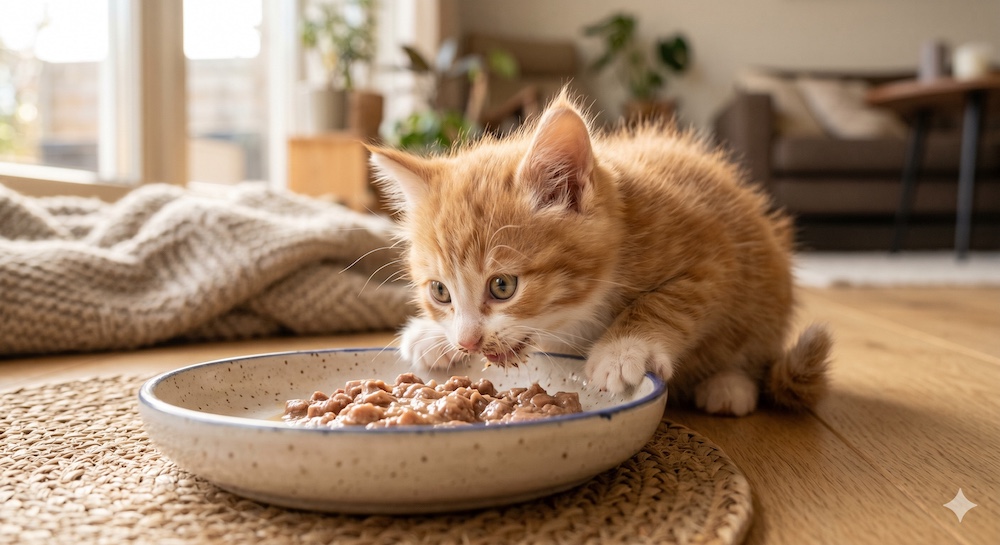
Kittens (0–12 Months)
Kittens have high protein and caloric needs alongside still-developing kidneys. Wet food is strongly recommended as the primary diet during this stage for both nutritional density and hydration support. Choose formulas specifically labeled for kittens or “all life stages.”
Our kitten feeding guide covers exactly what to look for in kitten food and how often to feed during the first year.
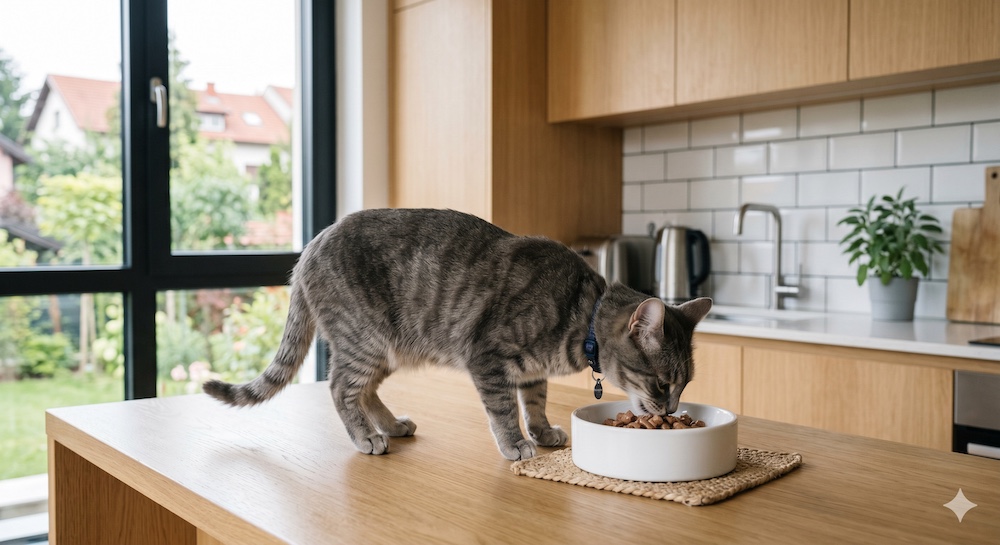
Adult Cats (1–7 Years)
Healthy adult cats can thrive on either format if chosen carefully—but wet food as the primary diet remains the stronger recommendation for long-term urinary and kidney health.
For indoor cats with lower activity levels, wet food’s superior satiety per calorie also helps prevent the obesity that is increasingly common in domestic cats.
Senior Cats (7+ Years)
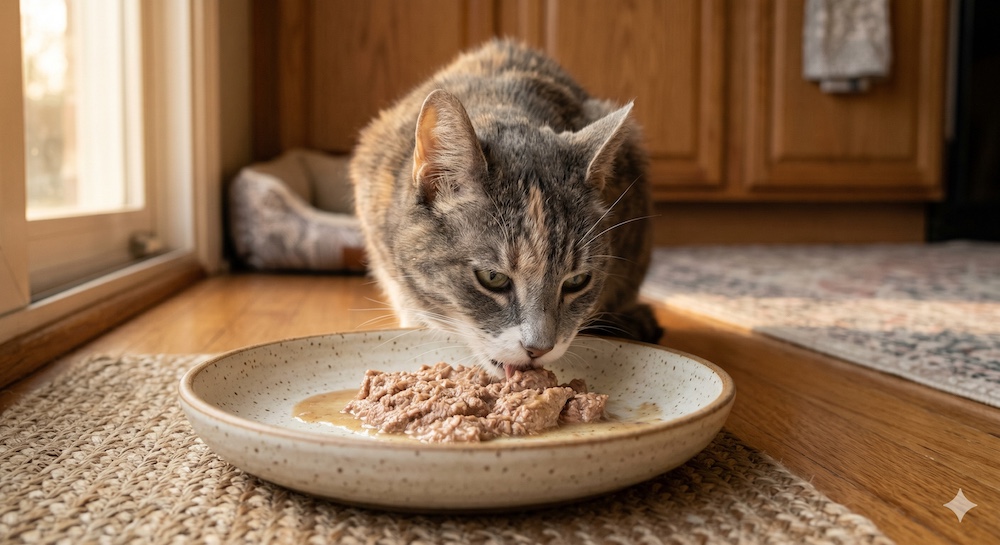
Wet food becomes especially important as cats age. Senior cats are at the highest risk for kidney disease and urinary issues—and many also develop dental problems, reduced appetite, and difficulty chewing dry kibble.
A primarily wet diet with soft textures is the most appropriate choice for most senior cats. For cats with diagnosed kidney disease, your veterinarian will likely prescribe a specific therapeutic wet food with controlled phosphorus levels.
👉🏼 Our best cat food for senior cats covers kidney-supportive wet food formulas in detail.
📰 Life-stage-specific hydration needs are supported by veterinary consensus from the Cornell Feline Health Center and AAFCO life-stage nutritional statements, both of which confirm that kittens and senior cats have the highest sensitivity to inadequate moisture intake.
What to Look for in Quality Wet and Dry Cat Food
Regardless of format, these standards apply:
✅ For Wet Food
- Named animal protein as the first ingredient: “Chicken”, “Salmon”, “Turkey”—not “poultry” or “fish”.
- Taurine explicitly listed in the ingredients or guaranteed analysis.
- AAFCO “complete and balanced” statement for your cat’s life stage.
- No artificial preservatives (BHA, BHT).
- Minimal added thickeners and gums in pâté-style formulas.
✅ For Dry Food
- Named animal protein in the top two ingredients.
- Fat content from named animal sources (chicken fat, salmon oil).
- Carbohydrate content under 30% on dry matter basis where possible.
- AAFCO “complete and balanced” statement.
- No artificial colors or flavors.
- Produced by a brand that employs at least one board-certified veterinary nutritionist.
📰 AAFCO (aafco.org) nutritional adequacy standards remain the baseline for evaluating any commercial cat food, regardless of format. The Cornell Feline Health Center’s feline nutrition guidance confirms that named protein sources and taurine inclusion are non-negotiable markers of quality across wet and dry formulas alike.
How to Switch Between Wet and Dry Food
Cats are notoriously resistant to dietary change— especially when switching from dry to wet. A cat that has eaten exclusively dry kibble for years may refuse wet food initially.
The transition process:
| Day | Old Food | New Food |
|---|---|---|
| 1–3 | 75% | 25% |
| 4–6 | 50% | 50% |
| 7–9 | 25% | 75% |
| 10+ | 0% | 100% |
Tips for reluctant switchers:
- Warm wet food slightly (to just below body temperature) to intensify the aroma.
- Mix a small amount of the cat’s favorite dry food into wet food initially.
- Try different textures—some cats prefer pâté, others prefer chunks in gravy.
- Try different proteins—a cat refusing chicken wet food may accept salmon or turkey.
- Be patient and consistent—most cats accept wet food within 2–4 weeks.
If your cat is persistently refusing food during a transition, our why is my cat not eating guide covers the most common causes of food refusal and how to resolve them.
Conclusion: For Most Cats, Wet Food Wins
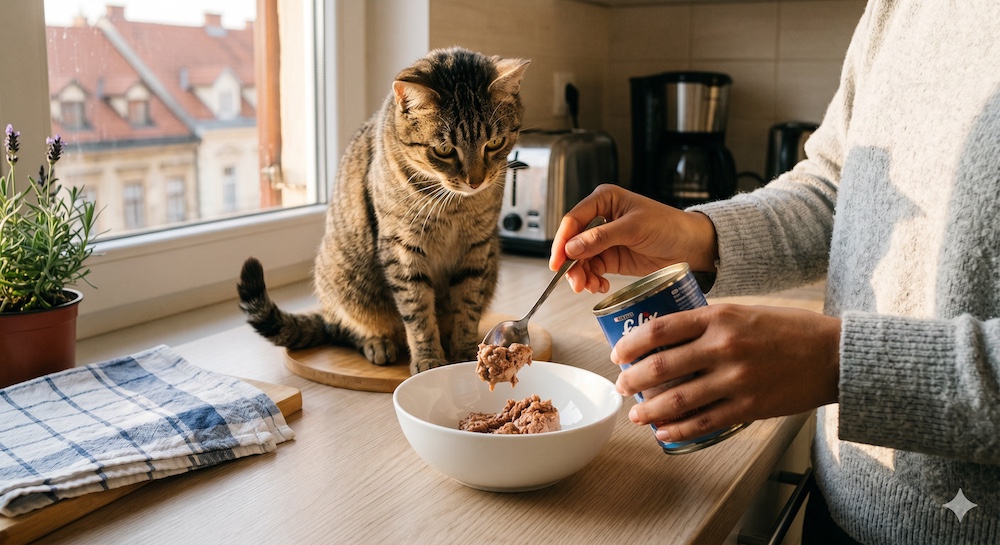
The biology is clear. Cats are not adapted to obtain their moisture from drinking water separately from their food. Wet food solves this problem passively—every meal contributes to hydration without relying on a cat’s limited thirst drive.
For cats with urinary history, kidney concerns, or any senior cat, wet food as the primary diet is not just preferable—it is the strongest evidence-based recommendation available without a prescription diet.
For healthy adult cats in multi-cat households where cost is a genuine concern, a well-planned combination diet using high-quality versions of both is a reasonable, practical compromise.
Key takeaways:
- ✅ Wet food provides 70–80% moisture per serving.
- ✅ Dry food contains only 8–10% moisture.
- ✅ Chronic low water intake is the leading driver of kidney and urinary disease in cats.
- ✅ Wet food better mirrors the natural prey diet.
- ✅ Combination feeding is a practical compromise.
- ✅ Senior and urinary cats should prioritize wet food.
- ✅ Both formats require AAFCO approval and named protein as the first ingredient.
👉🏼 Cat Nutrition Guide — the complete picture of feline nutrition for every life stage.
👉🏼 Kitten Feeding Guide — wet food priorities in the critical first year.
👉🏼 Best Cat Food for Senior Cats — kidney-supportive wet food formulas reviewed.
👉🏼 How Much to Feed a Cat — exact daily portions for wet, dry, and combination feeding.
👉🏼 Why Is My Cat Not Eating — solving food refusal during transitions.

🐈 Browse cat food, treats, toys, health products, supplements, litter and everything else your cat needs 🐾

🐈 Browse raw cat food, freeze-dried meals, toppers and natural treats from Indiana farms 🐾

🐈 Browse cat food, treats, veterinary diets, supplements and everything else your feline needs 🐾
(This post contains affiliate links. If you purchase through our links, we may earn a small commission at no extra cost to you. This never influences our editorial opinions.)
FAQ: Wet vs Dry Cat Food — Your Questions Answered
Is wet food always better than dry food for cats?
Wet food is generally the stronger recommendation for most cats due to its moisture content and closer resemblance to a natural prey diet. However, dry food can be appropriate as part of a combination diet, particularly when chosen carefully and paired with adequate hydration. The key factors are your cat’s health status, life stage, and whether they are drinking sufficient water.
Can I feed my cat only dry food?
Technically yes, if the food meets AAFCO standards—but it requires your cat to compensate by drinking substantially more water than their instincts naturally drive them to. Many cats do not compensate adequately, which over time increases the risk of urinary and kidney disease. If you feed primarily dry food, providing a cat water fountain and monitoring water intake is especially important.
How much wet food should I give my cat per day?
A general guideline for an average 9 lb (4 kg) adult cat eating only wet food is approximately 5–6 oz (140–170 g) per day, divided into two meals. This varies significantly by food caloric density, your cat’s weight, and activity level. Always check the feeding guidelines on your specific product and adjust based on body condition. Our how much to feed a cat guide covers this in detail.
Does dry food actually clean cats’ teeth?
The evidence for dry food’s dental benefits is weak. While some specialized dental diets with specific kibble sizes and textures have shown benefit, standard dry kibble does not meaningfully reduce plaque or tartar. Daily tooth brushing with a pet-safe toothpaste is far more effective for dental health than food format.
Why does my cat prefer dry food over wet?
Cats can develop strong texture and aroma preferences, particularly if they have eaten exclusively dry food from a young age. Dry food is also calorie-dense and often contains flavor enhancers that make it highly palatable. Most cats can be transitioned to wet food with patience—warming the wet food slightly and mixing a small amount of dry food into it initially are the most effective strategies.
Is grain-free wet food better for cats?
Not necessarily. Grains are not a primary concern in wet food because the carbohydrate content of most wet formulas is already low regardless of whether grains are present. Focus on protein quality and the presence of taurine rather than the absence of grains. “Grain-free” is a marketing term that does not guarantee superior nutrition in either wet or dry formats.