
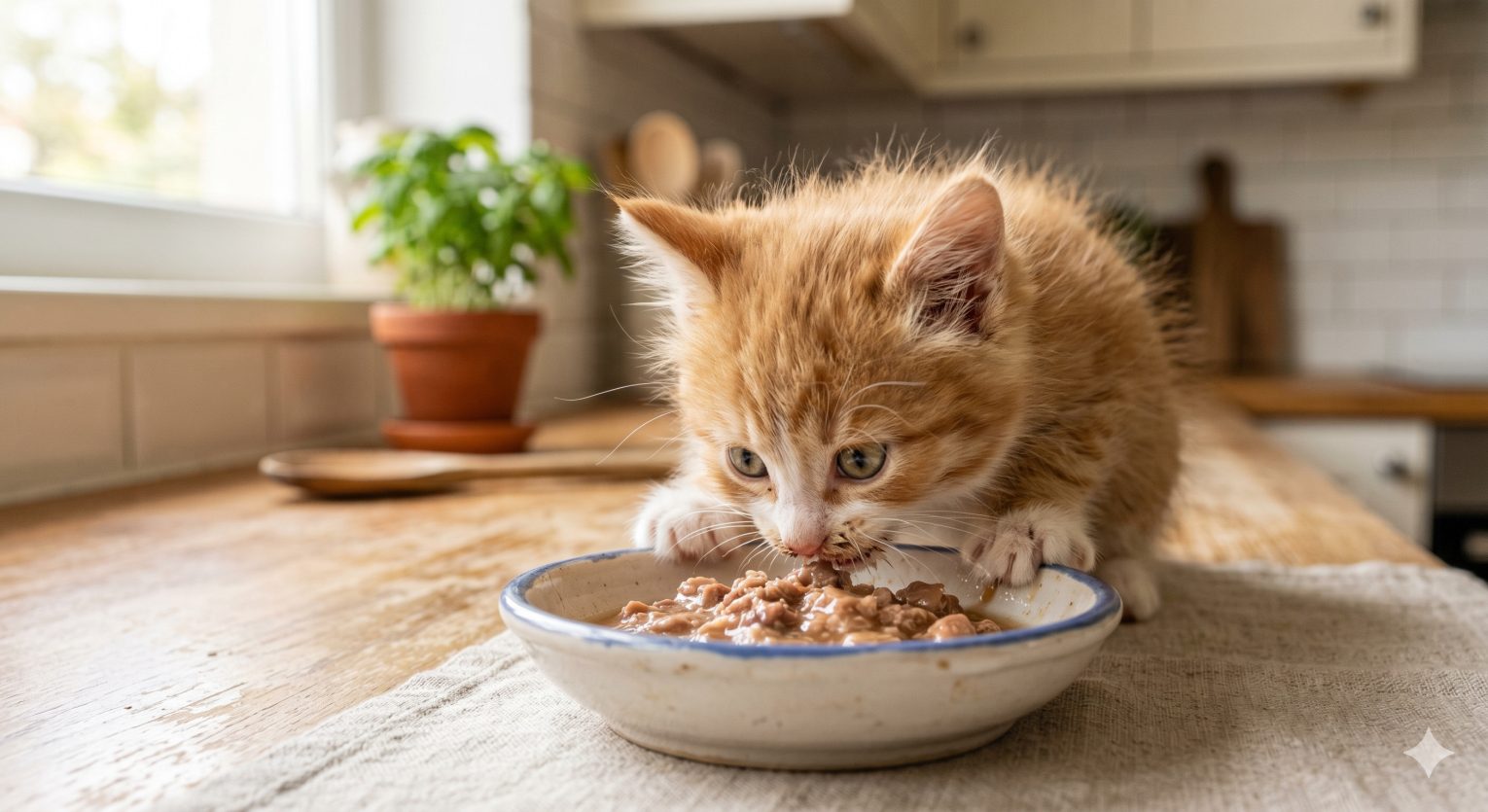
A kitten feeding guide starts with one non-negotiable rule: never feed adult cat food to a kitten as their primary diet. Kittens require significantly higher protein, more calories per kilogram, and specific nutrients like DHA and taurine to support rapid brain, eye, and bone development. Feed a kitten-specific or “all life stages” formula, 3–4 small meals daily until 6 months, then transition to 2–3 meals as they approach adulthood.
The first year of a cat’s life is the most nutritionally demanding of their entire lifespan. A kitten that triples their birth weight in the first few weeks, develops their brain and nervous system, and grows a full adult skeleton in 12 months has nutritional requirements that adult formulas simply cannot meet. Getting this right is one of the most impactful things you can do for your cat’s long-term health.
Kitten nutrition is one chapter in the bigger story of feline dietary needs. For the complete picture—from obligate carnivore biology to label reading and life-stage transitions—our cat nutrition guide covers everything you need before and after the first year.
Table of Contents
Why Kitten Nutrition Is Different
A kitten is not a small adult cat. The biological differences between a kitten and an adult cat are significant enough that feeding the wrong formula has measurable health consequences.
Growth rate: Kittens grow approximately 15 times faster than human infants relative to their adult body size. A kitten that weighs 3.5 oz (100 g) at birth will weigh 9–11 lb (4–5 kg) at 12 months. That rate of tissue production, bone formation, and brain development requires a caloric and protein density that adult maintenance formulas cannot provide.
Protein requirements: Adult cats require a minimum of 26% protein on a dry matter basis (AAFCO standard). Kittens require a minimum of 30%—and most high-quality kitten formulas exceed this significantly. The amino acid profile matters as much as the total protein percentage.
Taurine requirements: Taurine is an amino acid found only in animal tissue that cats cannot synthesize in adequate amounts. Kittens require taurine for heart development, vision, and immune function. Every AAFCO-approved kitten food must contain taurine—if you are feeding a home-cooked diet, supplementation is non-negotiable.
DHA requirements: Docosahexaenoic acid— an omega-3 fatty acid found in fish oil—is critical for brain and retinal development in the first year. Look for “DHA” on the ingredient list or guaranteed analysis.
Calcium and phosphorus: Critical for skeletal development in the correct ratio. AAFCO standards for kitten foods specify tighter Ca:P ratios than adult formulas. Imbalanced ratios during growth cause skeletal deformities that are irreversible.
📰 The AAFCO protein minimums cited here—26% for adult cats versus 30% for kittens on a dry matter basis—along with the tighter calcium-to-phosphorus ratio requirements for growth formulas, are established in official AAFCO nutrient profiles (aafco.org). The Cornell Feline Health Center confirms that imbalanced calcium-to-phosphorus ratios during the growth period can cause skeletal deformities that do not resolve later in life, reinforcing why kitten-specific formulation matters more than portion size alone.
(🩺 Vet’s Note: “The most common kitten nutrition mistake I see is owners feeding an ‘all life stages’ food from an unknown brand or, worse, adult cat food because it was on sale. The nutritional gap between a quality kitten formula and an adult maintenance food is significant—particularly for protein, DHA, and calcium balance” —LovingPetsGuide Veterinary Advisor.)
What to Feed a Kitten: Food Types
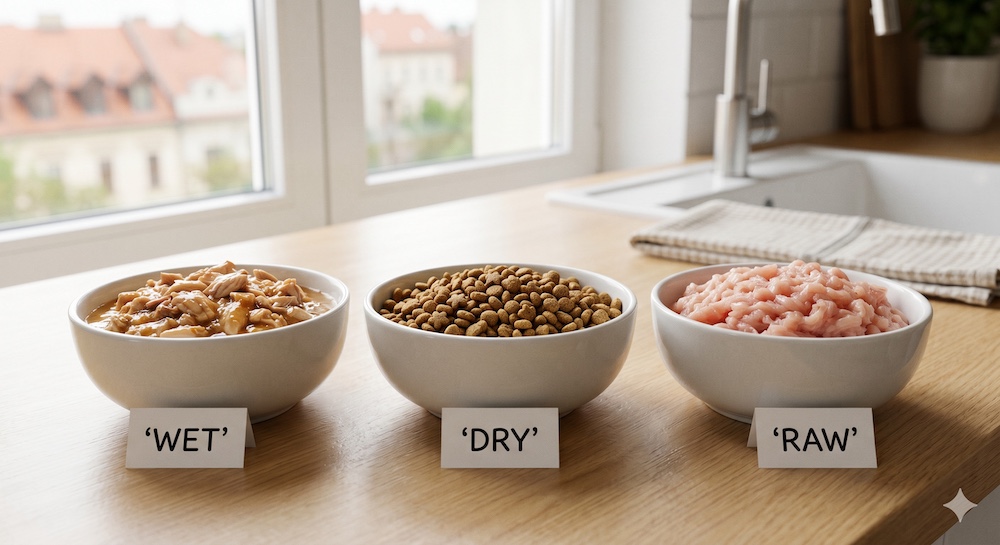
Not all kitten food is the same format—and the format you choose has real implications for hydration, nutrition, and long-term health. Here is what you need to know about each option before deciding what goes in the bowl.
Three formats, three very different moisture levels—wet food wins for hydration, dry for convenience, raw only with expert guidance.
(💡 Wet food is the strongest starting point for kittens—but the best diet is one your kitten will consistently eat and thrive on. If in doubt, your vet is always the right first call.)
💧 Wet Food — The Strongest Recommendation
Wet food is the recommended primary diet for kittens for three reasons:
💦 Hydration: Kittens have still-developing kidneys. Adequate moisture intake supports healthy kidney development and establishes good hydration habits early. Wet food provides 70–80% moisture per serving passively—no reliance on a kitten’s limited thirst drive.
🥩 Protein density: High-quality wet kitten foods typically contain more animal protein per calorie than dry kibble on a dry matter basis, better supporting the rapid tissue growth of the first year.
🍲 Palatability: The aroma and texture of wet food is closer to natural prey. Introducing variety in texture and protein source during kittenhood prevents the extreme food neophobia (refusal of new foods) that develops when cats eat a single food exclusively for too long.
📰 Hepatic lipidosis (fatty liver disease) is documented by the Merck Veterinary Manual (merckvetmanual.com) as the most common acquired and potentially lethal feline liver disease, triggered when inadequate caloric intake forces the body to mobilize fat reserves faster than the liver can process them. While this condition is most frequently diagnosed in previously overweight adult cats after several days without eating, kittens carry minimal fat reserves to begin with—making prompt veterinary attention for any prolonged food refusal a reasonable precaution regardless of age.
For a full comparison of wet and dry food formats and why moisture content matters so much for cats, our wet vs dry cat food guide covers the science in detail.
🐾 Purina Pro Plan Kitten Wet Food 🐾
💧 Purina Pro Plan Kitten (Wet Food)—70–80% moisture, named protein first, DHA and taurine confirmed, AAFCO feeding trial approved for growth. The strongest starting point for the most nutritionally demanding year of a cat’s life.
🟤 Dry Kibble — Acceptable With Caveats
High-quality dry kibble formulated specifically for kittens is nutritionally complete when chosen carefully. The practical advantages—convenience, cost, and enrichment potential via puzzle feeders—make it a reasonable option, particularly as part of a combination diet.
❗️ The critical caveat: Kittens eating exclusively dry food must drink substantially more water than their instincts naturally drive them to. A cat water fountain significantly increases drinking in kittens on dry diets.
(💡 If feeding dry kibble, try using a puzzle feeder or scatter feeding—it slows eating, provides mental stimulation, and makes meals more satisfying for young, curious kittens.)
🥩 Raw Diets — Approach With Caution
Raw diets are not recommended for kittens without expert guidance. Kittens have still- developing immune systems and are significantly more vulnerable to bacterial contamination (Salmonella, Listeria, Campylobacter) than adult cats. If you wish to feed raw, consult a board-certified veterinary nutritionist before starting and never feed raw to a kitten under 6 months without professional guidance.
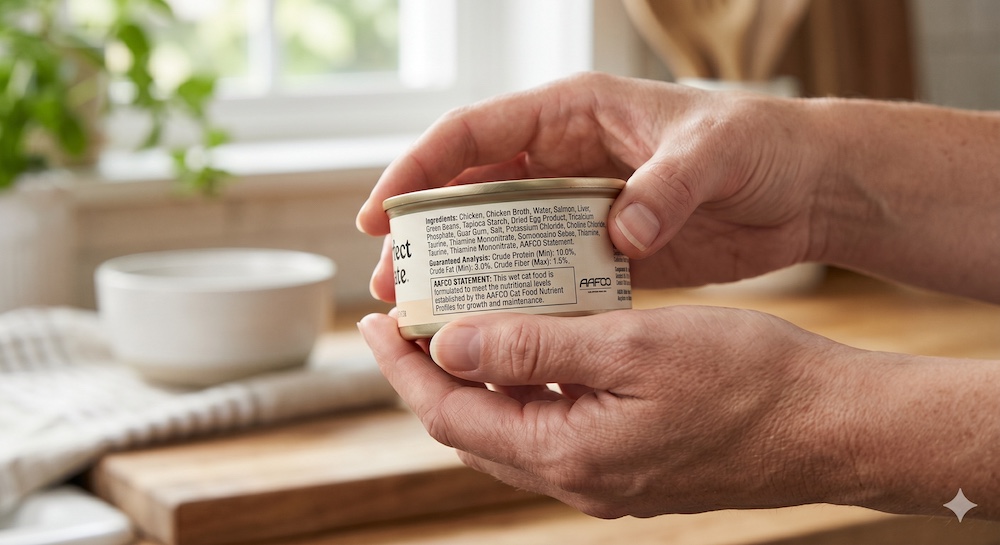
How to Read a Kitten Food Label
Not all kitten food is equal. These are the non-negotiables before anything goes in the bowl.
Four things to check on every kitten food label: AAFCO statement, named protein first, taurine listed, DHA present.
(💡 Always check the AAFCO statement before anything else—if it says “for supplemental or intermittent feeding only,” put it back on the shelf. It is not a complete diet.)
1. ✔️ The AAFCO Life Stage Statement: The label must say “complete and balanced nutrition for growth” or “complete and balanced for all life stages.” If it says “for adult maintenance” or “for supplemental feeding only”— it is not appropriate as a primary kitten diet.
2. ✔️ Named animal protein as the first ingredient: “Chicken,” “Salmon,” “Turkey”—not “poultry,” “meat,” or “fish.” A named species as the first ingredient is the baseline quality signal.
3. ✔️ Taurine explicitly listed: Taurine should appear in the ingredient list or the guaranteed analysis. Its absence is a serious red flag in any cat food at any life stage.
4. ✔️ DHA listed: Look for “DHA,” “docosahexaenoic acid,” or “fish oil” in the ingredient list. This is your confirmation that brain and eye development is supported.
5. ✔️ No artificial preservatives: BHA, BHT, and ethoxyquin are chemical preservatives linked to potential health concerns. Choose foods preserved with natural alternatives like mixed tocopherols (Vitamin E) or rosemary extract.
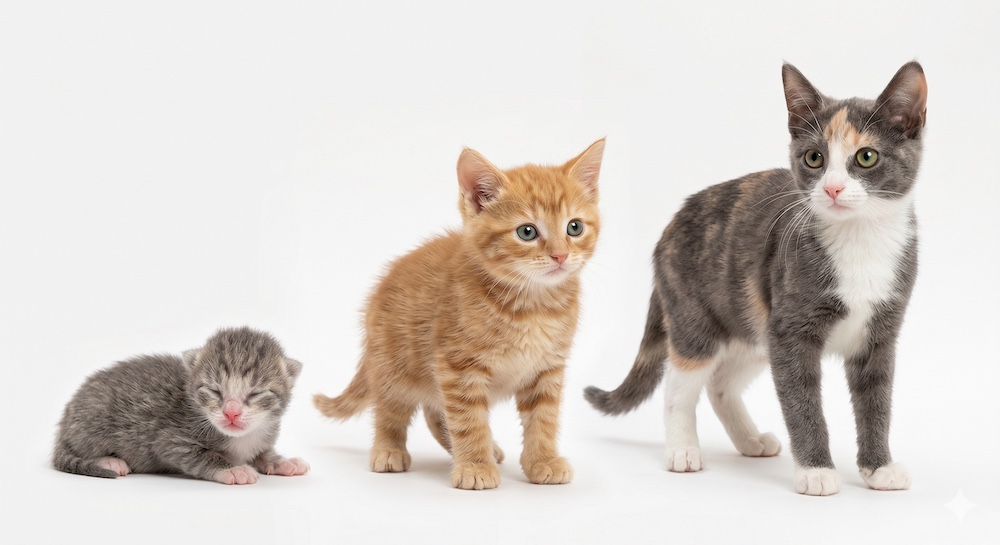
Kitten Feeding Schedule by Age
Feeding requirements change significantly at every stage—adjust portions monthly as your kitten grows.
(💡 Kittens don’t follow a fixed calendar— adjust portions based on body condition every month, not just age. A kitten that looks lean at 4 months needs more food, regardless of what the packaging says.)
🐾 4–8 Weeks (Weaning Stage)
At this stage, kittens are transitioning from mother’s milk to solid food. This phase is typically managed by the breeder or rescue— but if you are hand-raising a kitten under 4 weeks, kitten milk replacer (KMR) is required. Never give cow’s milk—most kittens are lactose intolerant and it causes severe diarrhea.
🐾 PetAg KMR Kitten Milk Replacer 🐾
🍼 PetAg KMR (Kitten Milk Replacer)—The standard veterinary recommendation for hand-raising kittens under 4 weeks. Formulated to match a queen’s milk composition—never substitute cow’s milk, which most kittens cannot digest.
Weaning process:
- 4 weeks: Offer a thin slurry of wet kitten food mixed with KMR.
- 5–6 weeks: Gradually thicken the mixture as the kitten learns to eat solid food.
- 7–8 weeks: Most kittens are eating solid wet food independently.
🐾 8–16 Weeks (Peak Growth Phase)
This is the most nutritionally critical window of the kitten’s life. Growth is at its fastest and caloric needs per kilogram of body weight are at their highest.
Feeding frequency: 3–4 meals per day Portion size: Follow the feeding guidelines on your specific food based on current weight— not projected adult weight.
Key priorities:
- Introduce variety in protein source now (chicken, turkey, fish, beef) to prevent future food neophobia.
- Never restrict food intake during this phase— kittens at this age are growing too rapidly to benefit from portion restriction.
- Ensure fresh water is always available, ideally from a cat water fountain.
🐾 Cat Water Fountains 🐾
💦 Flowing Water Fountains—Kittens are drawn to moving water far more than a still bowl, which helps establish strong hydration habits early—especially important for still-developing kidneys. Chewy carries fountains from Catit, PetSafe, and more—worth browsing to find the right size and style.
🐾 3–6 Months (Rapid Development Continues)
Growth rate begins to slow slightly but nutritional requirements remain high. Adult teeth start coming in around 3–4 months.
Feeding frequency: 3 meals per day Portion size: Increase as weight increases— re-check feeding guidelines monthly
Watch for: Changes in food preference as adult teeth come in. Some kittens temporarily prefer softer textures during teething. Slightly warming wet food or softening kibble with warm water helps during this phase.
🐾 6–12 Months (Transitioning to Adulthood)
By 6 months, most domestic breed kittens have reached approximately 75% of their adult size. Caloric needs begin to decrease relative to body weight.
Feeding frequency: 2–3 meals per day Portion size: Begin adjusting based on body condition rather than just weight
Key milestone: Most domestic breed cats can transition to an adult formula between 10–12 months. Large breeds—Maine Coons, Norwegian Forest Cats, Ragdolls—continue growing until 18–24 months and should remain on kitten or “all life stages” formula throughout this extended growth period.
How Much to Feed a Kitten: Practical Guide
The feeding guidelines on kitten food packaging are starting points, not precise targets. Adjust based on your kitten’s actual body condition—not just their age or weight.
General daily caloric requirements:
| Age | Daily Calories (approximate) |
|---|---|
| 8–10 weeks | 200–250 kcal |
| 3 months | 250–300 kcal |
| 4 months | 300–350 kcal |
| 6 months | 250–300 kcal |
| 9 months | 200–250 kcal |
| 12 months | 180–220 kcal |
(Caloric needs peak around 3–4 months and gradually decrease as growth rate slows. Always verify caloric density on your specific food’s label.)
🐈 How to assess body condition in kittens:
- Correct weight: Ribs easily felt without pressing hard but not visible. No protruding hip bones. Slight waist visible from above from about 5 months onwards.
- Underweight: Ribs, spine, and hip bones clearly visible. Increase meal frequency and portion size—never restrict a growing kitten’s food intake without veterinary guidance.
- Overweight: Ribs difficult to feel. No visible waist. While rare in young kittens under 6 months, neutered kittens are more prone to weight gain post-surgery. Reduce portions by 10–15% and monitor.
For a complete breakdown of cat portion sizes across all life stages and food types, our how much to feed a cat guide covers every scenario in detail.
Common Kitten Feeding Mistakes
| ❌ Feeding adult cat food long-term: The most common and consequential mistake. Adult formulas do not provide the protein density, DHA, or caloric content a growing kitten requires. Use kitten-specific or “all life stages” formulas for the entire first year. |
| ❌ Free-feeding dry kibble indefinitely: Free-feeding is common with kittens—and appropriate in very young kittens under 12 weeks who need constant caloric access. But as kittens approach 4–6 months, transitioning to structured meals allows you to monitor intake, detect appetite changes that signal illness, and prevent overeating post-neuter. |
| ❌ Not introducing food variety early: Cats become strongly imprinted on the texture and protein of the food they eat in kittenhood. A kitten that only ever eats one brand of chicken kibble may flatly refuse anything else as an adult. Introduce at least 3–4 different protein sources and both wet and dry textures during the first 6 months. |
| ❌ Giving cow’s milk: Cow’s milk is not appropriate for kittens— most are lactose intolerant and it causes diarrhea, dehydration, and digestive upset. Water and kitten-formula wet food provide all the hydration a weaned kitten needs. |
| ❌ Switching to adult food too early: Some owners transition to adult food at 6 months because their kitten “looks like a cat now.” Domestic breed cats benefit from staying on kitten formula until 10–12 months. Large breeds need kitten or all-life-stages food until 18–24 months. |
(🩺 Vet’s Note: “I always encourage new kitten owners to introduce food variety as early as possible—different proteins, both wet and dry, different textures. A kitten with a broad food acceptance profile is a cat that will never hold you hostage at 3am demanding only one specific discontinued flavor” —LovingPetsGuide Veterinary Advisor.)
Transitioning from Kitten to Adult Food
The transition from kitten to adult formula should be gradual—even though the cat’s feeding schedule changes, their digestive system needs time to adjust to a different nutritional profile.
Recommended transition timeline:
| Day | Kitten Food | Adult Food |
|---|---|---|
| 1–3 | 75% | 25% |
| 4–6 | 50% | 50% |
| 7–9 | 25% | 75% |
| 10+ | 0% | 100% |
When to transition:
- Domestic breeds: 10–12 months.
- Large breeds (Maine Coon, Ragdoll, Norwegian Forest Cat): 18–24 months.
- Consult your vet if your cat has been neutered early—post-neuter caloric needs decrease and the transition to adult or “neutered” formula is worth discussing.
Foods to Avoid Completely in Kittens
Some foods that cause mild issues in adults are significantly more dangerous for kittens due to their smaller body mass and developing systems.
| Food | Risk |
|---|---|
| 🧅 Onions & garlic (all forms) | Hemolytic anemia—dangerous at very small doses relative to body weight |
| 🍫 Chocolate | Theobromine toxicity—more severe in small bodies |
| 🍇 Grapes & raisins | Acute kidney failure—zero tolerance |
| 🥜 Xylitol | Blood sugar crash and liver failure within hours |
| 🐟 Raw fish regularly | Thiaminase destroys Vitamin B1—neurological damage |
| 🥛 Cow’s milk | Lactose intolerance—severe diarrhea and dehydration |
| 🍺 Alcohol | Fatal in tiny amounts |
| ☕ Caffeine | Toxic—affects heart and nervous system |
If your kitten ingests any of the above, contact your veterinarian immediately—do not wait for symptoms to appear.
Conclusion: The First Year Sets the Foundation
The nutritional decisions you make in your cat’s first year have a longer compounding effect than any other period of their life. A kitten fed appropriately—high-quality protein, adequate moisture, variety in texture and source, correct portion sizes—enters adulthood with a stronger immune system, healthier kidneys, better dental development, and a food flexibility that makes the rest of their life easier to manage.
Key takeaways:
- ✅ Always use kitten-specific or all-life-stages formula.
- ✅ Feed 3–4 meals daily until 6 months, then 2–3.
- ✅ Wet food is the strongest recommendation for hydration.
- ✅ Introduce variety in protein and texture early.
- ✅ Check for taurine and DHA on every label.
- ✅ Never give cow’s milk—it causes diarrhea.
- ✅ Large breeds stay on kitten food until 18–24 months.
📝 Editor’s Note: Protein and calcium-phosphorus ratio standards in this guide reflect official AAFCO nutrient profiles (aafco.org). Hepatic lipidosis risk information was cross-referenced with the Merck Veterinary Manual (merckvetmanual.com) and the Cornell Feline Health Center. Large breed extended growth timelines (18–24 months) are consistent with veterinary guidance on late-maturing cat breeds.
👉🏼 Full Cat Nutrition Guide — complete feline nutrition for every life stage.
👉🏼 Wet vs Dry Cat Food — why moisture format matters for kittens especially.
👉🏼 How Much to Feed a Cat — exact portions by weight and food type.
👉🏼 Why Is my Cat Not Eating — solving food refusal during weaning and transitions.

🐈 Browse cat food, treats, toys, health products, supplements, litter and everything else your cat needs 🐾

🐈 Browse raw cat food, freeze-dried meals, toppers and natural treats from Indiana farms 🐾

🐈 Browse cat food, treats, veterinary diets, supplements and everything else your feline needs 🐾
(This post contains affiliate links. If you purchase through our links, we may earn a small commission at no extra cost to you. This never influences our editorial opinions.)
FAQ: Kitten Feeding Guide — Your Questions Answered
What should I feed a kitten at 8 weeks old?
At 8 weeks, kittens are fully weaned and ready for solid food. Feed a high-quality wet kitten food as the primary diet—choose a formula with named animal protein as the first ingredient, an AAFCO “complete and balanced for growth” statement, and explicit taurine content. Offer 3–4 small meals per day. Dry kibble formulated for kittens is acceptable alongside wet food but should not be the sole diet due to its low moisture content.
How often should I feed a kitten?
Feed 3–4 small meals daily from 8 weeks to 6 months of age. From 6 months onwards, transition gradually to 2–3 meals per day as growth rate slows. By 10–12 months, most domestic breed cats do well on 2 meals per day. Never restrict a young kitten’s food intake—growth demands consistent caloric access throughout the day.
When do I switch from kitten to adult cat food?
Domestic breed cats can transition to adult food between 10–12 months. Large breeds—Maine Coons, Ragdolls, Norwegian Forest Cats—should remain on kitten or “all life stages” food until 18–24 months due to their extended growth period. When you do transition, do so gradually over 10 days to avoid digestive upset.
Can kittens eat adult cat food occasionally?
Occasionally is not a concern—the nutritional difference does not cause harm from a single meal. The problem arises when adult food becomes the primary long-term diet. A kitten eating adult food daily over weeks and months does not receive adequate protein density, DHA, or caloric content for healthy development.
Is homemade food okay for kittens?
Homemade diets for kittens carry significant risk of nutritional imbalance—particularly taurine, calcium, and DHA deficiencies that cause irreversible developmental damage. If you choose to feed homemade, work with a board-certified veterinary nutritionist to formulate a complete recipe. Never use generic “cat food recipes” from the internet for a growing kitten without professional review.
My kitten won’t eat wet food. What should I do?
Kittens that refuse wet food are almost always responding to a texture or temperature preference. Try warming the food slightly to intensify the aroma. Try a different texture—pâté instead of chunks, or chunks instead of pâté. Try a different protein—a kitten refusing chicken may accept salmon or turkey. If food refusal persists beyond 24–48 hours in a young kitten, contact your vet—kittens are vulnerable to hepatic lipidosis (fatty liver disease) from even short periods of inadequate caloric intake.