
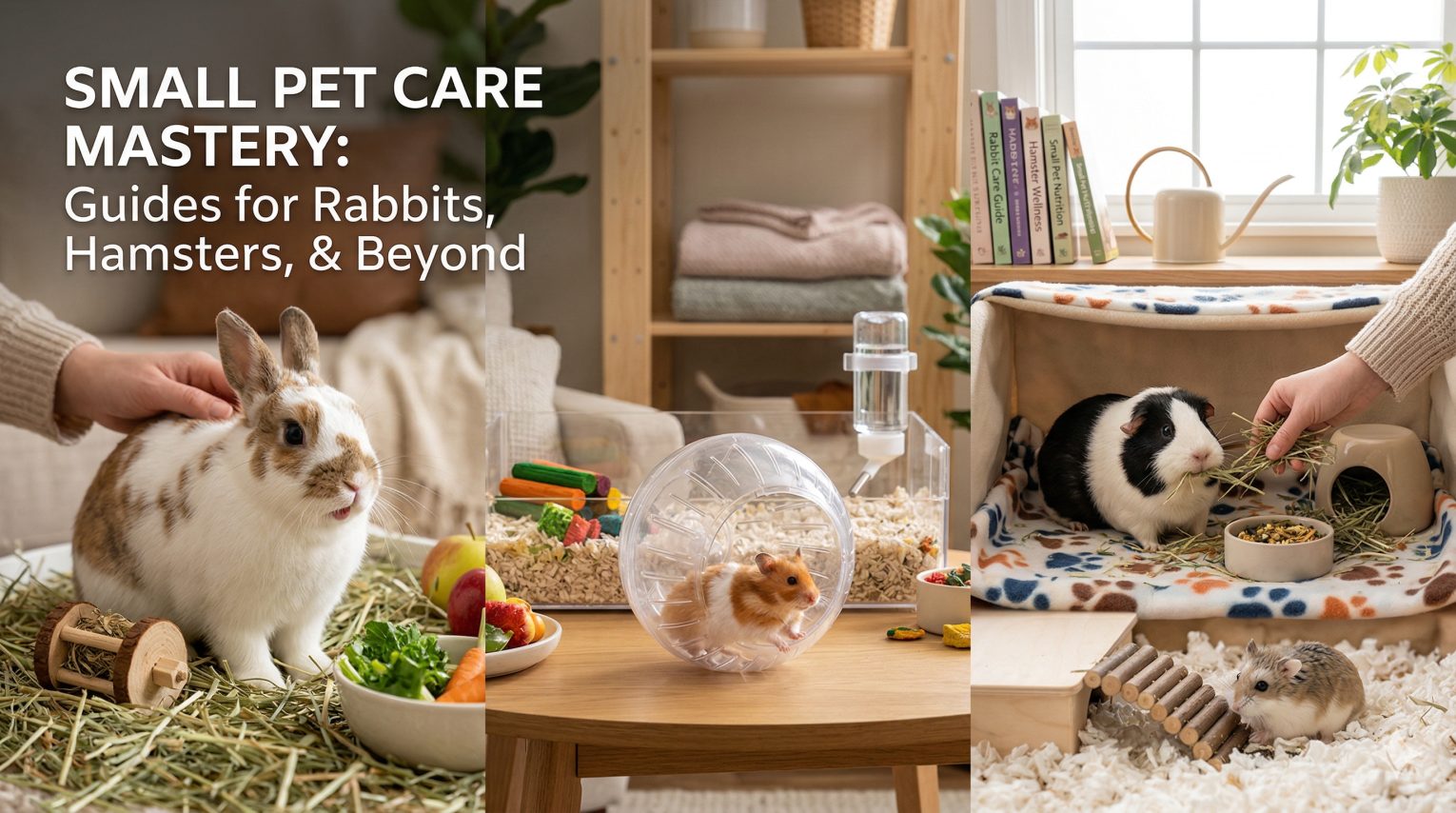
Small pets bring immense joy in compact packages, but don’t let their size fool you. This small pet care guide goes far beyond basic pet store advice—covering everything from specialized high-fiber diets to habitat enrichment that mimics natural burrows, because rabbits, guinea pigs, hamsters, and gerbils have genuinely complex needs.
At LovingPetsGuide.com, we specialize in “pocket pets.” Our mission is to move beyond basic pet store advice and provide you with deep-dive guides on nutrition, habitat engineering, and species-specific health care to ensure your tiny companions thrive for years.
Table of Contents
🐀 Explore Small Pet Care by Category
Whether you are a new owner or a seasoned enthusiast, find expert advice tailored to your pet’s specific world:
- Diet & Nutrition — Mastering Timothy hay ratios, safe veggies, and preventing GI stasis.
- Habitat & Setup — Choosing the right cage size, safe bedding, and enriching playpens.
- Health & Wellness — Spotting subtle illnesses, essential dental care, and weight management.
- Hygiene & Grooming — Safe nail clipping, managing shedding, and perfect dust bath setups.
- Species Guides — Dedicated care guides for rabbits, hamsters, guinea pigs, and more.
- Best Small Pet Gear — Tested silent wheels, chew-proof bottles, and non-toxic hideouts.
🥗 Small Pet Nutrition: More Than Just Pellets
The number one cause of health issues in small pets is improper diet. While a rabbit needs 80% high-quality hay, a hamster thrives on a variety of grains and proteins. Understanding the “safe vs toxic” list for your specific pet is the first step in responsible ownership. Providing the right diet helps prevent digestive issues and supports long-term health.
Essential Feeding & Diet Guides
- [Rabbit Diet Guide]: Why Timothy Hay is non-negotiable.
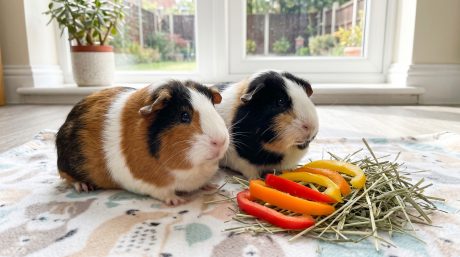
- [Guinea Pig Nutrition]: Ensuring adequate Vitamin C intake.
- Safe Fruits & Veggies for Small Pets: A comprehensive A-Z list.
- [What Do Hamsters Eat]? Balancing seeds, grains, and protein.
🐀 Latest Small Pet Diet & Nutrition Guides
- Safe & Unsafe Vegetables for Rabbits, Guinea Pigs & Hamsters: The Complete Guide
 This guide covers safe and unsafe vegetables, fruits, and herbs for the three most common small pet species—rabbits,…

🏠 Habitat Setup: Creating a Stress-Free Environment
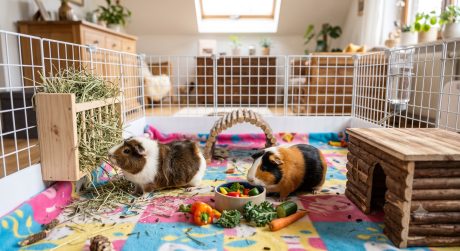
A cage is not just a box; it’s a sanctuary. Many commercial cages are actually too small for active animals like rabbits and guinea pigs. We focus on “life-sized” habitats that allow for natural behaviors like foraging, burrowing, and sprinting. Providing a well-designed habitat helps reduce stress and improves the quality of life for small pets.
Habitat & Bedding Guides
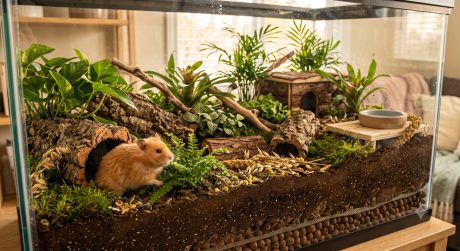
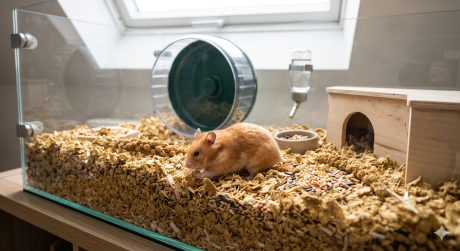
- How to Set Up a Bioactive Hamster Enclosure: Deep bedding for burrowing.
- [Best Cages for Guinea Pigs]: Why floor space matters more than height.
- [Rabbit Proofing Your Home]: A guide to free-roam living.
- [Choosing Safe Bedding]: Avoiding respiratory issues from cedar and pine.
🐀 Latest Small Pet Habitat & Setup Guides
- The Best Guinea Pig Cages in 2026: Size Guide and Top PicksThe best cage for guinea pigs is the one with the most floor space you can realistically accommodate—minimum…
- Bioactive Hamster Enclosure Setup Guide: Natural Habitat Step by StepA bioactive hamster enclosure is a living ecosystem that mimics a hamster’s natural habitat—combining a deep burrowing substrate,…
🩺 Small Pet Health: Spotting Early Warning Signs
Small pets are “prey animals,” which means they are experts at hiding illness until it is very advanced. Learning to spot subtle signs — like a change in dropping size or a slight decrease in activity — is life-saving. Early detection of health problems can help ensure your pet receives proper care.
Wellness & Care Resources
- [5 Signs Your Small Pet Needs an Emergency Vet]: When to act immediately.
- [Dental Health in Rabbits & Rodents]: How to prevent overgrown teeth.
- [Grooming Your Small Pet]: Safe nail trimming and coat care.
- [Recognizing “Wet Tail” in Hamsters]: Prevention and treatment.
🧼 Hygiene & Grooming: Essential Upkeep
Unlike cats and dogs, small pets have unique grooming requirements. Rabbits need regular brushing to prevent life-threatening intestinal blockages from ingested fur, while chinchillas and certain hamsters require specific dust baths to keep their coats oil-free. Mastering safe nail trimming and coat care is a vital part of your weekly routine.
Grooming & Hygiene Resources
- [The Ultimate Guide to Small Pet Nail Trimming]: Avoiding the quick.
- [How to Setup a Safe Dust Bath]: For chinchillas, degus, and hamsters.
- [Brushing Your Rabbit]: Managing molting season safely.
- [Cleaning Scent Glands]: A delicate but necessary task for guinea pigs.
📚 Dedicated Species Guides
Hamsters and guinea pigs are among the most common small pets, especially for first-time pet owners. Rabbits are intelligent and social animals that require more care and attention than many people expect. Every pocket pet is uniquely wired. Here, we break down the specific behavioral quirks and training methods for the most popular small animals.
Rabbit Care & Behavior
- [Rabbit Training 101]: Can you litter train a bunny? (Yes!)
- [Understanding Rabbit Body Language]: Binkies, flops, and thumps.
Hamster & Guinea Pig Essentials
- [Solitary vs Social]: Why Guinea Pigs need friends and Hamsters don’t.
- [The Best Enrichment Toys for Bored Small Pets]: Keeping them mentally stimulated while in their cage.
🐀 Latest Small Pet Species Guides
- The Complete Small Pet Care Guide: Rabbits, Guinea Pigs, and HamstersRabbits, guinea pigs, and hamsters are the three most popular small pets in the world—but they have significantly…
- The Complete Hamster Care Guide for New and Experienced OwnersA healthy hamster needs four things above all else: a cage large enough to run, explore, and burrow…
- The Complete Guinea Pig Care Guide for New and Experienced OwnersGuinea pigs need unlimited grass hay (75–80% of their diet), daily fresh vegetables for vitamin C (which they…
✅ How-To: The 5-Minute Daily Small Pet Health Check
Small pets are masters at hiding pain. Perform this quick, 5-minute visual and physical exam on your pocket pet every evening:
Total Time: 5 minutes
Examine the Droppings
Look for changes in the size, shape, or quantity of poops, which is the very first sign of dangerous GI stasis.
Check the Food and Water
Ensure they are actively eating their hay/pellets and that the water bottle spout isn’t jammed.
Inspect the Eyes and Nose
Ensure they are bright, clear, and completely free from any discharge, crustiness, or sneezing.
Check the Coat and Hindquarters
Gently stroke them to feel for unusual lumps, check for fur loss, and ensure their bottom is perfectly clean (no signs of diarrhea or “wet tail”).
Observe Their Behavior
Make sure they are active, curious, and moving normally without signs of lethargy, hunching in a corner, or limping.
(📖 Pro Tip: If you notice anything unusual during your daily check, consult our Small Pet Health & Wellness guides, but always contact your veterinarian for a professional diagnosis.)
🐭 Recommended Gear for Small Pets
The small pet market is flooded with products that are actually unsafe. We filter through the noise to recommend only the safest, most durable enclosures, toys, and food brands that align with modern veterinary standards.
Top-Rated Small Pet Gear (2026)
- [Top 10 Best Cages for Indoor Rabbits & Guinea Pigs]
- [Review: The Best Silent Hamster Wheels for Nighttime Peace]
- [Safe & Absorbent Bedding: Our Top Picks for Odor Control]
- [Interactive Foraging Toys: Keep Your Small Pet Mentally Sharp]
❓ Frequently Asked Questions About Small Pet Care
What is the absolute minimum cage size for a hamster or guinea pig?
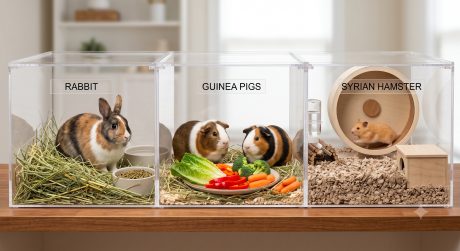
A single Syrian hamster needs an unbroken floor space of at least 800 sq inches (but bigger is always better). Two guinea pigs require a minimum of 10.5 square feet (e.g., a 2×4 C&C cage). Always prioritize floor space over tall, multi-level cages.
How do I keep my rabbit or guinea pig cool in the summer?
Small pets are highly susceptible to heatstroke. Keep enclosures out of direct sunlight, provide ceramic tiles cooled in the fridge for them to lie on, and ensure constant access to fresh, cool water.
Are exercise balls safe for hamsters?
No. Modern exotic vets advise against exercise balls. They offer poor ventilation, restrict the hamster’s senses (which rely on whiskers and smell), and can cause spinal injuries or toe amputations. Use a safe, solid-surface exercise wheel or a secure playpen instead.
Do rabbits and guinea pigs need a companion?
Guinea pigs are highly social animals and should never be kept alone—they need at least one same-sex companion. Rabbits are also social and do better in pairs, though bonding requires careful introduction. Syrian hamsters, by contrast, are solitary and must be housed alone.
How long do small pets typically live?
Lifespans vary significantly by species. Syrian hamsters live 2–3 years, guinea pigs 4–8 years, rabbits 8–12 years with proper care, and chinchillas can live 15+ years. Understanding your pet’s lifespan helps you plan for their long-term care.
❤️ Why Trust Our Small Pet Experts
Our small pet care guides are built on current exotic veterinary guidelines, including recommendations from the House Rabbit Society (rabbit.org), the American Veterinary Medical Association – AVMA (avma.org), and the Association of Exotic Mammal Veterinarians – AEMV (aemv.org), alongside modern ethological research on small mammal behavior. We actively challenge outdated pet store myths—like undersized cages and wire wheels—and replace them with species-appropriate, evidence-based advice.

🐀 Browse small pet food, bedding, cages, toys, supplements and everything else your small pet needs 🐾
(This post contains affiliate links. If you purchase through our links, we may earn a small commission at no extra cost to you. This never influences our editorial opinions.)