
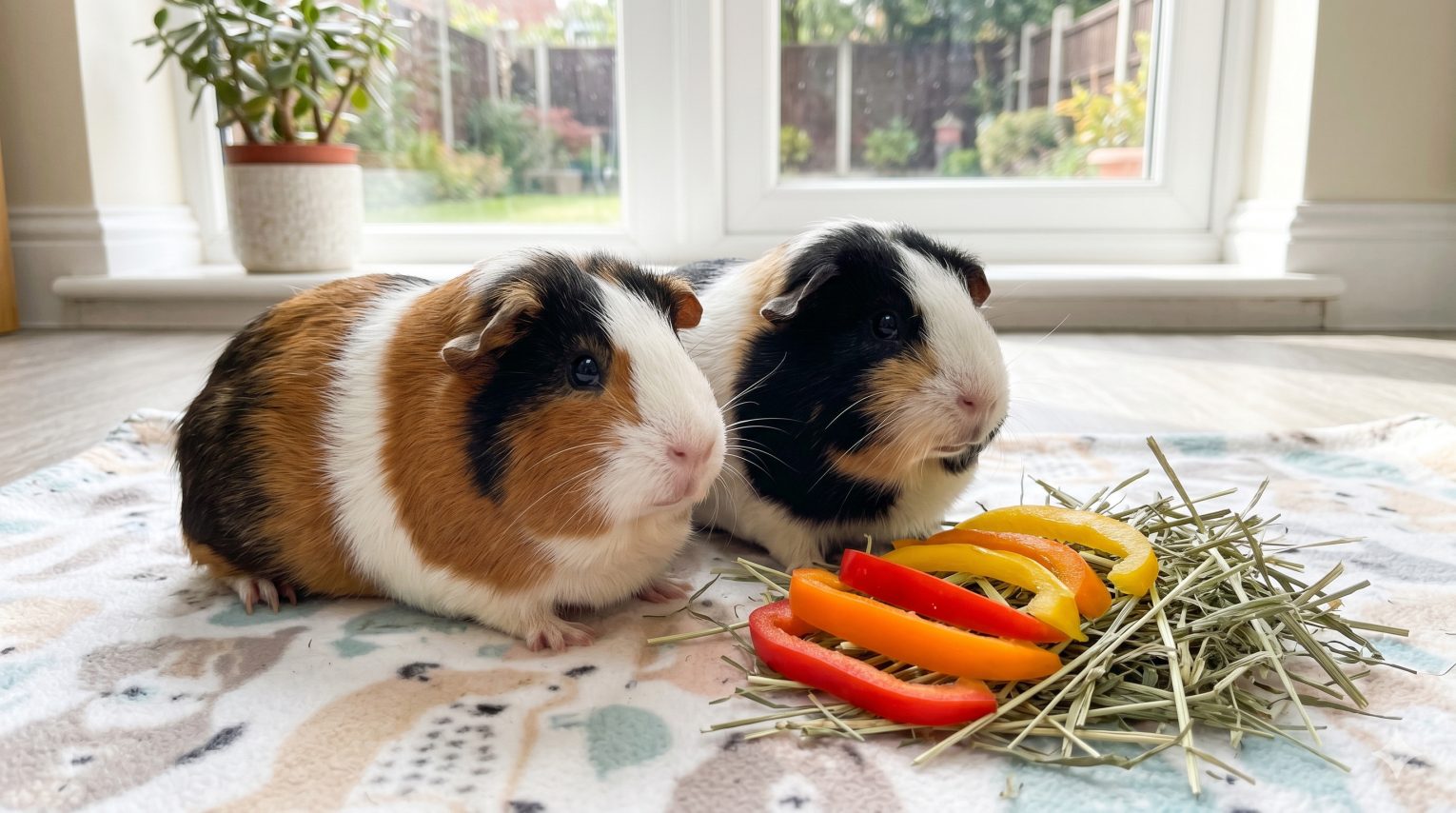
Guinea pigs need unlimited grass hay (75–80% of their diet), daily fresh vegetables for vitamin C (which they cannot produce on their own), a minimum of 7.5 square feet of cage space per pig, and— critically—a same-species companion. Unlike most small pets, guinea pigs are extremely social herd animals that suffer measurable stress when kept alone, even with plenty of human attention.
Guinea pigs are gentle, vocal, and highly social— making them one of the best small pets for families and first-time owners willing to commit to their specific needs. But two requirements set them apart from every other small pet on this site: their absolute dependence on dietary vitamin C, and their need for company of their own kind. Get those two things right, and most other aspects of guinea pig care fall into place.
Guinea pig care is one of three small pet species covered in our small pet care guide—the complete hub for rabbits, guinea pigs, and hamsters covering nutrition, housing, health, and species-specific needs in one place. If you’re deciding between a rabbit and a guinea pig, our rabbit care guide covers the comparison points worth knowing before you choose.
(💡 Guinea pigs need daily vitamin C, unlimited hay, and—unlike most small pets—a companion of their own kind.)
Table of Contents
What Makes Guinea Pigs Different
Guinea pigs (Cavia porcellus, also called cavies) are not rodents in the same nutritional category as hamsters or gerbils, and they are not solitary like rabbits can sometimes be. Two biological facts drive almost everything in this guide.
1. Guinea pigs cannot synthesize vitamin C: Like humans, guinea pigs lack the enzyme (L-gulonolactone oxidase) needed to produce vitamin C internally. Every gram of vitamin C in their body must come from diet. A vitamin C deficiency causes scurvy—a painful, progressive condition affecting joints, skin, immune function, and wound healing. This single fact shapes the entire diet section of this guide.
2. Guinea pigs are obligate social animals: In the wild, guinea pigs live in herds of 5–10 individuals. A guinea pig kept entirely alone—even with attentive owners—shows measurably higher stress hormone levels, reduced activity, and behavioral withdrawal compared to guinea pigs housed with a companion. Unless there is a specific medical or behavioral reason for solo housing, guinea pigs should always be kept in same-sex pairs or small groups.
(🩺 Vet’s Note: “The two mistakes I see most often in guinea pig patients are insufficient vitamin C and solo housing. Both are completely preventable, and both have serious welfare consequences when overlooked. If you remember nothing else from a guinea pig care guide, remember these two things.”—LovingPetsGuide Veterinary Advisor)
📰 The biological inability of guinea pigs to synthesize vitamin C is well documented in exotic animal veterinary literature and confirmed by Chewy’s veterinary-reviewed guinea pig care resources at chewy.com/education. The social housing requirement is consistently emphasized across veterinary small animal care guidance— solo-housed guinea pigs are at meaningfully higher risk of stress-related health and behavioral issues compared to pair- or group-housed guinea pigs.
Part 1: Guinea Pig Diet
🐾 The Correct Diet Ratio
Priority 1️⃣ — Unlimited grass hay (75–80% of diet): Timothy hay, orchard grass, oat hay, or meadow hay. Always available, never rationed. Hay provides the fiber that keeps the digestive system moving and wears down continuously growing teeth.
Priority 2️⃣ — Fresh vegetables daily (the vitamin C delivery system): A handful to two handfuls of fresh vegetables per guinea pig, every single day, with at least one high-vitamin-C item included.
Priority 3️⃣ — Guinea pig-specific pellets (small amount): 1–2 tablespoons per guinea pig per day. Must be a pellet formulated specifically for guinea pigs and fortified with vitamin C—rabbit or general small animal pellets are not an adequate substitute.
💊 Vitamin C supplementation (often necessary): Pellet-based vitamin C degrades over time once the bag is opened—often within 90 days—so pellets alone cannot be relied upon as a sole vitamin C source. Daily fresh vegetables remain the primary method; a stabilized tablet supplement is a reliable backup, particularly for picky eaters.
(🩺 Vet’s Note: “I recommend treating vitamin C the way you’d treat a daily medication—non-negotiable, every single day, not just when you remember. The gap between ‘mostly consistent’ and ‘consistent’ matters more for guinea pigs than for almost any other small pet I treat.”—LovingPetsGuide Veterinary Advisor)
🐾 Hay: The Foundation
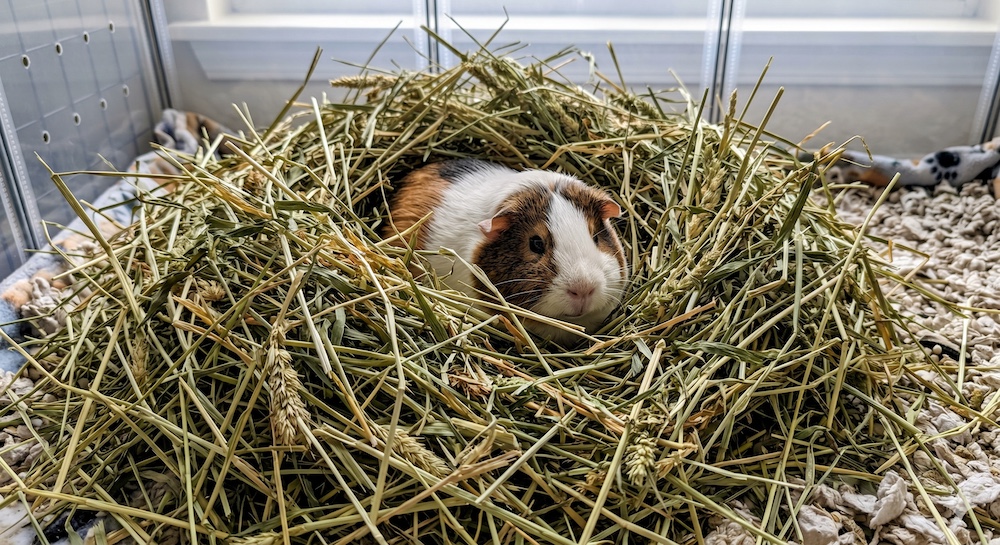
Like rabbits, guinea pigs need access to hay that makes up the majority of their daily food volume—not just a side item.
✅ Grass hays (suitable for all adult guinea pigs):
- Timothy hay—the standard recommendation.
- Orchard grass—softer, often preferred by picky eaters.
- Oat hay—good for variety.
- Meadow hay—natural mixed content.
❌ Avoid alfalfa hay for adult guinea pigs:
- Alfalfa’s high calcium and protein content is appropriate only for pregnant or nursing females and guinea pigs under 6 months. For healthy adults, regular alfalfa feeding contributes to bladder stones and excess weight gain over time.
🐾 Guinea Pig Hay & Pellets 🐾
🌾 Timothy Hay & Guinea Pig Pellets—Oxbow Western Timothy Hay and Oxbow Essentials Cavy Cuisine are well-regarded starting points, but Chewy carries dozens of hay and pellet options across multiple brands and textures—worth browsing to find what your guinea pig prefers.
🐾 Vitamin C: The Non-Negotiable Requirement
Adult guinea pigs need approximately 10–30 mg of vitamin C daily; pregnant, ill, or stressed guinea pigs need up to 50 mg. The most reliable way to meet this is fresh vegetables, with a stable tablet supplement as backup.
✅ High vitamin C vegetables (feed regularly):
- Bell peppers (red, yellow, orange)—among the highest vitamin C content of any common vegetable.
- Parsley.
- Kale (limited—also high in calcium).
- Broccoli (florets and stems).
- Brussels sprouts.
✅ Good everyday vegetables (lower vitamin C, still valuable):
- Romaine lettuce (not iceberg).
- Cucumber.
- Zucchini.
- Carrots (in moderation—higher in sugar).
- Cilantro.
❌ Avoid:
- Iceberg lettuce—minimal nutritional value, can cause diarrhea.
- Potatoes and potato leaves—toxic.
- Onions, garlic, leeks—toxic.
- Avocado—toxic.
- Rhubarb—toxic.
- Any sugary fruit—as a regular staple (small amounts as occasional treats only).
For a complete A–Z list of safe and unsafe foods across all small pet species, see safe vegetables for small pets.
🐾 Vitamin C Supplements for Guinea Pigs 🐾
💊 Stabilized Vitamin C Tablets—Oxbow Natural Science Vitamin C is a widely used starting point, but Chewy carries several stabilized tablet and chew options from different brands—a reliable backup to fresh vegetables, especially useful for picky eaters or during illness when vitamin C needs increase.
Part 2: Habitat
🐾 Minimum Space Requirements
Most commercially sold “starter” guinea pig cages are significantly undersized. The widely used standard among guinea pig welfare organizations recommends a minimum of 7.5 square feet for one guinea pig, with cage size increasing by roughly 20–30% for each additional guinea pig housed together.
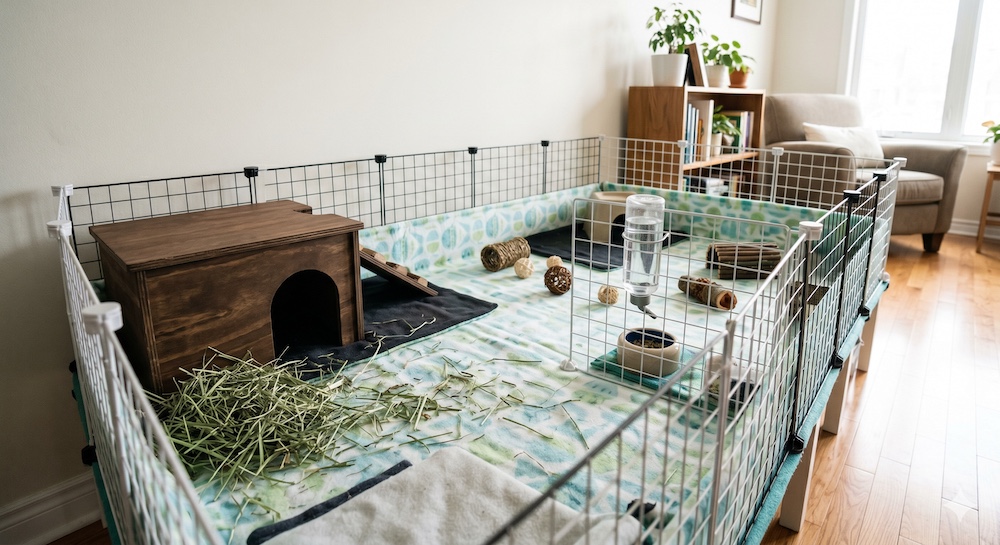
A properly sized guinea pig habitat allows room to run, multiple hideouts, and space for two guinea pigs to coexist comfortably.
Minimum enclosure sizes:
| Number of Guinea Pigs | Minimum Floor Space |
|---|---|
| 1 guinea pig | 7.5 sq ft |
| 2 guinea pigs | 10.5 sq ft |
| 3 guinea pigs | 13 sq ft |
| 4 guinea pigs | 15.5 sq ft |
Many experienced owners build their own enclosures using coroplast and wire grid panels (commonly called “C&C cages”) because they reach appropriate sizes far more affordably than most commercial cages. For a full breakdown of cage options, sizing, and what to buy, see best cages for guinea pigs.
🐾 Bedding
✅ Safe bedding options:
- Fleece liners over absorbent padding (reusable, cost-effective long term).
- Paper-based bedding (Carefresh, paper pellets).
❌ Unsafe bedding:
- Cedar or pine shavings—aromatic oils are toxic and contribute to respiratory disease, which guinea pigs are especially prone to.
- Sawdust—respiratory irritant.
- Corn cob bedding—can develop mold, poor odor control.
🐾 Environment and Placement
Guinea pigs are prey animals sensitive to loud noise and sudden movement. Keep their enclosure in a quiet area away from direct sunlight, drafts, and high-traffic household zones—but still within the family’s daily activity so they don’t become isolated.
🌡️ Temperature sensitivity: Guinea pigs are highly susceptible to heatstroke above approximately 26°C (79°F) and should never be kept in direct sun or an unventilated room during warm weather. They also do not tolerate cold well below roughly 15°C (59°F). Indoor housing in a temperature-stable room is strongly preferred over outdoor hutches in most climates.
🐾 Enrichment
- Multiple hideouts—guinea pigs need more than one so the lower-ranking pig in a pair always has an escape option.
- Tunnels for natural exploring behavior.
- Chew-safe wooden toys (teeth grow continuously).
- Hay racks or scatter feeding for foraging enrichment.
Part 3: Health Essentials
🐾 Finding a Guinea Pig-Savvy Vet
As with rabbits, guinea pigs need a vet experienced in exotic or small mammal medicine. Search for “guinea pig vet,” “exotic animal vet,” or “small mammal vet” in your area before a health issue arises.
🐾 Common Health Issues
Scurvy (vitamin C deficiency): Symptoms include joint pain, reluctance to move, poor coat condition, swollen joints, and slow wound healing. Entirely preventable with consistent daily vitamin C intake.
Respiratory infections: Guinea pigs have sensitive respiratory systems. Symptoms include sneezing, nasal or eye discharge, labored breathing, and lethargy. Poor ventilation, ammonia buildup from infrequent cage cleaning, and dusty bedding are common contributing factors. Respiratory infections in guinea pigs can progress quickly and require prompt veterinary attention.
Bladder stones: Linked to excess dietary calcium, often from too much alfalfa hay or calcium-rich vegetables in adult guinea pigs. Symptoms include straining to urinate, blood in urine, and vocalizing during urination.
Dental problems: Like rabbits, guinea pig teeth grow continuously. Insufficient hay intake leads to overgrown molars, which cause drooling, weight loss, and difficulty eating. For a complete overview, see [dental health in rabbits and rodents].
Pododermatitis (bumblefoot): Sores on the feet caused by wire-floor caging, excess weight, or dirty, damp bedding. Solid flooring with appropriate bedding largely prevents this.
📰 The respiratory disease susceptibility and bladder stone risk factors described in this section are consistently documented across veterinary small animal resources, including Chewy’s veterinary-reviewed guinea pig care content. Ammonia buildup from infrequent cage cleaning is repeatedly identified as a primary contributing factor to respiratory illness in guinea pigs—reinforcing the daily spot-cleaning recommendation throughout this guide.
🐾 Vocalizations (Normal, Not a Health Concern)
Guinea pigs are famously vocal, and understanding their sounds helps owners distinguish normal behavior from distress:
- 🔊 Wheeking—a loud, excited squeal, usually triggered by anticipation of food.
- 🔈 Purring—can indicate contentment or mild annoyance depending on pitch and body language.
- 🔉 Rumbling—often associated with mating or dominance behavior.
- 🔉 Chattering teeth—a warning sign of agitation or stress between guinea pigs; separate if this escalates to aggression.
🐾 Grooming
🐹 Short-haired guinea pigs (American breed): Minimal grooming—a weekly brush is sufficient.
🐹 Long-haired guinea pigs (Peruvian, Silkie, Texel): Daily brushing required to prevent matting, which can trap moisture and lead to skin problems.
✂️ Nail trimming: Every 4–6 weeks. Guinea pig nails grow continuously and can curl painfully if neglected.
🐾 Guinea Pig Habitat Accessories 🐾
🏠 Hideouts, Tunnels & Enrichment—Every guinea pig habitat needs at least one hideout per pig, water bottles, and chew-safe toys. Chewy carries a wide range of guinea pig accessories at every price point—worth browsing to outfit a properly enriched, multi-pig habitat.
🐾 Signs of a Healthy Guinea Pig
| Area | Healthy | Concern |
|---|---|---|
| Appetite | Consistent hay and veg intake | Reduced or stopped eating |
| Droppings | Firm, consistent, plentiful | Fewer, soft, or absent |
| Eyes | Clear, bright | Discharge, cloudiness |
| Breathing | Quiet, regular | Wheezing, labored, noisy |
| Coat | Smooth, no bald patches | Dull, patchy, flaky |
| Posture | Active, alert when awake | Hunched, reluctant to move |
| Social behavior | Interacts with cage mate | Withdrawn, hiding constantly |
The 5 Most Common Guinea Pig Care Mistakes
| ❌ Housing a guinea pig alone: Guinea pigs are herd animals. A solo guinea pig— even with attentive owners—experiences measurable stress. Keep guinea pigs in same-sex pairs or small groups unless a vet specifically advises otherwise. |
| ❌ Relying on pellets alone for vitamin C: Vitamin C in pellets degrades significantly within 90 days of the bag being opened. Fresh vegetables must be the daily backbone of vitamin C intake, not pellets alone. |
| ❌ Undersized housing: Most starter cages sold in pet stores fall well short of the 7.5 sq ft minimum per guinea pig. See best cages for guinea pigs before buying. |
| ❌ Feeding alfalfa hay to adult guinea pigs: Appropriate for guinea pigs under 6 months or nursing mothers—but contributes to bladder stones and weight gain in healthy adults. |
| ❌ Infrequent cage cleaning: Ammonia buildup from infrequent cleaning is a leading contributor to respiratory illness in guinea pigs. Spot-clean daily; full bedding change weekly. |
Conclusion
Guinea pigs are gentle, social, and deeply rewarding pets when their two defining needs—consistent vitamin C and companionship—are met consistently. Most other aspects of their care follow standard small herbivore principles: unlimited hay, a properly sized habitat, and a vet experienced in exotic animals.
Key takeaways:
- ✅ Guinea pigs cannot make their own vitamin C— fresh vegetables daily, non-negotiable.
- ✅ Never house a guinea pig alone without a specific veterinary reason.
- ✅ Unlimited grass hay—75–80% of the diet.
- ✅ Minimum 7.5 sq ft per guinea pig, more for pairs.
- ✅ Avoid alfalfa hay for healthy adults.
- ✅ Clean the cage frequently—respiratory illness risk is real.
- ✅ Find a guinea pig-savvy vet before problems arise.
👉🏼 Small Pet Care Guide—complete hub for rabbits, guinea pigs, and hamsters.
👉🏼 Rabbit Care Guide—compare rabbit vs guinea pig care requirements.
👉🏼 Hamster Care Guide—full cage setup, diet, and common mistakes.
👉🏼 Safe Vegetables for Small Pets—complete A–Z safe and unsafe food list.
👉🏼 Best Cages for Guinea Pigs—minimum size standards and top enclosure picks.
📝 Editor’s Note: Diet and habitat recommendations in this guide were cross-referenced with Chewy’s veterinary-reviewed guinea pig care resources at chewy.com/education, alongside established small animal welfare standards for minimum guinea pig enclosure sizing. Vitamin C requirements and degradation timelines were verified against manufacturer product documentation for stabilized vitamin C supplements.

🐀 Browse small pet food, bedding, cages, toys, supplements and everything else your small pet needs 🐾
(This post contains affiliate links. If you purchase through our links, we may earn a small commission at no extra cost to you. This never influences our editorial opinions.)
FAQ: Guinea Pig Care
Why do guinea pigs need vitamin C if other small pets don’t?
Guinea pigs lack the enzyme needed to synthesize vitamin C internally—the same biological gap humans have. Most other small pets, including rabbits and hamsters, can produce their own. Without adequate dietary vitamin C, guinea pigs develop scurvy, a painful and potentially serious condition. Daily fresh vegetables, supplemented as needed with a stabilized tablet, prevent this entirely.
Can I keep just one guinea pig?
It’s possible, but not recommended. Guinea pigs are herd animals that show measurable stress when housed alone, even with significant human attention. If you must keep a single guinea pig—due to aggression or health isolation needs—daily extended human interaction becomes essential, but it does not fully replace guinea pig companionship.
How big does a guinea pig cage need to be?
A minimum of 7.5 square feet of floor space for one guinea pig, increasing by roughly 20–30% for each additional guinea pig. Most commercially sold starter cages are significantly smaller than this. See best cages for guinea pigs for sizing details and recommended options.
What vegetables have the most vitamin C for guinea pigs?
Bell peppers are among the highest, followed by parsley, kale, broccoli, and Brussels sprouts. Rotate several high-vitamin-C vegetables daily rather than relying on just one.
How long do guinea pigs live?
Guinea pigs typically live 5–7 years with proper care, with some individuals reaching 8 years.
Do guinea pigs and rabbits get along as cage mates?
No—housing guinea pigs and rabbits together is not recommended. They have different dietary needs (rabbits don’t require dietary vitamin C the way guinea pigs do), different social communication styles, and rabbits can injure guinea pigs even unintentionally during play, particularly with kicks from their powerful hind legs. Keep them in separate, species-appropriate enclosures.