
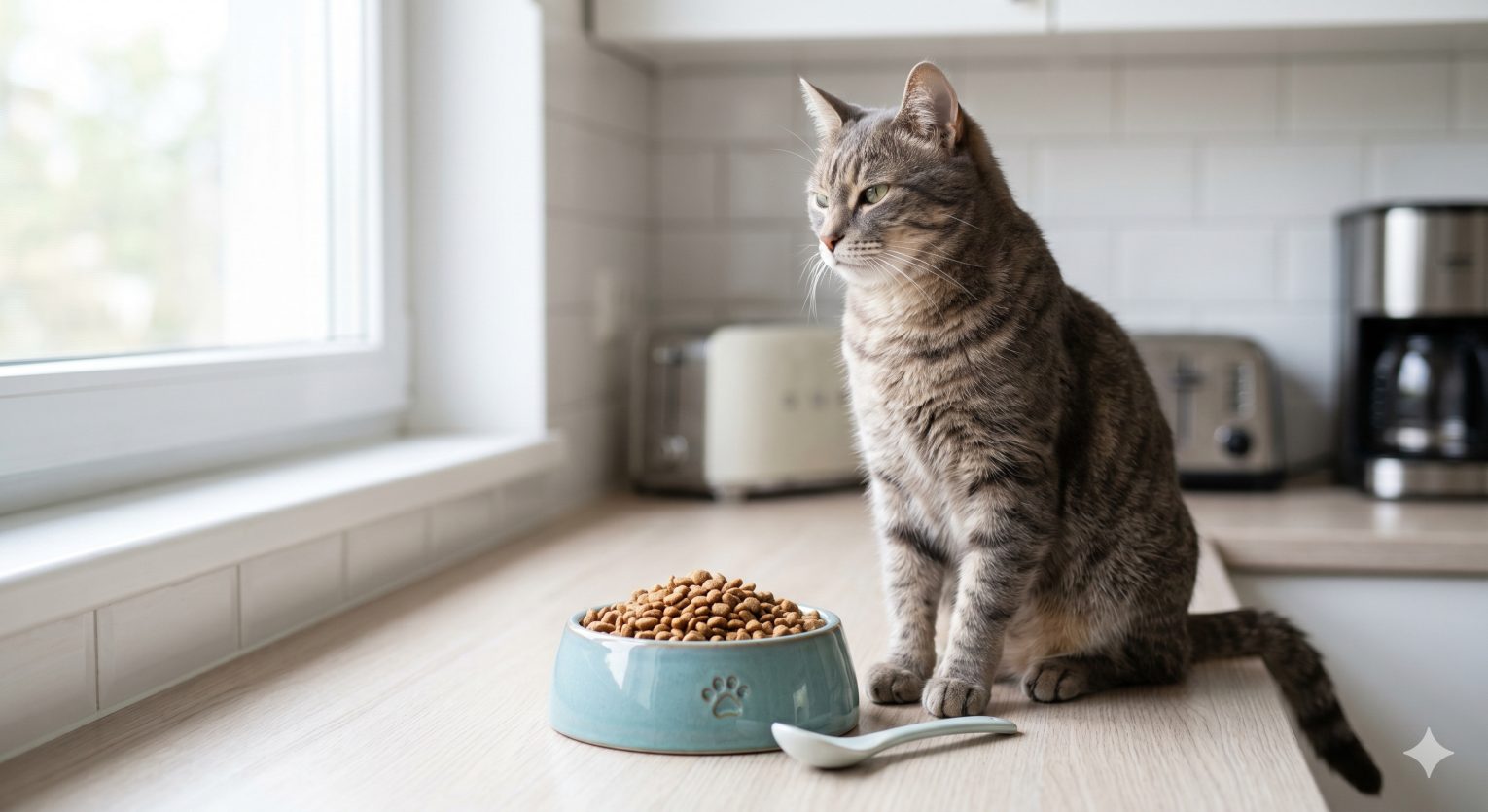
Why is my cat not eating? The most common reasons fall into two categories: medical causes—including dental disease, respiratory infections, kidney disease, and pain—and behavioral causes including food aversion, stress, environmental change, and learned picky eating. Any cat that has not eaten for more than 24–48 hours requires a veterinary assessment, as cats are uniquely vulnerable to a life-threatening liver condition called hepatic lipidosis that develops rapidly during food refusal.
Unlike dogs, cats cannot safely skip meals for extended periods. A cat that stops eating is always telling you something—the question is whether it is a preference, a behavioral response, or a medical emergency. This guide covers every significant cause, how to tell them apart, and exactly what to do in each case.
Food refusal is one of the most common—and most important—signs that something has changed in your cat’s world. For the full foundation of feline nutrition, what cats actually need to thrive, and how to read food labels correctly, our cat nutrition guide covers everything before and after this guide.
Table of Contents
Why Cat Food Refusal Is Always Taken Seriously
Cats are not built to fast. Unlike dogs and humans, cats have a metabolic quirk that makes prolonged food refusal genuinely dangerous: when a cat stops eating, their body begins mobilizing fat reserves for energy. When fat moves to the liver faster than it can be processed, it accumulates—causing hepatic lipidosis, also known as fatty liver disease.
Hepatic lipidosis can develop in as little as 48–72 hours of inadequate food intake—and it is fatal without veterinary intervention. Obese cats are at significantly higher risk.
⏰ The 24-hour rule: If your cat has not eaten for 24 hours, contact your vet. If it has been 48 hours or more, seek veterinary care the same day without waiting to “see how they go.”
This does not mean every skipped meal is an emergency—but it does mean food refusal in cats is never something to wait out for days.
(🩺 Vet’s Note: “Hepatic lipidosis is one of the most preventable cat emergencies I see— but only if owners act quickly. A cat that goes 2–3 days without eating while the owner tries different foods is a cat that may arrive at the clinic in liver failure. When in doubt, call your vet the same day”—LovingPetsGuide Veterinary Advisor.)
📰 Hepatic lipidosis is documented by the Merck Veterinary Manual (merckvetmanual.com) as the most common acquired and potentially lethal feline liver disease, triggered when inadequate caloric intake forces the body to mobilize fat reserves faster than the liver can process them—consistent with the 48–72 hour onset window described throughout this guide.
Medical Causes of Food Refusal
Medical causes of food refusal in cats are the most important to identify—and the most frequently missed because cats hide pain and illness instinctively.
1. Dental Disease and Oral Pain
Dental disease affects the majority of cats over 3 years of age—and eating hurts when teeth, gums, or the mouth are inflamed. A cat with dental pain does not announce it. They may approach their food bowl, sniff it, and walk away. They may drop food while chewing, eat on one side of their mouth, or stop eating dry food while still accepting wet.
🚨 Signs that point to dental pain:
- Dropping food from the mouth.
- Eating only on one side.
- Accepting wet food but refusing dry kibble.
- Pawing at the mouth.
- Drooling or bad breath beyond normal.
What to do: A veterinary dental examination is the only way to diagnose dental disease. Many cats require a dental cleaning under anesthesia, and some require extractions. After dental treatment, most cats resume normal eating quickly.
2. Respiratory Infections (Cat Flu)
Cats use their sense of smell to locate and assess food before eating. An upper respiratory infection that blocks nasal passages eliminates this trigger entirely—a cat that cannot smell their food has no appetite signal.
🚨 Signs of respiratory infection:
- Sneezing, nasal discharge.
- Watery eyes.
- Congestion or breathing through the mouth.
- Lethargy alongside food refusal.
What to do: Warm food slightly to intensify the aroma and help compensate for reduced smell. A vet visit is warranted—upper respiratory infections often require antibiotics and supportive care. Never use human decongestants on cats.
3. Kidney Disease
Kidney disease (CKD) is the leading cause of death in domestic cats over 7 years old. Nausea, reduced appetite, and eventual food refusal are classic symptoms. A cat in the early stages of kidney disease may simply eat less than usual. In advanced stages, nausea can be severe enough to cause complete food refusal.
🚨 Signs that point to kidney disease:
- Increased drinking and urination.
- Weight loss over weeks or months.
- Poor coat condition.
- Lethargy and weakness.
What to do: Bloodwork and urinalysis are required for diagnosis. Dietary management— specifically low-phosphorus wet food—is a cornerstone of kidney disease treatment. Our best cat food for senior cats covers kidney-supportive formulas in detail.
📰 Chronic kidney disease as the leading cause of death in domestic cats is documented in the Journal of Feline Medicine and Surgery and summarized by Today’s Veterinary Practice, both confirming reduced appetite and eventual food refusal as classic early-to-advanced stage symptoms.
4. Gastrointestinal Issues
Nausea, vomiting, gastritis, inflammatory bowel disease (IBD), and intestinal obstructions all cause food refusal. Cats with nausea approaching their food bowl will often sniff it and then back away—the smell triggers the nausea response.
🚨 Signs of GI involvement:
- Vomiting alongside food refusal.
- Visible abdominal discomfort.
- Diarrhea or constipation.
- Eating grass or licking surfaces (often a sign of nausea).
What to do: Mild, isolated vomiting with quick recovery is not necessarily an emergency. Persistent vomiting, blood in vomit, or complete food refusal alongside vomiting requires same-day veterinary assessment.
For dietary management of digestive conditions, our best cat food for sensitive stomachs covers options from standard formulas to prescription diets.
5. Pain from Other Sources
Any source of pain—arthritis, a wound, a urinary blockage, an injury—can suppress a cat’s appetite. Cats in significant pain often stop eating entirely. This is particularly important for male cats, who are prone to urethral blockages, which are life-threatening emergencies.
🚨 Signs of pain-related food refusal:
- Sudden, complete food refusal in a previously healthy cat.
- Abnormal posture or movement.
- Vocalizing when touched or moving.
- Straining in the litter box with little or no output (urinary emergency—go to vet immediately).
What to do: Any sudden, complete food refusal in a previously healthy cat warrants same-day veterinary assessment to rule out pain or emergency.
6. Systemic Illness (Fever, Infections, Cancer)
Fever, serious infections, hyperthyroidism, diabetes, and cancer all affect appetite. Food refusal in these cases is a symptom, not the primary problem—treating the underlying condition restores appetite.
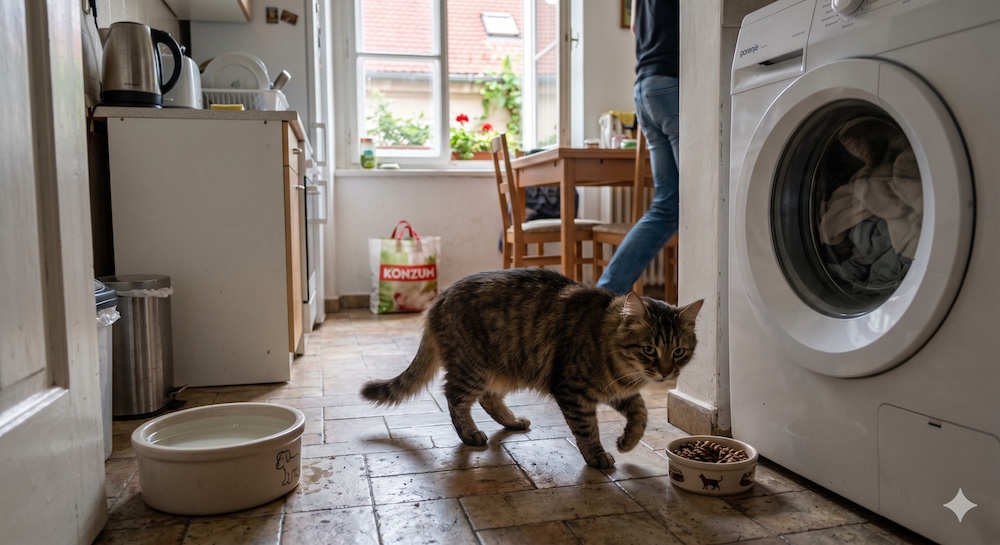
Behavioral Causes of Food Refusal
If your vet has ruled out medical causes, behavioral and environmental factors are the next area to investigate.
(💡 Food bowl placement matters more than most owners realize—noise, competing pets, and location all affect whether a cat will eat comfortably.)
1. Stress and Environmental Change
Cats are highly sensitive to environmental change. Moving house, a new baby, a new pet, renovation noise, a changed routine, or even rearranged furniture can trigger temporary food refusal in sensitive cats.
❗️ Common environmental triggers:
- Moving to a new home.
- New person or animal in the household.
- Change in feeding location or bowl.
- Increased noise or activity near feeding area.
- Owner’s absence (cats can go off food when their primary person is away).
- Building work or unusual sounds.
What to do: Maintain feeding routine and location as consistently as possible during transitions. Place the food bowl in a quiet, low-traffic area away from litter boxes. If a new pet has been introduced, ensure cats can eat separately without competition.
2. Food Aversion (Negative Association)
Cats can develop lasting aversions to foods they were eating when they felt unwell—even if the food itself was not the cause. This is a hardwired survival mechanism that is difficult to override.
How it develops: A cat eats their usual food, then becomes nauseous from an unrelated cause (a car journey, an illness, a medication). They associate the nausea with that food and refuse it permanently—even after recovery.
What to do: If a cat develops an aversion to their usual food during an illness, do not offer their “good” food while they are actively nauseous—you risk creating a permanent aversion to their regular diet. Offer a novel food or prescription recovery food during illness, and return to their regular food once they have fully recovered.
3. Learned Picky Eating
Some cats develop extreme food selectivity not from medical causes but from learned behavior—specifically, from owners who immediately provide alternatives whenever a meal is refused.
How it develops: Cat refuses meal → owner provides more palatable alternative → cat learns that refusing food produces better options. Over time, the cat’s acceptable food range narrows to a single brand, flavor, or texture.
🚨 Signs of learned picky eating:
- No weight loss or other health concerns.
- Cat accepts highly palatable foods (treats, human food, rotisserie chicken) while refusing their regular diet.
- Behavior developed gradually over months.
- No environmental or routine changes.
What to do: The “tough love” approach—offer the food, leave it for 20–30 minutes, then remove it without alternatives. Most healthy cats will eat within 1–2 days when they understand alternatives are not coming. Never use this approach with a cat that is already underweight, elderly, or medically compromised.
4. Food Texture or Temperature Preference
Cats that have eaten one type of food exclusively for a long time can become strongly imprinted on that specific format. A cat that has only eaten dry kibble may flatly refuse wet food on first introduction— not from illness, but from genuine unfamiliarity.
What to do:
- Introduce new textures gradually—mix a small amount of new food with the familiar food and increase the proportion over 10–14 days.
- Warm wet food slightly to increase aroma.
- Try different textures within wet food—pâté, shredded, chunks in gravy.
- Try different protein sources—a cat refusing chicken may accept salmon or turkey.
For more on transitions between food formats, our wet vs dry cat food guide covers the specific challenges of switching a dry-food cat to wet food.
5. Bowl Aversion
Cats have sensitive whiskers. Deep, narrow bowls cause “whisker fatigue”—physical discomfort when their whiskers touch the sides of the bowl while eating. This is a surprisingly common and overlooked cause of food refusal.
🚨 Signs of whisker fatigue:
- Cat pulls food out of the bowl onto the floor to eat it.
- Cat eats only from the center of the bowl and leaves the edges.
- Cat approaches the bowl and then backs away.
- Refuses food from a certain bowl but accepts it from a flat surface.
What to do: Switch to a wide, flat, shallow ceramic or stainless steel bowl—sometimes called a “whisker-friendly” bowl. Many cats resume normal eating within the first meal.
🐾 Wide & Shallow Cat Food Bowls 🐾
🥣 Whisker-Friendly Flat Bowls—Wide, shallow ceramic or stainless steel bowls eliminate whisker fatigue entirely. If your cat pulls food onto the floor or eats only from the bowl’s center, this is likely the fix. Chewy carries a wide range of flat bowl options across materials and sizes.
How to Tell Medical from Behavioral Causes
This is the most important distinction—because the response is completely different.
| Sign | Points to Medical | Points to Behavioral |
|---|---|---|
| Complete refusal of all food | ✅ | Possible but less common |
| Accepts treats but refuses meals | Sometimes | ✅ |
| Weight loss visible | ✅ | Rare |
| Vomiting or lethargy present | ✅ | ✗ |
| Started during illness | ✅ (aversion) | ✅ |
| Started after environment change | Possible | ✅ |
| Only refuses specific bowl | ✗ | ✅ |
| Developed gradually over months | Possible | ✅ (picky eating) |
| Sudden, complete change in healthy cat | ✅ | Less common |
When in doubt, see a vet first. Behavioral interventions applied to a cat with a medical cause waste time and allow conditions to progress.
Practical Steps to Take Right Now
If your cat has stopped eating, work through these steps in order:
Assess the timeline
– Less than 12 hours: monitor closely.
– 12–24 hours: try the interventions below.
– 24+ hours: call your vet.
– 48+ hours: veterinary visit today.Check for obvious medical signs
Look for vomiting, lethargy, unusual posture, signs of pain, straining in the litter box, or discharge from eyes and nose. Any of these warrant immediate veterinary contact.
Try warming the food
Warm wet food to just below body temperature (around 38°C / 100°F). The intensified aroma triggers appetite in cats with reduced smell or mild nausea. Many cats who refuse cold food will accept warmed food.
Change the environment
Move the bowl to a quiet location. If there are other pets, feed separately. Remove the bowl from proximity to litter boxes, appliances, or high-traffic areas.
Try a different bowl
Switch to a wide, flat ceramic or stainless steel plate. Eliminate the whisker fatigue variable.
Try a different texture or protein
Offer a small amount of a novel protein—something your cat has not eaten recently. Do not offer treats or human food as a substitute (this reinforces selective eating).
Do not wait beyond 48 hours
Even if you believe the cause is behavioral, a cat that has not eaten for 48 hours requires a vet visit to rule out hepatic lipidosis beginning to develop.
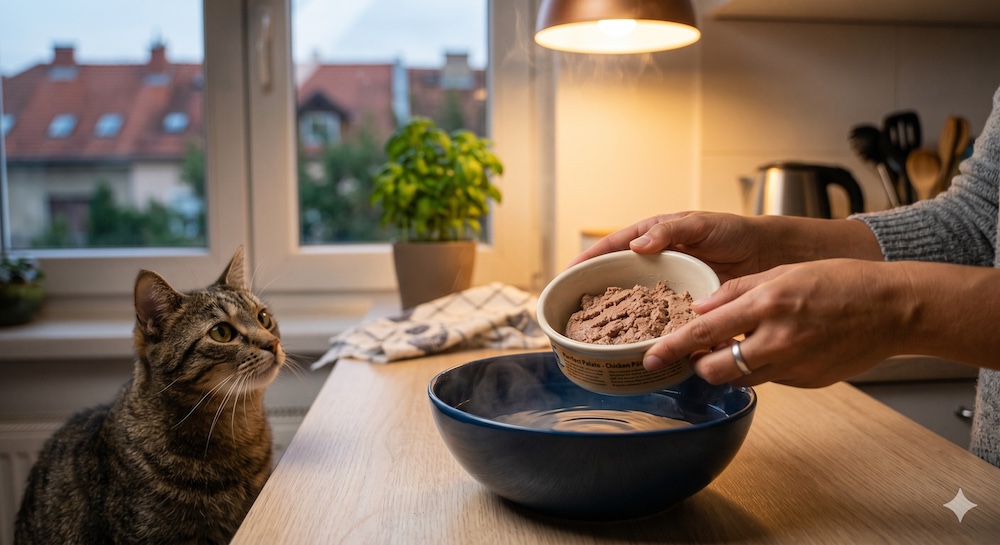
Back to step 3: A cat that approaches the bowl, sniffs, and walks away is not always being picky—often the food is simply too cold to trigger their appetite signal. Cats in the wild consume prey at body temperature, around 38°C (100°F). Refrigerated wet food sits at 4°C (39°F)—a significant difference that suppresses the appetite response in many cats, particularly seniors and cats recovering from illness. Warming the food for 10–15 seconds in the microwave or placing the bowl in warm water for a few minutes is the single most effective and overlooked tool for a cat that has gone off their food.
(💡 Warming wet food to just below body temperature is the single most effective first step for a cat with reduced appetite.)
🐾 Purina Pro Plan Adult Wet Cat Food 🐾
💧 Purina Pro Plan (Wet Cat Food)—High aroma, high moisture, named protein first. A strong starting food when trying a novel protein during refusal or illness—warming to just below body temperature dramatically increases acceptance for reluctant or recovering cats.
Feeding During Illness: Avoiding Aversion
One of the most overlooked aspects of caring for a sick cat is protecting their food preferences during recovery.
When a cat is nauseous or unwell, do not offer their regular food. The risk of creating a permanent food aversion to their staple diet is significant—and once established, these aversions are very difficult to reverse.
❗️ During illness:
- Offer a temporary diet of bland, novel foods (cooked plain chicken, veterinary recovery food).
- Never force-feed during active nausea.
- Offer small amounts frequently rather than full meals.
- Return to the regular diet only after your cat has fully recovered and is eating comfortably.
❕ After recovery: Reintroduce their regular food gradually, mixed with the recovery food, over 5–7 days.
When Food Refusal Signals a Dietary Problem
Sometimes a cat refusing food is not ill or stressed—they are simply communicating that something about their current food is not meeting their needs.
❓ Questions to ask:
- Has the formula changed recently? Many brands quietly reformulate without changing packaging—a changed smell or texture can trigger refusal.
- Is the food past its best date? Oxidized kibble smells and tastes rancid to a cat, even if it appears fine to you. Always store dry food in an airtight container.
- Has feeding frequency or timing changed? Cats thrive on routine. A change from two meals to one, or a significant shift in timing, can temporarily disrupt appetite.
- Is the food format still appropriate? A senior cat developing dental problems may need to transition from dry kibble to wet food. Our best cat food for senior cats covers the transition process.
Not sure if your cat is getting the right amount of food overall? Our how much to feed a cat guide covers exact daily portions for every format, weight, and life stage.
Conclusion: Never Wait More Than 48 Hours
Food refusal in cats is never trivial—but it is also usually resolvable once the cause is identified. The biggest mistake is waiting and hoping the problem resolves itself.
A cat refusing food for 48 hours or more is at risk for hepatic lipidosis regardless of whether the cause is medical or behavioral. Veterinary assessment after 24–48 hours of refusal is not overcautious—it is the appropriate response to the way cats’ metabolism works.
Key takeaways:
- ✅ 24 hours without eating → call your vet.
- ✅ 48 hours without eating → visit your vet today.
- ✅ Medical causes must be ruled out before behavioral interventions.
- ✅ Warm food to increase aroma as a first step.
- ✅ Switch to a flat, wide bowl to eliminate whisker fatigue.
- ✅ Do not offer alternatives during illness—protect their food preferences.
- ✅ Learned picky eating is real but never assume it without ruling out medical causes.
📝 Editor’s Note: Hepatic lipidosis timeline and mechanism were verified against the Merck Veterinary Manual. Chronic kidney disease prevalence and symptom progression were cross-referenced with the Journal of Feline Medicine and Surgery and Today’s Veterinary Practice.
🐾 Cat Water Fountains 🐾
💦 Flowing Water Fountains—Cats with kidney disease or urinary issues that suppress appetite benefit significantly from increased hydration. Moving water is far more appealing than a still bowl to most cats—and consistent water intake reduces kidney workload during recovery and illness.
👉🏼 Full Cat Nutrition Guide — complete feline nutrition for every life stage
👉🏼 Wet vs Dry Cat Food — switching formats to improve appetite
👉🏼 Best Cat Food for Senior Cats — senior-specific formulas for aging appetites and kidney health
👉🏼 How Much to Feed a Cat — confirming correct daily portions

🐈 Browse cat food, treats, toys, health products, supplements, litter and everything else your cat needs 🐾

🐈 Browse raw cat food, freeze-dried meals, toppers and natural treats from Indiana farms 🐾

🐈 Browse cat food, treats, veterinary diets, supplements and everything else your feline needs 🐾
(This post contains affiliate links. If you purchase through our links, we may earn a small commission at no extra cost to you. This never influences our editorial opinions.)
FAQ: Why Is My Cat Not Eating — Your Questions Answered
How long can a cat go without eating?
A healthy adult cat can survive without food for 1–2 weeks in terms of biological survival— but this is dangerously misleading as a practical guideline. Hepatic lipidosis (fatty liver disease) can develop in just 48–72 hours of inadequate food intake, particularly in overweight cats. The practical guideline is: contact your vet after 24 hours, visit your vet after 48 hours. Do not wait for visible symptoms of liver failure.
My cat is eating treats but refusing their food. Is this a problem?
Yes, it is significant. A cat that accepts treats but refuses regular meals is telling you one of two things: their regular food has been associated with a negative experience (aversion), or they have learned that refusing meals produces more palatable alternatives. However, dental pain can also present this way—treats are often softer than regular food. Rule out dental disease before assuming it is behavioral.
Could my cat be refusing food because of the bowl?
Absolutely—this is more common than most owners realize. Deep, narrow bowls cause whisker fatigue, a real physical discomfort from whisker compression during eating. Signs include pulling food out of the bowl to eat it on the floor, eating only from the center, and refusing the bowl but accepting food from a flat plate. Switch to a wide, shallow ceramic or stainless steel plate and many cats resume normal eating within the first meal.
My cat just had surgery. Why aren’t they eating?
Post-surgical food refusal is extremely common and expected for 12–24 hours following general anesthesia due to residual nausea. Most cats resume eating within 24 hours. If your cat has not eaten within 24 hours of surgery, contact your veterinarian—post-operative complications including pain and infection can suppress appetite beyond the normal recovery window.
Can stress cause a cat to stop eating?
Yes, stress is one of the most common behavioral causes of food refusal in cats. Cats are highly sensitive to environmental change—a new pet, a house move, building work, or even furniture rearrangement can trigger temporary food refusal. Stress-related food refusal typically resolves within 1–3 days once the cat has adjusted. However, if refusal extends beyond 48 hours regardless of cause, veterinary assessment is warranted.
Is it normal for cats to eat less in hot weather?
Mild appetite reduction in hot weather is normal in cats, as in most animals—higher temperatures reduce caloric demand. However, significant food refusal in hot weather combined with lethargy, panting, or vomiting can indicate heat stress or dehydration, which warrants veterinary attention. Ensure fresh, cool water is always available, especially in summer.