
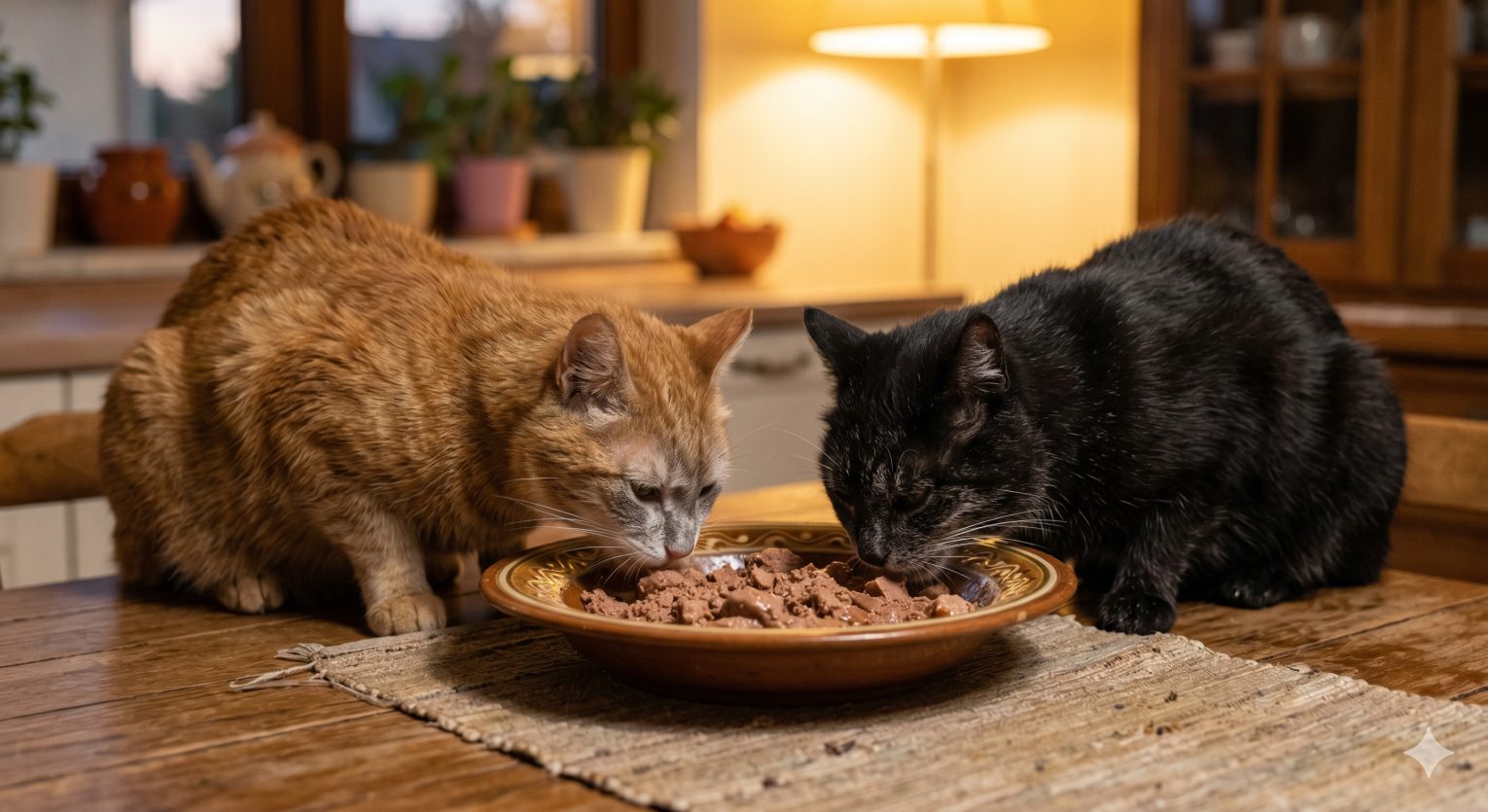
The best cat food for senior cats prioritizes three things: highly digestible animal protein to prevent muscle loss, increased moisture to support aging kidneys, and controlled phosphorus levels to reduce the workload on a cat’s most vulnerable organ. Brands consistently recommended by veterinary nutritionists for senior cats include Hill’s Science Diet Senior, Royal Canin Aging, and Purina Pro Plan Prime Plus—all available in wet formulas that deliver the hydration aging cats critically need.
Senior cats are not simply older adult cats. From around 7 years of age, their metabolism, digestive efficiency, kidney function, and nutritional requirements shift in ways that make the right food choice genuinely consequential. Kidney disease alone is the leading cause of death in domestic cats—and diet is one of the few levers owners can directly control.
Senior cat nutrition builds on the same biological foundations as all feline feeding— but with specific adjustments for aging. Our cat nutrition guide covers the complete picture of obligate carnivore nutrition, label reading, and life-stage feeding before diving into senior-specific picks. For breed-specific considerations before your cat reaches senior age, see best cat food by breed.
Table of Contents
When Is a Cat Considered Senior?
The age at which a cat enters their senior years depends on breed and body size—but general veterinary guidelines define:
- Mature/Middle-aged: 7–10 years.
- Senior: 11–14 years.
- Geriatric: 15+ years.
Many owners and even some food brands use “senior” loosely to mean any cat over 7—which is the standard we use throughout this guide, as this is when meaningful metabolic and health changes begin.
Large breeds age faster: A Maine Coon or Norwegian Forest Cat may show senior health markers by 8–9 years. Small domestic breeds like the Siamese can remain metabolically “adult” until 10–11 years.
What Changes in a Senior Cat’s Body
Understanding the physical changes of aging explains why food choices matter so much in these years.
Kidney Function Declines
The kidneys are the most vulnerable organ in the aging cat. By age 15, approximately 30–40% of domestic cats have some degree of chronic kidney disease (CKD). The kidneys filter waste products, regulate hydration, and maintain blood pressure—and they lose efficiency gradually, often without obvious symptoms until significant damage has occurred.
Diet directly impacts kidney workload. Controlled phosphorus, adequate hydration, and high-quality protein all reduce the burden on aging kidneys.
📰 The prevalence of chronic kidney disease in aging cats—affecting an estimated 30–40% of cats by age 15—is documented in the Journal of Feline Medicine and Surgery and summarized by Today’s Veterinary Practice, both indicating CKD as one of the most common conditions diagnosed in senior feline patients through routine bloodwork.
Muscle Mass Decreases
Sarcopenia—age-related muscle loss—affects cats just as it affects humans. Senior cats that do not receive adequate high-quality protein begin breaking down muscle tissue for energy, accelerating weakness, reducing mobility, and shortening lifespan.
The persistent myth: Many owners still believe senior cats need less protein to protect their kidneys. Current veterinary consensus has largely reversed this position. Healthy senior cats—those without diagnosed kidney disease—need the same or higher protein than adults, with greater digestibility. Protein restriction is only appropriate for cats with documented, advanced kidney disease, as directed by a veterinarian.
📰 The shift away from routine protein restriction in healthy senior cats reflects updated veterinary consensus reported through AAHA feline life stage guidelines, which distinguish between healthy aging cats—who benefit from maintained or increased high-quality protein to counter sarcopenia—and cats with diagnosed advanced kidney disease, where restriction remains appropriate only under direct veterinary supervision.
Digestive Efficiency Reduces
Senior cats produce fewer digestive enzymes and have reduced intestinal absorption efficiency. This means they extract fewer nutrients per gram of food consumed—which is why the quality and digestibility of the protein source matters more, not less, as cats age.
For seniors with digestive sensitivity alongside age-related changes, our sensitive stomach cat food guide covers formulas appropriate for older cats.
Appetite and Thirst Drive Decrease
Aging cats frequently eat less—whether from dental pain, reduced sense of smell, cognitive changes, or simply reduced hunger drive. A cat that is eating less must receive higher nutritional density per meal.
Thirst drive, already low in all cats, decreases further with age—making wet food’s passive hydration benefit increasingly critical.
(🩺 Vet’s Note: “The two most impactful dietary changes I recommend for cats over 7 are: switch to primarily wet food if you haven’t already, and ensure the protein source is named and highly digestible. Those two changes alone significantly reduce kidney workload and slow muscle loss—the two biggest threats to senior cat longevity”—LovingPetsGuide Veterinary Advisor.)
What to Look for in Senior Cat Food
✅ Must Have
| High-quality named animal protein: Named species first—”Chicken,” “Salmon,” “Turkey.” Not “poultry,” “fish,” or “meat.” Senior cats need protein that is both high in quantity and highly bioavailable. |
| Wet food format as primary diet: Hydration is the single most important dietary factor for kidney health. Wet food provides 70–80% moisture per serving passively. For a senior cat whose kidneys are under increasing pressure, this is not a preference—it is a health requirement. For a full breakdown of why moisture content matters so critically, our wet vs dry cat food guide covers the science in detail. |
| Controlled phosphorus: Phosphorus accelerates kidney disease progression when consumed in excess. Senior cat formulas should list phosphorus content in the guaranteed analysis—look for formulas that are explicitly lower in phosphorus than standard adult foods. |
| Omega-3 fatty acids: DHA and EPA from fish oil reduce systemic inflammation, support cognitive function, and benefit joint and kidney health. Look for fish oil or salmon oil in the ingredient list. |
| Taurine explicitly listed: Non-negotiable at every life stage. Its absence is a red flag regardless of brand or price point. |
(🧾 AAFCO “complete and balanced” statement for adult maintenance or all life stages.)
❌ Avoid
| Unnamed protein sources: “Meat meal,” “poultry by-products,” or “animal digest” without a named species signal lower-quality, less digestible protein that increases kidney workload. |
| High phosphorus content: Some budget senior foods compensate for lower protein quality by increasing overall phosphorus—the opposite of what aging kidneys need. |
| Artificial preservatives (BHA, BHT): Chemical preservatives add unnecessary metabolic burden in an already stressed system. Choose naturally preserved formulas. |
| Excessive carbohydrates: Senior cats have even less metabolic capacity for carbohydrates than adults. High carbohydrate dry foods contribute to obesity and blood sugar dysregulation. |
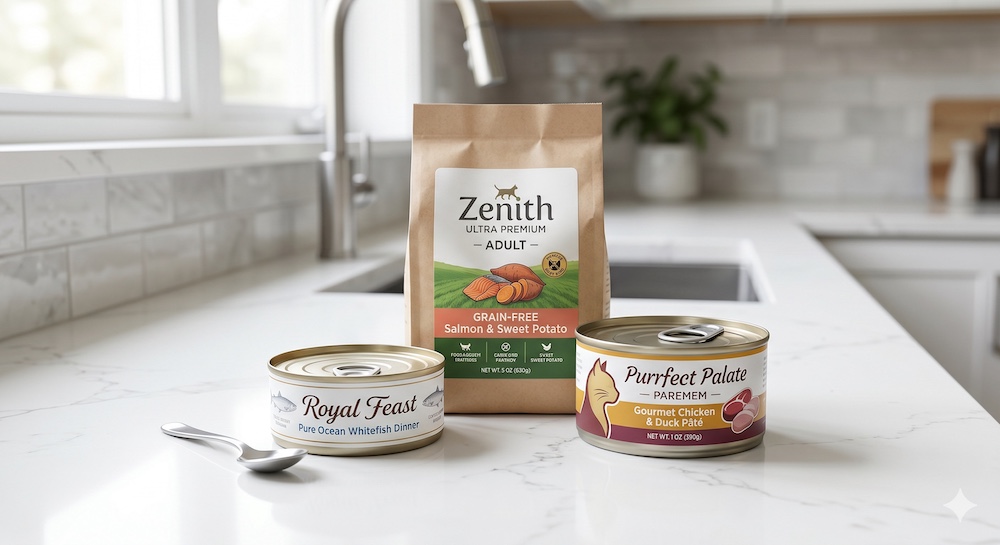
Our Top Picks: Best Senior Cat Food
These recommendations are based on ingredient quality, nutritional profile, veterinary endorsement, and consistent palatability for aging cats.
Not all senior formulas are equal—these picks consistently deliver on protein quality, phosphorus control, and palatability for aging appetites.
🥇 Best Overall: Hill’s Science Diet Adult 7+ Youthful Vitality
Hill’s is the most consistently vet-recommended senior cat food brand, formulated by board-certified veterinary nutritionists with a focus on measurable health outcomes.
Key features:
- Chicken as first ingredient.
- Clinically proven antioxidant blend.
- Controlled phosphorus levels.
- Added omega-3 fatty acids.
- Available in wet and dry formats.
- AAFCO approved for adult maintenance.
✅ Vet’s most-recommended senior brand.
✅ Clinically tested digestibility.
✅ No artificial colors, flavors, or preservatives.
✅ Consistent formula—no random ingredient changes.
❌ Higher price point than budget options.
❌ Not ideal for cats with chicken intolerance.
Best for: Healthy senior cats aged 7+ looking for a science-backed maintenance formula.
🥈 Best for Kidney Support: Royal Canin Renal Support (Wet)
For cats with diagnosed or suspected kidney disease, Royal Canin Renal Support is the most widely prescribed veterinary therapeutic diet for feline kidney disease worldwide.
Key features:
- Specifically formulated for cats with chronic kidney disease.
- Very low phosphorus content.
- High-quality digestible protein at controlled levels.
- Enhanced palatability for cats with reduced appetite.
- Available in multiple texture variants.
- Requires veterinary recommendation for therapeutic version.
✅ Gold standard for kidney disease management.
✅ Multiple texture options for picky eaters.
✅ Proven palatability in sick cats.
✅ Phosphorus restricted to therapeutic levels.
❌ Requires vet recommendation for therapeutic version.
❌ Higher cost than standard senior formulas.
Best for: Senior cats with diagnosed chronic kidney disease or elevated kidney values on bloodwork.
🥉 Best High-Protein Option: Purina Pro Plan Prime Plus Adult 7+
Purina Pro Plan is backed by more feeding trial research than almost any other brand. The Prime Plus formula is specifically engineered for cats over 7 with a focus on muscle mass preservation.
Key features:
- Real chicken or salmon as first ingredient.
- High protein content for muscle maintenance.
- Live probiotics added post-cooking.
- Omega-3 and omega-6 fatty acids.
- AAFCO approved.
- Available in wet and dry formats.
✅ Exceptionally high protein quality.
✅ Live probiotics support digestive health.
✅ Excellent palatability for picky seniors.
✅ Backed by extensive research.
❌ Higher phosphorus than Royal Canin Renal.
❌ Not appropriate for cats with advanced kidney disease.
Best for: Healthy senior cats with no kidney diagnosis who need high-quality protein to maintain muscle mass.
💰 Best Budget Pick: Purina ONE Vibrant Maturity 7+
For owners who need results without the premium price tag, Purina ONE Vibrant Maturity is the most reliable affordable senior option—consistently outperforming generic store brands on protein quality and palatability.
Key features:
- Real turkey or chicken as first ingredient.
- No artificial colors or flavors.
- Added vitamins and minerals for senior health.
- AAFCO approved.
- Widely available.
✅ Significantly more affordable.
✅ Named protein as first ingredient.
✅ No artificial additives.
❌ Less precise senior-specific formulation.
❌ Lower omega-3 content than premium options.
Best for: Budget-conscious owners with healthy senior cats and no specific health concerns.
Comparison Table: At a Glance
| Brand | Format | Protein | Phosphorus | Best For | Rating |
|---|---|---|---|---|---|
| Hill’s Science Diet 7+ | Wet + Dry | High | Controlled | Overall best | ⭐⭐⭐⭐⭐ |
| Royal Canin Renal | Wet | Controlled | Very Low | Kidney disease | ⭐⭐⭐⭐⭐ |
| Purina Pro Plan 7+ | Wet + Dry | Very High | Moderate | Muscle maintenance | ⭐⭐⭐⭐ |
| Purina ONE 7+ | Wet + Dry | Moderate | Standard | Budget pick | ⭐⭐⭐⭐ |
For a full WSAVA-ranked comparison of all major brands, see best cat food brands.
Senior Cat Feeding Schedule and Portions
Portion control remains important in senior cats—but the approach shifts from weight management to ensuring adequate intake.
General daily wet food guidelines for senior cats:
| Cat Weight | Daily Wet Food | Meals Per Day |
|---|---|---|
| 2–3 kg (4–6 lb) | 80–100 g | 2–3 |
| 3–4 kg (6–9 lb) | 100–130 g | 2 |
| 4–5 kg (9–11 lb) | 130–160 g | 2 |
| 5+ kg (11+ lb) | Consult vet | 2 |
For senior cats with reduced appetite: Smaller, more frequent meals (3 times daily) are often better tolerated than two larger meals. Warming wet food to just below body temperature significantly improves palatability for cats with diminished smell.
For a complete breakdown of portion sizes across all life stages and food types, our how much to feed a cat guide covers every scenario in detail.
Feeding Senior Cats With Common Health Conditions
Chronic Kidney Disease (CKD)
The most common senior cat health condition. Dietary management is central to slowing progression.
Key dietary principles:
- Increase moisture intake dramatically—wet food exclusively or close to it.
- Reduce phosphorus intake.
- Maintain adequate high-quality protein (restriction only in advanced stages as directed by your vet).
- Consider a prescription kidney diet (Hill’s k/d, Royal Canin Renal, Purina NF) for confirmed diagnosis.
Never reduce protein based on a CKD diagnosis without veterinary guidance. The current evidence supports protein restriction only in advanced stages—premature restriction accelerates muscle wasting.
Hyperthyroidism
Hyperthyroidism is the second most common senior cat health condition. Affected cats have accelerated metabolism, often losing weight despite excellent appetite.
Key dietary principles:
- High caloric density to meet elevated metabolic demands.
- High-quality protein to slow muscle loss.
- Iodine restriction (Hill’s y/d) is an option but requires strict adherence— every meal must be iodine-controlled.
Diabetes
Feline diabetes is closely linked to chronically high carbohydrate intake and obesity. Dietary management is often as important as insulin therapy.
Key dietary principles:
- Very low carbohydrate diet—wet food is strongly preferred over dry.
- High protein, moderate fat.
- Consistent meal timing to coordinate with insulin administration.
- Prescription low-carb diets are available and frequently recommended.
Dental Disease
Dental disease affects the majority of cats over 7. Pain while chewing leads to reduced food intake and weight loss.
Key dietary principles:
- Soft wet food textures ease discomfort.
- Pâté-style formulas require less chewing than chunk-based formats.
- Dental cleaning under anesthesia is often more effective than dietary changes alone for advanced dental disease.
(🩺 Vet’s Note: “Dental disease is the most commonly missed reason for weight loss in senior cats. Before changing food, always rule out oral pain—a cat that stops eating their usual food may simply be telling you their mouth hurts, not that they don’t like the food anymore” —LovingPetsGuide Veterinary Advisor.)
How to Switch a Senior Cat to New Food
Senior cats are the most resistant to dietary change of any life stage. A food switch that takes 10 days in a young cat may take 3–4 weeks in a senior.
Extended senior transition timeline:
| Day | Old Food | New Food |
|---|---|---|
| 1–4 | 80% | 20% |
| 5–8 | 60% | 40% |
| 9–12 | 40% | 60% |
| 13–16 | 20% | 80% |
| 17+ | 0% | 100% |
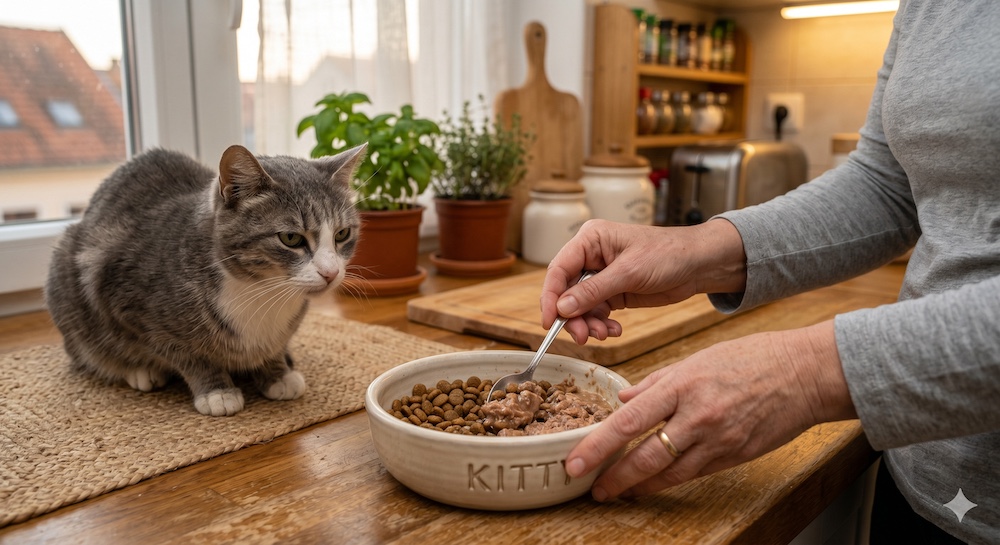
🐈 Tips for resistant seniors:
- Warm food to just below body temperature.
- Add a small amount of low-sodium tuna water or chicken broth to wet food.
- Try multiple textures—some seniors who refuse pâté accept shredded or flaked.
- Never force a switch faster than your cat accepts—hepatic lipidosis (fatty liver disease) can develop when a cat stops eating for even 2–3 days.
📰 Hepatic lipidosis is documented by the Merck Veterinary Manual (merckvetmanual.com) as the most common acquired feline liver disease, triggered when inadequate caloric intake forces rapid fat mobilization that the liver cannot process quickly enough. The Cornell Feline Health Center notes this risk applies with particular urgency to senior cats, who often carry less metabolic reserve than younger adults during any period of reduced appetite.
(💡 Senior cats need the slowest food transitions of any life stage—patience here prevents refusal and dangerous caloric drops.)
If your senior cat is consistently refusing food or eating significantly less than usual, this warrants a veterinary visit—it may signal an underlying health issue rather than simple food preference. Our why is my cat not eating guide covers the distinction between preference and medical causes.
Regular Veterinary Monitoring for Senior Cats
Diet alone is not enough to manage senior cat health. Annual bloodwork (increasing to every 6 months from age 10) allows early detection of kidney disease, thyroid issues, diabetes, and anemia—all of which require dietary adjustments.
❓What to monitor annually:
- BUN, creatinine, SDMA (kidney function).
- T4 (thyroid function).
- Blood glucose (diabetes).
- CBC (complete blood count).
- Urinalysis (kidney and bladder health).
- Body weight and muscle condition scoring.
Early detection of kidney disease—before clinical symptoms appear—allows dietary intervention that can add years to a cat’s healthy life.
Conclusion: The Senior Years Deserve the Best Bowl
The investments you make in your cat’s nutrition from age 7 onwards have a compounding effect on every year that follows. Kidney disease, muscle loss, and cognitive decline are not inevitable—they are influenced by diet in ways that are genuinely within your control.
Start with wet food as the primary diet, ensure protein quality is high and phosphorus is controlled, schedule annual bloodwork, and adjust as your vet advises. Those steps, consistently applied, represent the most evidence-based approach to giving your senior cat the longest, healthiest life possible.
Key takeaways:
- ✅ Wet food as primary diet supports kidney health.
- ✅ Senior cats need more digestible protein—not less.
- ✅ Control phosphorus—it directly impacts kidney workload.
- ✅ Annual bloodwork catches kidney disease early.
- ✅ Reduce meal size but increase frequency if appetite drops.
- ✅ Warm wet food to improve palatability for aging senses.
- ✅ Never restrict protein without a confirmed diagnosis.
📝 Editor’s Note: Chronic kidney disease prevalence data was cross-referenced with the Journal of Feline Medicine and Surgery and Today’s Veterinary Practice. Senior protein guidance reflects current AAHA feline life stage consensus. Hepatic lipidosis risk information was verified against the Merck Veterinary Manual and Cornell Feline Health Center.
👉🏼 Cat Nutrition Guide — complete feline nutrition from kittenhood to senior years.
👉🏼 Wet vs Dry Cat Food — why wet food matters more as cats age.
👉🏼 How Much to Feed a Cat — senior portion sizes by weight and health status.
👉🏼 Why Is My Cat Not Eating — when senior food refusal signals a health issue.

🐈 Browse cat food, treats, toys, health products, supplements, litter and everything else your cat needs 🐾

🐈 Browse raw cat food, freeze-dried meals, toppers and natural treats from Indiana farms 🐾

🐈 Browse cat food, treats, veterinary diets, supplements and everything else your feline needs 🐾
(This post contains affiliate links. If you purchase through our links, we may earn a small commission at no extra cost to you. This never influences our editorial opinions.)
FAQ: Best Cat Food for Senior Cats — Your Questions Answered
At what age should I switch my cat to senior food?
Most cats benefit from a senior-specific formula from around 7 years of age—when kidney function begins to decline and muscle mass preservation becomes a priority. However, if your cat is healthy and thriving on a high-quality adult formula at 7, there is no urgent need to switch until your vet’s annual bloodwork indicates changing needs. Large breeds may show senior markers earlier; small breeds may remain on adult food comfortably until 9–10 years.
Should I feed my senior cat wet or dry food?
Wet food is strongly recommended as the primary diet for senior cats. Aging kidneys require maximum hydration support, and wet food delivers 70–80% moisture per serving passively. Dry food can be included as a small enrichment component but should not be the primary caloric source for a senior cat with any kidney concerns.
Do senior cats need less protein?
Healthy senior cats actually need the same or more protein than adults—but it must be highly digestible. The persistent belief that protein harms aging kidneys applies only to cats with advanced, diagnosed CKD under veterinary supervision. For healthy seniors, adequate high-quality protein is the primary tool against muscle wasting.
What is the best food for a senior cat with kidney disease?
For cats with diagnosed CKD, prescription kidney diets—Hill’s k/d, Royal Canin Renal, or Purina NF—are the most evidence-backed options. These formulas have controlled phosphorus, adjusted protein levels, and are formulated specifically for kidney disease management. Always follow your veterinarian’s specific guidance, as the stage of kidney disease determines the appropriate level of dietary restriction.
My senior cat has lost weight. Should I change their food?
Weight loss in a senior cat warrants a veterinary visit before any dietary changes. Hyperthyroidism, diabetes, kidney disease, dental pain, and cancer are all common causes of senior cat weight loss—and each requires a different dietary response. Changing food without identifying the cause may delay necessary diagnosis and treatment.
Can I feed my senior cat kitten food to help them gain weight?
This is sometimes recommended by vets for very underweight senior cats who need caloric density—but only under veterinary supervision. Kitten food has higher phosphorus content than senior formulas, which can accelerate kidney disease in cats with existing kidney issues. Never use kitten food long-term for a senior cat without explicit veterinary guidance.