
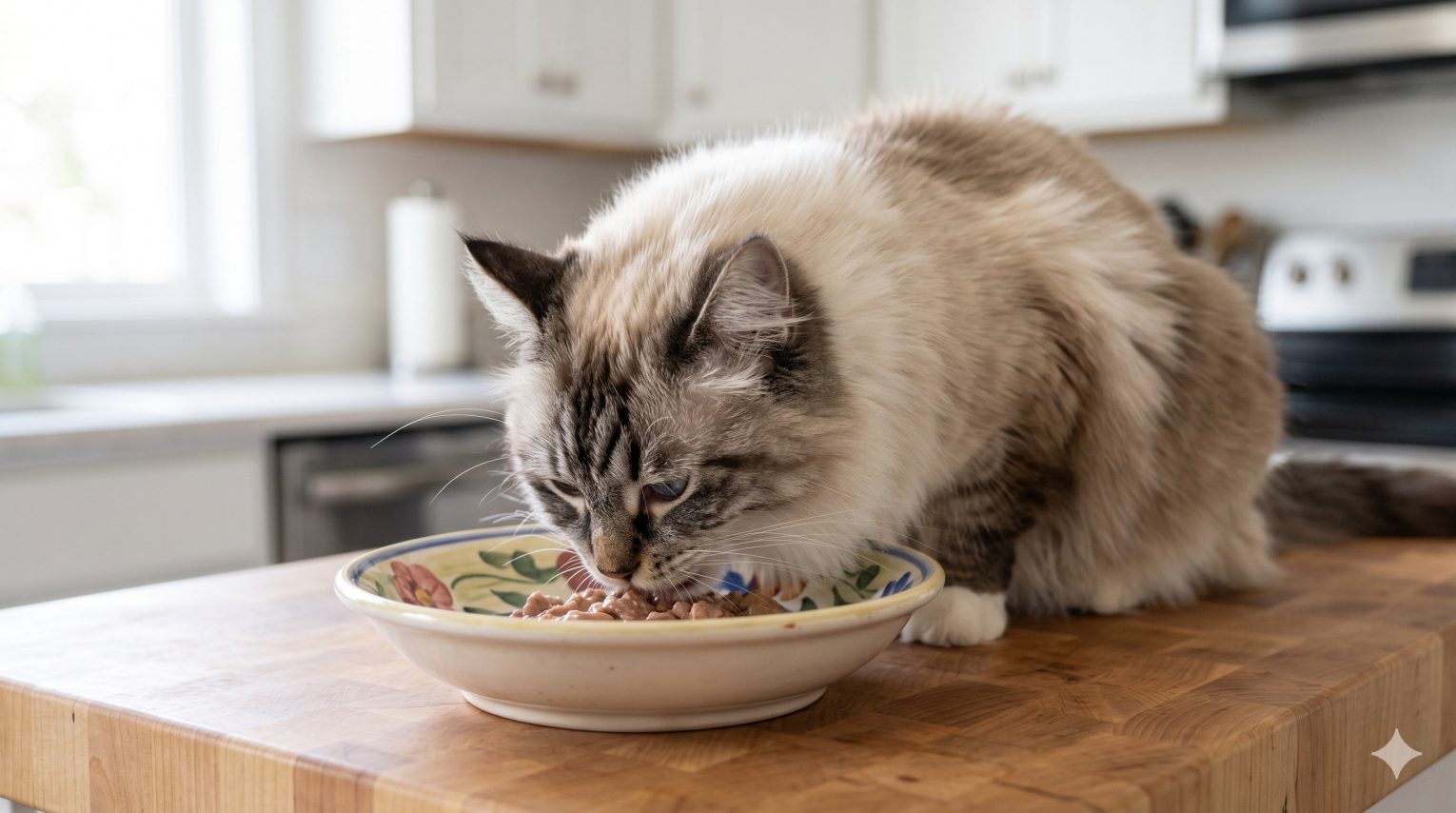
The best cat food for sensitive stomachs is highly digestible, contains a named animal protein as the first ingredient, avoids common trigger ingredients like artificial additives and low-quality by-products, and includes prebiotic fiber or probiotics to support the gut microbiome. Top vet-recommended picks include Purina Pro Plan Sensitive Skin & Stomach, Hill’s Science Diet Sensitive Stomach & Skin, and Royal Canin Digestive Care—all formulated with clinically proven digestibility and consistently recommended by veterinary gastroenterologists.
Before choosing a sensitive stomach food, the most important step is ruling out a medical cause for the digestive symptoms. Occasional vomiting once or twice a month in an otherwise healthy cat may not require dietary intervention. Frequent vomiting, chronic diarrhea, blood in stools, or weight loss alongside digestive symptoms always warrants a veterinary assessment before food changes—because feeding a better food to a cat with inflammatory bowel disease, pancreatitis, or intestinal lymphoma delays diagnosis and treatment.
Sensitive stomach food selection builds on the fundamentals of feline nutrition. For the complete picture of cat macronutrient requirements, food types, and label reading, our cat nutrition guide covers the foundation before you narrow down by health need.
(💡 The right food for a sensitive stomach is highly digestible, free of trigger ingredients, and supported by actual clinical digestibility data—not just marketing claims.)
Table of Contents
Rule Out Medical Causes First
Digestive symptoms in cats have a spectrum of causes—from mild food sensitivity to serious gastrointestinal disease. Choosing the right food matters far less than knowing which category your cat is in.
❓When to see a vet before changing food:
- Vomiting more than twice per week consistently.
- Diarrhea lasting more than 48–72 hours.
- Blood in vomit or stool.
- Weight loss alongside digestive symptoms.
- Lethargy or reduced appetite accompanying GI signs.
- Symptoms that worsen despite food changes.
❗️Common medical causes of digestive symptoms:
Inflammatory Bowel Disease (IBD): The most common chronic GI condition in cats. IBD involves chronic inflammation of the gastrointestinal tract and requires veterinary diagnosis—often via biopsy—and management with prescription diets and/or medication. Standard sensitive stomach foods are insufficient for moderate to severe IBD.
Intestinal Lymphoma: The most common GI cancer in cats, often mimicking IBD clinically. Distinguishing lymphoma from IBD frequently requires biopsy rather than just food changes. A cat with chronic vomiting and weight loss that does not improve on a sensitive stomach diet needs biopsy, not another food change.
Pancreatitis: Feline pancreatitis is underdiagnosed because cats show minimal obvious symptoms. Chronic pancreatitis causes intermittent vomiting, reduced appetite, and weight loss—symptoms often attributed to food sensitivity.
Parasites: Giardia, coccidia, and roundworms cause chronic diarrhea and digestive upset. A fecal test rules this out quickly before any dietary intervention.
(🩺 Vet’s Note: “The most common mistake I see is owners cycling through five different ‘sensitive stomach’ foods over 18 months while their cat has IBD or early lymphoma that needs diagnosis and treatment. A dietary trial is appropriate for mild, intermittent symptoms in an otherwise healthy cat—but persistent symptoms in a cat losing weight need a workup, not a new bag of food”—LovingPetsGuide Veterinary Advisor.)
What Makes a Cat Food Good for Sensitive Stomachs
✅ What to Look For
| High digestibility: The most important factor. Highly digestible proteins and carbohydrates reduce the residue reaching the large intestine—less fermentation, less gas, firmer stools. The gold standard for verifying digestibility is clinical feeding trial data, not label claims. Rice is the most consistently digestible carbohydrate source for sensitive cats. Chicken and turkey are the most digestible protein sources for most cats without confirmed chicken sensitivity. |
| Named animal protein as the first ingredient: “Chicken,” “Turkey,” “Salmon”—not “poultry,” “fish meal,” or “meat and bone meal.” |
| Prebiotic fiber: Prebiotics (psyllium husk, chicory root, beet pulp in appropriate amounts) feed beneficial gut bacteria and support microbiome health. Distinct from dietary fiber—prebiotics are fermentable and specifically support the gut flora that maintain digestive stability. |
| Probiotics: Live beneficial bacteria that colonize the gut and compete with pathogenic bacteria. Purina Pro Plan is unique among mainstream cat foods in including live probiotics—most foods kill probiotic bacteria during processing and then add them post-production at Purina. |
| Limited ingredient count: For cats with suspected food sensitivities, fewer ingredients means fewer potential triggers. Limited ingredient diets (LID) with a single protein source and minimal additives simplify the elimination process. |
| Wet food format: Wet food is generally preferable for digestively sensitive cats—lower carbohydrate content, higher moisture, and less processing than dry kibble. Cats with chronic vomiting particularly benefit from the higher moisture content reducing the concentration of digestive irritants. |
❌ What to Avoid
- Artificial colors, flavors, and preservatives (BHA, BHT, ethoxyquin).
- High dietary fat content—excess fat exacerbates digestive sensitivity in many cats.
- Multiple protein sources in a single formula— complicates identifying allergens.
- Lactose—most adult cats are lactose intolerant.
- High fiber content above what is appropriate for cats—too much insoluble fiber can worsen diarrhea.
- Novel ingredients the cat has never eaten (during an active digestive episode).
Our Top Picks: Best Cat Food for Sensitive Stomachs
🥇 Best Overall: Purina Pro Plan Adult Sensitive Skin & Stomach — Salmon & Rice (Wet)
Purina Pro Plan Sensitive Skin & Stomach is the most consistently vet-recommended formula for cats with digestive and skin sensitivities. Salmon as the first ingredient makes it appropriate for cats with chicken sensitivity— the most common feline protein trigger—and the live probiotic inclusion is unique among mainstream competitive formulas.
Key features:
- Salmon as first ingredient—novel protein for cats with chicken sensitivity.
- Live probiotics for gut microbiome support.
- Prebiotic fiber for digestive balance.
- High digestibility—AAFCO feeding trial approved.
- No artificial colors, flavors, or preservatives.
- Available in wet and dry formats.
✅ Most consistently vet-recommended formula.
✅ Live probiotics—genuinely unique among mainstream brands.
✅ Salmon protein—appropriate for chicken-sensitive cats.
✅ AAFCO feeding trial data.
✅ Both wet and dry available.
❌ Contains salmon (concern for fish-sensitive cats).
❌ Premium price point.
🏆 Best for: Cats with intermittent vomiting or loose stools without confirmed food allergy— the live probiotic inclusion makes this the strongest starting formula.
🐾 Purina Pro Plan Sensitive Skin & Stomach 🐾
🐈 Salmon & Rice (Dry/Wet) — Sensitive Stomach — Live probiotics, salmon as the first ingredient, and prebiotic fiber—the most complete sensitive stomach formula available from a research-backed brand. Available in both wet and dry formats.
🥈 Best Science-Backed: Hill’s Science Diet Sensitive Stomach & Skin
Hill’s Sensitive Stomach & Skin is formulated by board-certified veterinary nutritionists and has clinically proven digestibility data behind it—not just label claims. It is the formula most frequently recommended by veterinary internists for sensitive cats where clinical evidence is the priority.
Key features:
- Clinically proven digestibility.
- Prebiotic fiber for microbiome support.
- Vitamin E and omega-6 for skin support.
- No artificial additives.
- AAFCO feeding trial approved.
- Available in adult and senior formulas.
✅ Board-certified nutritionist formulation.
✅ Clinically proven digestibility—published data.
✅ Gentle on sensitive systems.
✅ Senior version available for older cats.
❌ Chicken as first protein (concern for chicken-sensitive cats).
❌ Higher price than budget options.
🏆 Best for: Cats where the owner wants maximum clinical evidence backing—particularly recommended after a veterinary assessment has ruled out IBD or other medical causes.
🐾 Hill’s Science Diet Sensitive Stomach & Skin 🐾
🐈 Hill’s Science Diet (Dry) — Clinically Proven Digestibility — Formulated by board-certified veterinary nutritionists with clinically proven digestibility data—not just label claims. The go-to recommendation from veterinary internists for sensitive cats.
🥉 Best for Chronic Digestive Issues: Royal Canin Digestive Care
Royal Canin Digestive Care is the most targeted formula for cats with chronic digestive sensitivity— engineered specifically to optimize stool quality, reduce digestive transit time variability, and support the intestinal barrier function.
Key features:
- Highly digestible proteins selected for maximum GI tolerance.
- Prebiotics (fructo-oligosaccharides) for microbiome support.
- Exclusive fiber blend for optimal stool quality.
- Precise nutrient ratios for intestinal health.
- AAFCO approved.
✅ Most targeted GI formula in the mainstream range.
✅ Specific fiber blend for stool quality.
✅ Prebiotics included.
✅ Available in wet and dry.
❌ Ingredient list less “clean” than Hill’s.
❌ Contains some by-products.
❌ More expensive than Purina.
🏆 Best for: Cats with chronic loose stools or frequent soft stool episodes where stool quality is the primary concern alongside general digestive sensitivity.
🐾 Royal Canin Digestive Care 🐾
🐈 Royal Canin (Dry/Wet) — Chronic Digestive Support — The most targeted mainstream formula for stool quality and digestive stability—specific fiber blend and prebiotics designed for cats with recurring soft stools or digestive inconsistency.
💰 Best Budget: Purina ONE Sensitive Skin & Stomach
For owners who need proven sensitive stomach performance without the premium price, Purina ONE Sensitive Skin & Stomach shares the same research infrastructure as Pro Plan at a significantly lower price point.
Key features:
- Real turkey as first ingredient.
- No artificial colors or flavors.
- Omega-6 for skin and coat support.
- Gentle fiber blend.
- AAFCO approved.
✅ Named turkey protein as first ingredient.
✅ No artificial additives.
✅ Significantly more affordable.
✅ Widely available.
❌ No live probiotics (unlike Pro Plan).
❌ Less clinical research backing than Pro Plan.
🏆 Best for: Budget-conscious owners with cats showing mild intermittent digestive sensitivity and no confirmed food allergy or serious GI condition.
🐾 Purina ONE Sensitive Skin & Stomach 🐾
🐈 Purina ONE (Dry) — Budget Sensitive Stomach — Real turkey as the first ingredient with no artificial additives—Purina’s sensitive formula at a significantly lower price than Pro Plan. Best for mild intermittent digestive sensitivity.
Comparison Table
| Brand | First Protein | Probiotics | Digestibility | Price | Rating |
|---|---|---|---|---|---|
| Purina Pro Plan Sensitive | Salmon | ✅ Live | ✅ Feeding trial | $$ | ⭐⭐⭐⭐⭐ |
| Hill’s Science Diet Sensitive | Chicken | ❌ | ✅ Clinical data | $$–$$$ | ⭐⭐⭐⭐⭐ |
| Royal Canin Digestive Care | Chicken | ❌ | ✅ Targeted fiber | $$–$$$ | ⭐⭐⭐⭐ |
| Purina ONE Sensitive | Turkey | ❌ | ✅ AAFCO | $ | ⭐⭐⭐⭐ |
When to Consider a Prescription Diet
Standard sensitive stomach foods are appropriate for mild to moderate digestive sensitivity without a confirmed medical diagnosis. The following situations warrant veterinary assessment and possible prescription diet:
Purina Pro Plan Veterinary Diets EN Gastroenteric: For cats with confirmed GI disease requiring a more intensive digestive support formula. Requires veterinary recommendation.
Hill’s Prescription Diet i/d Digestive Care: The most prescribed GI therapeutic diet in veterinary practice. For IBD, pancreatitis, or post-surgery GI recovery. Requires veterinary prescription.
Royal Canin Gastrointestinal formulas: Multiple therapeutic formulas for specific GI conditions. Requires veterinary recommendation.
For cats with confirmed IBD or intestinal lymphoma, prescription diets are the appropriate starting point—not standard sensitive stomach foods.
How to Transition to a Sensitive Stomach Food
Cats with sensitive stomachs need even slower food transitions than healthy cats—a rapid switch that would merely cause 1–2 days of loose stools in a healthy cat can trigger a significant digestive episode in a sensitive cat.
Recommended transition for sensitive cats:
| Day | Previous Food | New Food |
|---|---|---|
| 1–3 | 85% | 15% |
| 4–6 | 70% | 30% |
| 7–9 | 50% | 50% |
| 10–12 | 30% | 70% |
| 13–14 | 10% | 90% |
| 15+ | 0% | 100% |
If loose stools or vomiting occur at any stage, hold the current ratio for 3–4 additional days before advancing. Some cats need 3–4 weeks total.
Supporting Gut Health Beyond Food
Probiotics: If your chosen food does not include live probiotics (only Purina Pro Plan does in the mainstream range), a separate probiotic supplement can be added. Cat-specific probiotics—Purina FortiFlora is the most studied—provide the Enterococcus faecium strain specifically researched for feline digestive support.
🐾 Purina FortiFlora Probiotic Supplement for Cats 🐾
💊 Supplement — Probiotic — The most clinically studied cat probiotic—Enterococcus faecium SF68, specifically researched for feline GI support. Sprinkle one sachet over food daily. Also useful for encouraging eating in finicky or recovering cats.
💧 Wet food increase: Even for cats eating a sensitive stomach dry food, adding wet food at one meal daily reduces the total carbohydrate load and increases moisture—both of which benefit digestive function.
⏱️ Feeding frequency: Two or three smaller meals daily rather than one large meal reduces the digestive load per feeding and typically results in fewer vomiting episodes in cats prone to regurgitation from eating too quickly.
🥣 Slow feeder bowl: Cats that eat quickly are more prone to vomiting shortly after meals. A wide, shallow slow feeder bowl extends mealtime and reduces regurgitation frequency.
🐾 Wide Shallow Slow Feeder Cat Bowl 🐾
🥣 Feeding Accessory — Extends mealtime and reduces regurgitation in cats that eat too quickly—one of the simplest interventions for cats that vomit shortly after meals. Also eliminates whisker fatigue as a contributing factor.
Conclusion: Start Simple, Be Consistent
For most cats with mild to moderate digestive sensitivity, a consistent switch to a highly digestible, clinically backed sensitive stomach formula—with a slow transition—resolves symptoms within 4–6 weeks. The cats that continue to have problems after a dietary change either have a medical cause that needs diagnosis or have not been transitioned slowly enough.
Key takeaways:
- ✅ Rule out medical causes before changing food.
- ✅ Frequent or severe symptoms need a vet, not a food change.
- ✅ High digestibility + named protein + probiotics is the formula to look for.
- ✅ Wet food is preferable for sensitive cats.
- ✅ Transition over 14–21 days—not 7.
- ✅ Purina Pro Plan Sensitive is the strongest starting formula with live probiotics included.
- ✅ If no improvement in 6 weeks—see a vet.
👉🏼 Cat Nutrition Guide—the complete foundation of feline nutrition.
👉🏼 Wet vs Dry Cat Food—why wet food benefits sensitive cats more than dry.
👉🏼 Why is my Cat Not Eating—when digestive issues accompany appetite loss.
👉🏼 How to Evaluate Cat Food Brands—applying the WSAVA framework to sensitive stomach options.
👉🏼 Best Cat Food Brands—broader brand landscape beyond sensitive stomach formulas.

🐈 Browse cat food, treats, toys, health products, supplements, litter and everything else your cat needs 🐾

🐈 Browse raw cat food, freeze-dried meals, toppers and natural treats from Indiana farms 🐾

🐈 Browse cat food, treats, veterinary diets, supplements and everything else your feline needs 🐾
(This post contains affiliate links. If you purchase through our links, we may earn a small commission at no extra cost to you. This never influences our editorial opinions.)
FAQ: Best Cat Food for Sensitive Stomachs
How do I know if my cat has a sensitive stomach or a food allergy?
Sensitive stomachs and food allergies overlap in symptoms but have different causes. Sensitive stomach typically refers to a digestive system that reacts to dietary factors like high fat, rapid food changes, or low digestibility—and responds well to a highly digestible sensitive stomach formula. A true food allergy involves an immune response to a specific protein and requires an elimination diet trial (8–12 weeks on a novel protein or hydrolyzed protein diet) to confirm. If your cat’s digestive symptoms are accompanied by skin issues, ear infections, or year-round itching, a food allergy is more likely than simple digestive sensitivity.
My cat vomits occasionally but seems healthy otherwise. Do I need to change their food?
Occasional vomiting—once or twice a month—in an otherwise healthy, normal-weight cat with no other symptoms is relatively common and does not always indicate a dietary problem. Cats are prone to vomiting hairballs, and some cats simply vomit occasionally without any underlying issue. If vomiting is more frequent than twice monthly, is accompanied by weight loss, blood, or behavioral changes, or has recently increased—that warrants attention. For intermittent vomiting without other symptoms, a slow transition to a sensitive stomach formula is a reasonable first step.
How long does it take for a sensitive stomach food to work?
Most cats show improvement in stool consistency within 2–4 weeks of completing the food transition. Vomiting frequency typically reduces within 4–6 weeks of consistent feeding. If symptoms have not improved meaningfully after 6–8 weeks on the new food, a veterinary assessment is appropriate—the issue may be medical rather than dietary.
Should I feed wet or dry food for a sensitive stomach?
Wet food is generally preferable for digestively sensitive cats for three reasons: lower carbohydrate content reduces digestive load, higher moisture content supports gut motility, and the softer texture is less abrasive on an inflamed GI tract. If dry food is necessary for budget or convenience reasons, a sensitive stomach dry formula with high digestibility is appropriate—but adding even one wet food meal daily improves outcomes for most sensitive cats.
Can I add probiotics to my cat’s current food instead of switching?
Yes—Purina FortiFlora is the most clinically studied cat probiotic and can be added to any food. For cats with mild intermittent digestive sensitivity who are otherwise healthy on their current diet, adding FortiFlora for 4–6 weeks is a reasonable first intervention before switching foods entirely. If symptoms resolve, you may not need to change the food. If they do not, a food change to a sensitive stomach formula is the next step.
My vet mentioned IBD. Is a sensitive stomach food enough?
No—IBD is a medical diagnosis requiring veterinary management that typically includes a prescription therapeutic diet, and in many cases, medication (steroids, chlorambucil). Standard sensitive stomach foods are appropriate for mild intermittent digestive sensitivity without confirmed IBD. If your vet has confirmed IBD, ask specifically about Hill’s Prescription Diet i/d or Purina Pro Plan Veterinary Diets EN—both are specifically formulated for IBD management and require veterinary recommendation.