
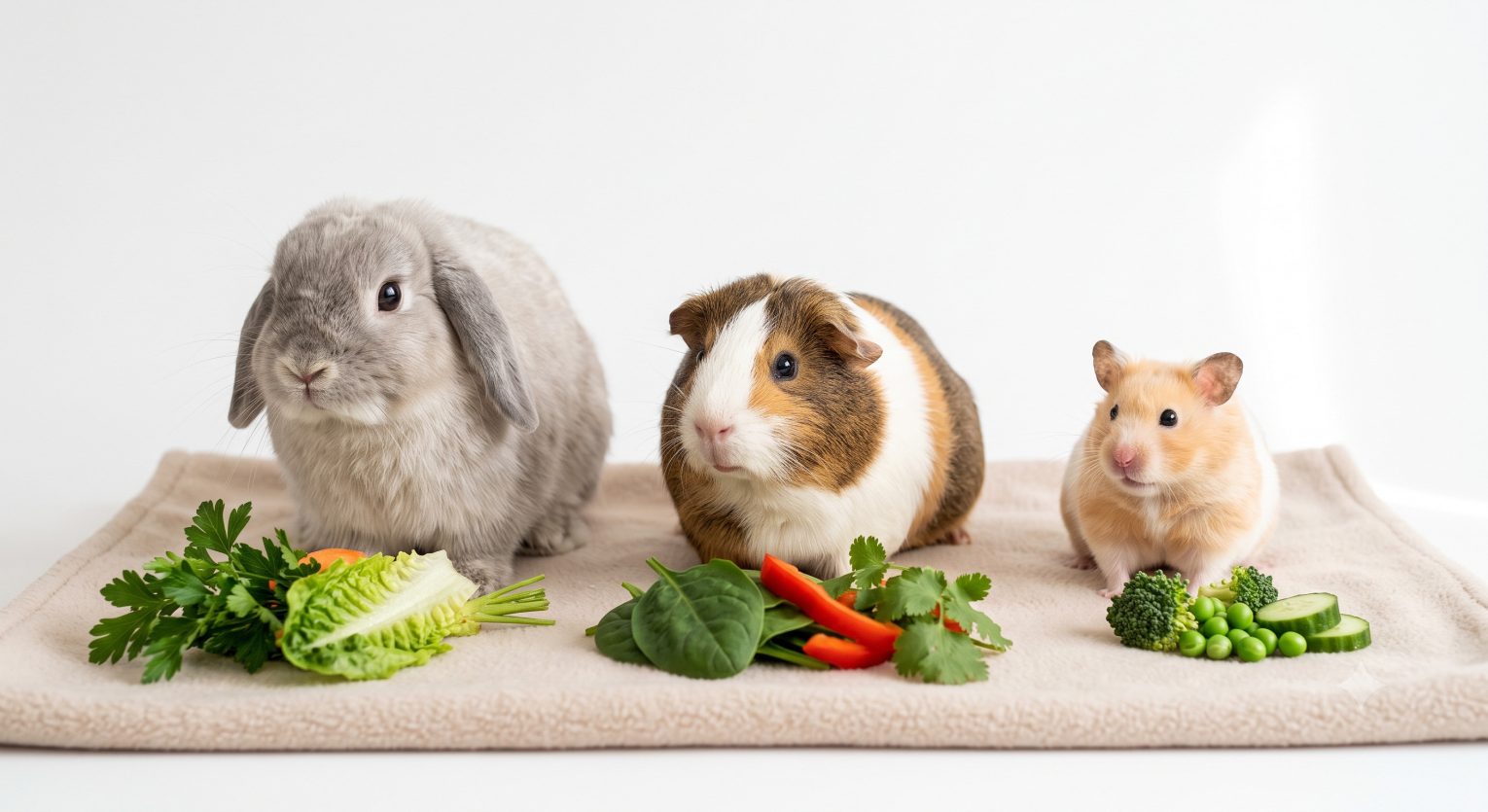
This guide covers safe and unsafe vegetables, fruits, and herbs for the three most common small pet species—rabbits, guinea pigs, and hamsters. Use it as a quick reference when introducing new foods or checking whether a specific item is safe before offering it. The most important rule applies to all three species: fresh vegetables are a supplement to hay and pellets, never the foundation of the diet.
The key species difference to understand before using this guide: guinea pigs cannot produce their own vitamin C and must get it from food daily. This makes bell peppers and parsley dietary priorities for guinea pigs—not just optional additions. Rabbits and hamsters do not have this requirement.
This food reference guide is part of our Small Pet Care Guide—the complete hub covering all aspects of rabbit, guinea pig, and hamster care including habitat, health, and nutrition. For full care guides by species, see Rabbit Care Guide, Guinea Pig Care Guide, and Hamster Care Guide.
(💡 Safe vegetables differ by species—and so do the quantities. Hay remains the primary diet for all three regardless of how many fresh greens are offered.)
Table of Contents
How to Use This Guide
Icons used throughout:
- ✅ Safe — can be offered regularly.
- ⚠️ Limited — safe in small amounts, not daily.
- ❌ Unsafe / Toxic — never offer.
Species abbreviations:
- 🐰 R = Rabbit
- 🐹 GP = Guinea Pig
- 🐹 H = Hamster
General portion guidelines:
| Species | Daily Greens | Single Serving |
|---|---|---|
| 🐰 Rabbit | 1–2 cups per 4 lbs body weight | Handful of mixed greens |
| 🐹 Guinea Pig | 1 cup per 2 lbs body weight | Small handful daily |
| 🐹 Hamster | 1 tsp per day | Pea-sized pieces only |
⚠️ Always introduce new foods slowly — offer a small amount and wait 24 hours before adding to the regular rotation. Digestive upset from rapid introduction is common in all three species.
📰 Portion guidelines in this article were cross-referenced with veterinary small animal nutrition resources including the House Rabbit Society at rabbit.org, the Guinea Pig Forum welfare guidelines, and Oxbow Animal Health’s published small pet nutrition guidance at oxbowanimalhealth.com. Species-specific vitamin C requirements for guinea pigs were verified against Chewy’s veterinary-reviewed guinea pig care content and published veterinary exotic animal literature.
Key Species Differences
Before diving into the A–Z list, three species-specific facts determine how you use this guide:
🐰 Rabbits: Hay must always be 80–90% of diet. Greens are a welcome daily addition but never a substitute. High-calcium vegetables (kale, spinach, parsley) should be rotated, not fed daily, to avoid bladder sludge over time.
🐹 Guinea Pigs: The only small pet here that cannot synthesize vitamin C internally. Every day’s vegetable selection should include at least one high-vitamin-C source—bell peppers are the most reliable choice. For full care context, see Guinea Pig Care Guide.
🐹 Hamsters: Significantly smaller portions than rabbits and guinea pigs—a “treat-sized” amount is the right mental model. High water-content vegetables (cucumber, zucchini) are fine but should not make up the whole daily allowance. Campbell’s Dwarf hamsters should receive no fruit at all due to genetic diabetes predisposition.
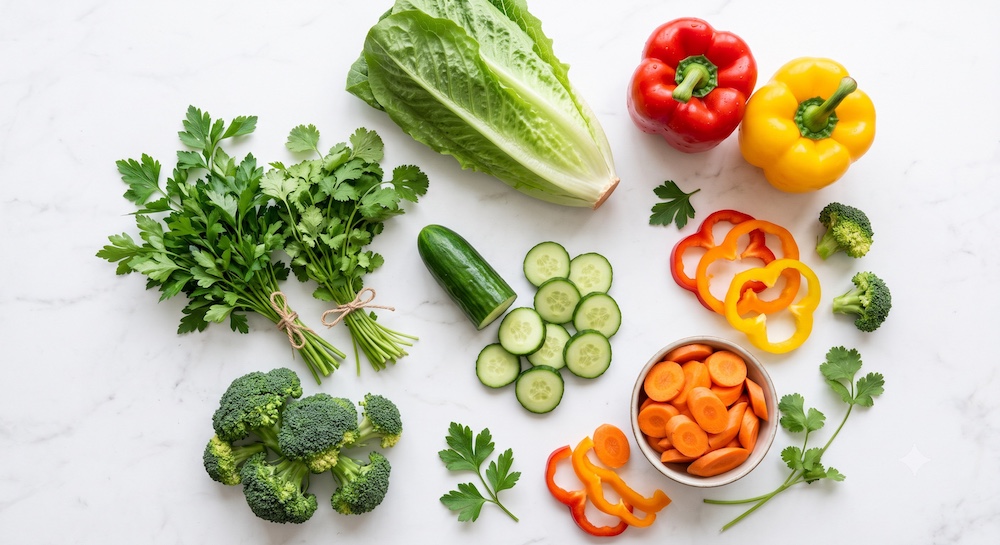
The A–Z Safe and Unsafe Food List
Variety is important—rotate vegetables to provide a range of nutrients rather than relying on the same food every day.
A
Apple (fruit—treat only) | 🐰 R ⚠️ | 🐹 GP ⚠️ | 🐹 H ⚠️ | Small slice, occasional treat. Remove seeds and core completely—apple seeds contain cyanide compounds toxic to all small pets.
Arugula (Rocket) | 🐰 R ✅ | 🐹 GP ✅ | 🐹 H ✅ | Peppery leafy green, good variety addition. Moderate calcium—rotate with lower-calcium greens rather than feeding exclusively.
Asparagus | 🐰 R ✅ | 🐹 GP ✅ | 🐹 H ⚠️ | Safe for rabbits and guinea pigs. Small hamster-appropriate pieces only; higher in phosphorus than ideal for daily hamster feeding.
Avocado | 🐰 R ❌ | 🐹 GP ❌ | 🐹 H ❌ | Toxic to all three species. Persin (found in flesh, skin, and pit) causes respiratory distress and potentially fatal heart problems. No exceptions.
B
Banana (fruit—treat only) | 🐰 R ⚠️ | 🐹 GP ⚠️ | 🐹 H ⚠️ | Very high in sugar—small piece occasionally. No banana for Campbell’s Dwarf hamsters.
Basil | 🐰 R ✅ | 🐹 GP ✅ | 🐹 H ✅ | Good aromatic herb, generally well accepted. Safe in regular rotation.
Bell Pepper (all colors) | 🐰 R ✅ | 🐹 GP ✅ | 🐹 H ✅ | One of the safest and most nutritious choices for all three species. Highest vitamin C content of any common vegetable—priority food for guinea pigs. Red and yellow peppers have more vitamin C than green. Remove seeds and white pith before serving.
Blueberries (fruit—treat only) | 🐰 R ⚠️ | 🐹 GP ⚠️ | 🐹 H ⚠️ | Antioxidant-rich but high in sugar. 2–3 berries maximum, occasional treat only.
Bok Choy | 🐰 R ✅ | 🐹 GP ✅ | 🐹 H ⚠️ | Good leafy green for rabbits and guinea pigs. Small amounts for hamsters—moderately high in calcium.
Broccoli | 🐰 R ✅ | 🐹 GP ✅ | 🐹 H ⚠️ | Safe for all three species but introduce slowly. Florets cause gas in rabbits if fed in large amounts—stems and leaves preferred. Good vitamin C source for guinea pigs. Small pieces for hamsters only.
Brussels Sprouts | 🐰 R ✅ | 🐹 GP ✅ | 🐹 H ⚠️ | Good vitamin C source. Introduce slowly— can cause gas in rabbits. Small amounts for hamsters.
C
Cabbage | 🐰 R ⚠️ | 🐹 GP ⚠️ | 🐹 H ⚠️ | Safe in small amounts but commonly causes gas and loose stools in all three species. Not worth the digestive disruption for most animals—lower-risk leafy greens are preferable.
Carrot | 🐰 R ⚠️ | 🐹 GP ⚠️ | 🐹 H ⚠️ | Safe but high in sugar. A common misconception presents carrots as a staple food for rabbits— they are a treat. Small piece a few times per week maximum for all three species. Carrot tops/greens are safe and lower in sugar.
Carrot Tops (greens) | 🐰 R ✅ | 🐹 GP ✅ | 🐹 H ✅ | The leafy greens attached to carrots. Nutritious, lower in sugar than the root, safe for regular feeding in all three species.
Cauliflower | 🐰 R ✅ | 🐹 GP ✅ | 🐹 H ⚠️ | Leaves and stem safe. Florets may cause gas in rabbits—offer leaves preferentially. Small amounts for hamsters.
Celery | 🐰 R ✅ | 🐹 GP ✅ | 🐹 H ⚠️ | Safe, but cut into very small pieces for rabbits—the stringy fibers can cause digestive blockage if swallowed in long pieces. Small pieces for hamsters. Good hydration contribution.
Cherry (fruit—treat) | 🐰 R ⚠️ | 🐹 GP ⚠️ | 🐹 H ⚠️ | Remove stone completely—cherry pits contain cyanide. Flesh only, occasional small piece.
Cilantro (Coriander) | 🐰 R ✅ | 🐹 GP ✅ | 🐹 H ✅ | Widely accepted, aromatic herb. Good rotation addition for all three species.
Corn | 🐰 R ❌ | 🐹 GP ❌ | 🐹 H ⚠️ | Too high in starch for rabbits and guinea pigs. Corn husk (leaves) is safe for rabbits. Very small amounts of plain corn for hamsters only.
Cucumber | 🐰 R ✅ | 🐹 GP ✅ | 🐹 H ✅ | High water content makes it excellent for hydration. Safe for all three species. Don’t make up the entire daily allowance— very low in nutrients compared to leafy greens.
D
Dandelion Greens and Flowers | 🐰 R ✅ | 🐹 GP ✅ | 🐹 H ✅ | Nutritious and generally well-accepted. Collect only from areas with no pesticide or herbicide use. Both leaves and flowers are safe.
Dill | 🐰 R ✅ | 🐹 GP ✅ | 🐹 H ✅ | Good herb rotation choice. Safe for all three species in normal quantities.
F
Fennel | 🐰 R ✅ | 🐹 GP ✅ | 🐹 H ⚠️ | Bulb, fronds, and leaves safe for rabbits and guinea pigs. Small amounts for hamsters only.
G
Garlic | 🐰 R ❌ | 🐹 GP ❌ | 🐹 H ❌ | Toxic to all three species. Causes hemolytic anemia—destruction of red blood cells. All forms including raw, cooked, dried, and powdered are toxic. No exceptions.
Grapes / Raisins | 🐰 R ❌ | 🐹 GP ❌ | 🐹 H ❌ | Toxic to all three species. Cause acute kidney failure. No exceptions—even a small amount is dangerous.
K
Kale | 🐰 R ⚠️ | 🐹 GP ⚠️ | 🐹 H ⚠️ | Safe but high in calcium and oxalates— feeding daily to rabbits and guinea pigs contributes to bladder sludge and stones over time. Excellent vitamin C source for guinea pigs. Rotate with lower-calcium greens rather than offering daily.
L
Leek | 🐰 R ❌ | 🐹 GP ❌ | 🐹 H ❌ | Toxic to all three species. Same mechanism as garlic and onion—hemolytic anemia. All parts including white and green portions.
Lettuce—Romaine | 🐰 R ✅ | 🐹 GP ✅ | 🐹 H ✅ | Good leafy green, widely accepted. Safe for regular feeding in all three species.
Lettuce—Iceberg | 🐰 R ❌ | 🐹 GP ❌ | 🐹 H ❌ | Almost no nutritional value and high water content causes diarrhea in all three species. Avoid entirely—many better leafy greens available.
Lettuce—Butterhead / Butter | 🐰 R ✅ | 🐹 GP ✅ | 🐹 H ✅ | Safe mild lettuce variety. Good for variety rotation.
M
Mango (fruit—treat) | 🐰 R ⚠️ | 🐹 GP ⚠️ | 🐹 H ⚠️ | Very high in sugar. Remove skin and pit. Small piece occasionally. Not for Campbell’s Dwarf hamsters.
Mint | 🐰 R ✅ | 🐹 GP ✅ | 🐹 H ⚠️ | Safe aromatic herb. Large amounts can cause mild digestive upset. Small regular quantities fine. Very limited amounts for hamsters.
O
Onion | 🐰 R ❌ | 🐹 GP ❌ | 🐹 H ❌ | Toxic to all three species. All forms—raw, cooked, dried, powdered—cause hemolytic anemia. Spring onion, shallot, and chives are also toxic. No exceptions.
P
Parsley | 🐰 R ⚠️ | 🐹 GP ✅ | 🐹 H ⚠️ | High in vitamin C—excellent for guinea pigs. High calcium content means limited quantities for rabbits to avoid bladder sludge. Small quantities for hamsters.
Peas (fresh or frozen) | 🐰 R ✅ | 🐹 GP ✅ | 🐹 H ⚠️ | Safe for rabbits and guinea pigs. Small amounts only for hamsters—higher in sugar than leafy greens.
Potato | 🐰 R ❌ | 🐹 GP ❌ | 🐹 H ❌ | Toxic to all three species. Both the flesh and particularly the leaves and green-tinged skin contain solanine—a toxic compound. No cooked potato either. No exceptions.
Pumpkin / Butternut Squash (flesh) | 🐰 R ✅ | 🐹 GP ✅ | 🐹 H ⚠️ | Safe in small amounts. Seeds are also safe for hamsters (unsalted). Higher in sugar than leafy greens—offer as a rotation item, not daily.
R
Radish | 🐰 R ⚠️ | 🐹 GP ⚠️ | 🐹 H ⚠️ | Safe in small amounts. Spicy—many small pets dislike the taste. Radish tops are safer and more palatable than the root for rabbits.
Raspberry (fruit—treat) | 🐰 R ⚠️ | 🐹 GP ⚠️ | 🐹 H ⚠️ | Safe occasional treat. Raspberry leaves are also safe for rabbits and guinea pigs.
Rhubarb | 🐰 R ❌ | 🐹 GP ❌ | 🐹 H ❌ | Toxic to all three species. High oxalic acid content causes kidney damage. All parts including leaves and stalks. No exceptions.
Romaine Lettuce — *see Lettuce
S
Spinach | 🐰 R ⚠️ | 🐹 GP ⚠️ | 🐹 H ⚠️ | Nutritious but high in oxalates and calcium. Safe in small occasional amounts for all three species—not appropriate as a daily staple for rabbits or guinea pigs due to bladder sludge risk over time.
Strawberry (fruit—treat) | 🐰 R ⚠️ | 🐹 GP ⚠️ | 🐹 H ⚠️ | Good vitamin C source for guinea pigs. Safe occasional treat for all three species. Strawberry leaves are also safe for rabbits and guinea pigs.
Sweet Pepper — *see Bell Pepper
Sweet Potato | 🐰 R ⚠️ | 🐹 GP ⚠️ | 🐹 H ⚠️ | Cooked only—raw sweet potato is harder to digest. High in sugar and starch. Small occasional amounts for all three species.
T
Tomato (fruit only) | 🐰 R ⚠️ | 🐹 GP ⚠️ | 🐹 H ⚠️ | The fruit flesh is safe in small amounts. Tomato leaves, stems, and unripe green tomatoes are toxic to all three species. Remove all green parts before serving. Acidic—avoid for hamsters with digestive sensitivity.
W
Watercress | 🐰 R ✅ | 🐹 GP ✅ | 🐹 H ✅ | Good dark leafy green, high in nutrients. Safe for all three species in regular rotation.
Z
Zucchini (Courgette) | 🐰 R ✅ | 🐹 GP ✅ | 🐹 H ✅ | Safe for all three species. Good hydration contribution, low in calcium. Skin and flesh both safe. One of the most universally safe vegetables across all three species.
Strictly Toxic Foods — Never Feed Any Small Pet
❌ These foods are dangerous to all three species and should never be offered under any circumstances:
| Food | Why Toxic |
|---|---|
| 🥑 Avocado | Persin—cardiac toxicity |
| 🧄 Garlic | Hemolytic anemia |
| 🧅 Onion, leek, chives | Hemolytic anemia |
| 🍇 Grapes and raisins | Acute kidney failure |
| 🥬 Rhubarb | Oxalic acid—kidney damage |
| 🥔 Potato (all parts) | Solanine poisoning |
| 🌱 Tomato leaves/stems | Solanine |
| 🫘 Apple seeds / cherry pits | Cyanide compounds |
| 🥬 Iceberg lettuce | Diarrhea, no nutritional value |
| 🌽 Corn (rabbits/guinea pigs) | Excess starch |
🚨 If your small pet has eaten something toxic: Contact a veterinarian or exotic animal emergency clinic immediately. Do not wait for symptoms to appear—some toxic reactions develop slowly.
Fruits: Treat Guide
Fruit is high in sugar and should be treated as a reward, not a dietary component for any of the three species.
✅ Safe fruits (all species except where noted):
| Fruit | Safe Species | Portion | Notes |
|---|---|---|---|
| 🍏 Apple | All | Small slice | Remove seeds + core |
| 🍌 Banana | All | Small piece | Not for Campbell’s dwarfs |
| 🫐 Blueberry | All | 2–3 berries | |
| 🥭 Mango | All | Small piece | Not for Campbell’s dwarfs |
| 🍑 Peach | All | Small piece | Remove pit |
| 🍐 Pear | All | Small slice | Remove seeds |
| 🔴 Raspberry | All | 2–3 berries | |
| 🍓 Strawberry | All | Small piece | Good Vit C for guinea pigs |
| 🍉 Watermelon | All | Seedless only | High water, low sugar |
⚠️ Fruits to avoid for Campbell’s Dwarf Hamsters: All fruit. Campbell’s Dwarf hamsters have a genetic predisposition to diabetes—even small amounts of fruit sugar cause blood glucose spikes that accelerate disease progression.
Hay: Still the Priority
A note before leaving this guide: no matter how varied the vegetable list above, hay remains the foundation of the diet for rabbits and guinea pigs (75–90% of total intake), and a component of a balanced hamster diet. Fresh vegetables are a supplement to hay and pellets—never a replacement.
For the full diet breakdown including hay types and pellet recommendations by species, see: Rabbit Care Guide, Guinea Pig Care Guide, Hamster Care Guide.
🐾 Timothy Hay for Small Pets 🐾
🌾 Oxbow Western Timothy Hay—The most consistently vet-recommended grass hay for rabbits and guinea pigs. Regardless of how varied the fresh vegetable rotation, hay must always be available in unlimited quantity—it is the dietary foundation that fresh greens support, not replace.
🐾 Vitamin C Supplements for Guinea Pigs 🐾
💊 Stabilized Vitamin C Tablets—Fresh vegetables are the primary vitamin C source for guinea pigs, but a stabilized tablet supplement ensures daily requirements are met on days when high-vitamin-C vegetables aren’t available. Particularly useful during illness when appetite drops.
Conclusion
Fresh vegetables add variety, hydration, and important micronutrients to the diet of all three small pet species—but they are supplements, not foundations. Keep portions appropriate per species, introduce new foods slowly, and cross-reference this list whenever you are unsure about a specific food.
The three rules that apply to every item on this list:
- ✅ Introduce new foods one at a time and wait 24 hours before adding another.
- ✅ Guinea pigs need daily vitamin C from fresh food—bell peppers are the most reliable source.
- ✅ When in doubt, leave it out—there are enough confirmed safe options to provide variety without risking uncertain foods.
👉🏼 Small Pet Care Guide—complete hub for rabbits, guinea pigs, and hamsters.
👉🏼 Rabbit Care Guide—full rabbit diet, habitat, and health guide.
👉🏼 Guinea Pig Care Guide—full guide including vitamin C requirements and daily diet.
👉🏼 Hamster Care Guide—hamster diet, portion sizes, and foods to avoid.
👉🏼 Best Cages for Guinea Pigs—habitat sizing guide for guinea pigs and small pets.

🐀 Browse small pet food, bedding, cages, toys, supplements and everything else your small pet needs 🐾
(This post contains affiliate links. If you purchase through our links, we may earn a small commission at no extra cost to you. This never influences our editorial opinions.)
FAQ: Safe Vegetables for Small Pets
Can rabbits, guinea pigs, and hamsters eat the same vegetables?
Many vegetables are safe for all three species, but portions differ significantly. Hamsters need much smaller quantities—a pea-sized piece is often the right serving size. Guinea pigs need at least one daily vitamin C source (bell pepper, parsley, broccoli) that rabbits and hamsters do not require for the same reason. Always check species-specific notes rather than assuming what’s safe for one is safe for all at the same serving size.
How often should I feed fresh vegetables?
Rabbits and guinea pigs benefit from daily fresh vegetables as part of their routine. Hamsters can receive fresh vegetables daily but in very small amounts—a pea-sized piece of one or two items. Avoid offering large amounts of high-water-content vegetables all at once for any species, as this can cause loose stools.
Can I feed my small pet vegetables from my own salad or plate?
Only if they are plain and unseasoned—no dressings, salt, vinegar, or cooked components. Many common human condiments and cooking additives are toxic to small pets. Feed only raw, clean, unseasoned vegetables.
My guinea pig won’t eat bell peppers. What other vitamin C sources can I use?
Parsley, broccoli (florets and stems), kale, Brussels sprouts, and strawberries are all good vitamin C sources. Rotate through these if bell peppers are refused. A stabilized tablet supplement is a reliable backup for picky guinea pigs.
Are frozen vegetables safe for small pets?
Plain frozen vegetables without additives are safe once thawed to room temperature. Avoid any frozen vegetables with added salt, sauces, or seasoning. Fresh is preferable where available—frozen is acceptable.
What should I do if my pet accidentally eats something toxic?
Contact a veterinarian or exotic animal emergency clinic immediately. Bring the packaging or note exactly what was eaten and the approximate amount. Do not wait for symptoms—with small animals, toxic reactions can escalate rapidly. Time is critical.