
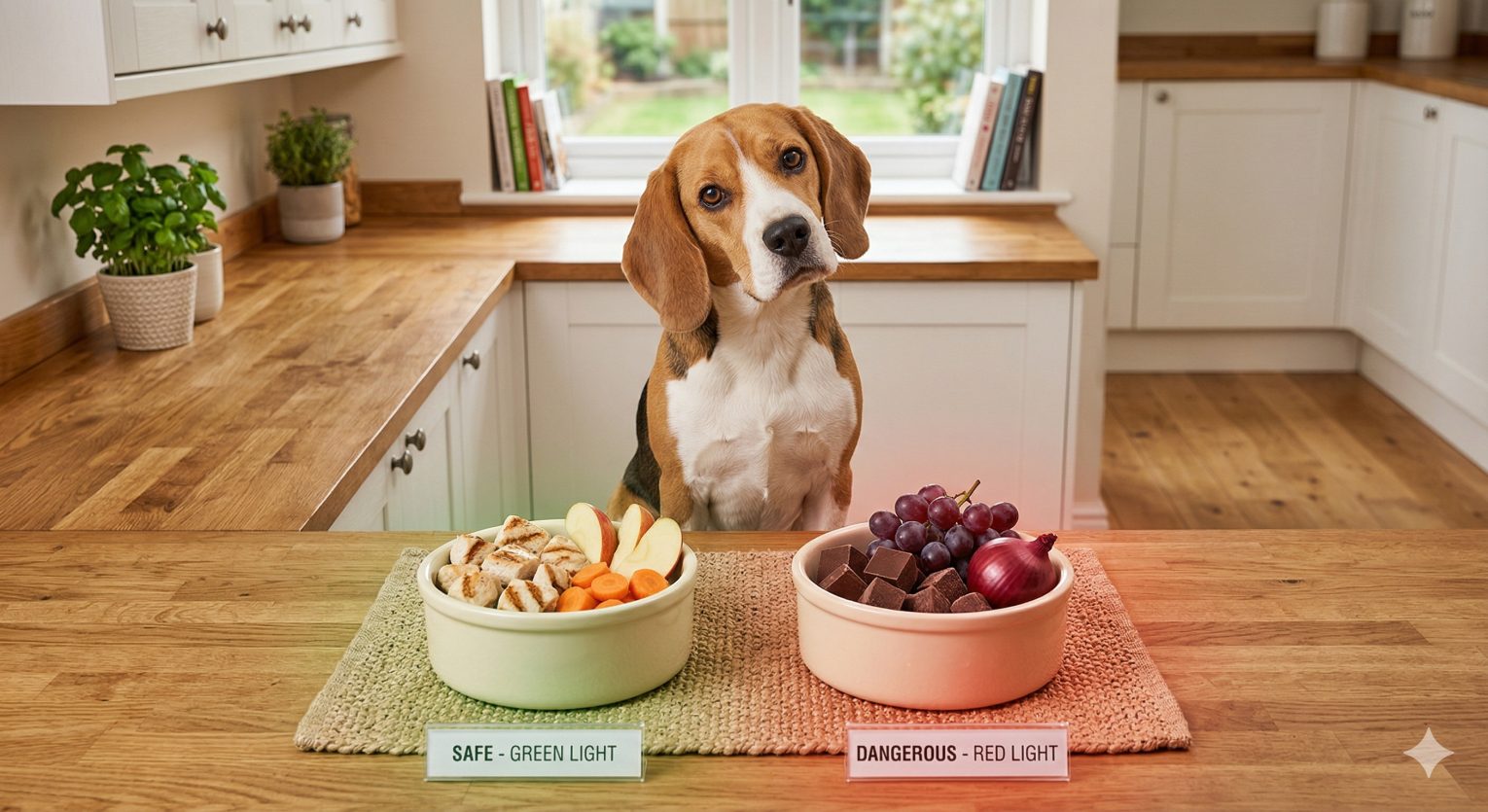
Safe human foods for dogs include plain cooked chicken, carrots, apples (no seeds), eggs, and brown rice. Foods that are toxic and must never be given include chocolate, grapes, onions, garlic, xylitol, and alcohol—even in small amounts. Always serve human foods plain, unseasoned, and in small portions only.
We’ve all been there. You are sitting on the couch, enjoying a delicious snack, when you feel a pair of eyes burning into the side of your face. You look down, and your dog is offering their finest “I’m starving” puppy-dog eyes. It is almost impossible to resist.
But before you share that slice of fruit or piece of cheese, you must ask yourself: “Is this actually safe for them?”
While dogs are omnivores (meaning they can extract nutrients from both plant and meat sources), their digestive systems process food differently than ours. Many ordinary human foods are not just unhealthy for dogs; they are incredibly dangerous, toxic, and can cause fatal conditions like pancreatitis.
In this guide, we provide a definitive safety checklist to help you understand which human foods are safe, which must be given in moderation, and which could kill your best friend.
(Want to make sure you are building their everyday main diet from high-quality sources? Check out our complete dog nutrition guide for everything you need.)
Table of Contents
The Green Light: Human Foods Safe for Dogs
When offered in small, plain, and cooked portions, many common kitchen staples can be fantastic, nutritious treats for your dog. Remember, these should never replace a balanced commercial diet, but rather act as healthy supplements.
👉🏼 Single-ingredient natural treats from Raw Paws are a safe, purpose-made alternative to sharing human food.
🐾 Raw Paws Freeze-Dried Dog Treats 🐾
❄️ Raw Paws Single-Ingredient Treats — A purpose-made alternative when you want to share “real food” flavor without the seasoning, sugar, or portion-control risks of table scraps. Single ingredient, freeze-dried, sourced from Indiana farms. 15% off 1st Auto Ship + 5% off future orders.
✅ Healthy Proteins and Grains
- Lean Meat (Chicken, Turkey, Beef): Cooked, plain, and without any seasoning, garlic, or onion powder. Crucial: Always remove all skin and bones before serving, as cooked bones splinter easily and cause internal obstructions. Want to understand how much protein your dog actually needs daily? Our dog nutrition basics covers macronutrient requirements for every life stage.
- Eggs: Scrambled or hard-boiled are an excellent source of digestible protein. Never feed raw egg whites.
- Plain Grains: Cooked brown rice, white rice, or oatmeal are gentle on the stomach and provide healthy carbohydrates for energy.
- Peanut Butter: A classic favorite. Check the label carefully. Ensure it does not contain Xylitol (a deadly artificial sweetener). Choose plain, unsalted varieties.
🐾 Zuke’s Mini Naturals Training Treats 🐾
🍪 Zuke’s Mini Naturals (Training Treats) — Real chicken, pea-sized and under 3 calories per treat. A purpose-made alternative to human food scraps—safe, portioned, and designed specifically for dogs. Ideal for rewarding good behavior without the guesswork.
✅ Safe Vegetables and Fruits
- Carrots: Great raw or cooked. The crunchy texture is good for their teeth, and they are low-calorie and high in fiber.
- Green Beans: Safe, healthy, and a fantastic, calorie-friendly treat for dogs on a weight management plan.
- Sweet Potatoes: Cooked, plain, and mashed (without butter or spices). Excellent source of vitamin A.
- Apples and Bananas: Apples (with seeds and core removed) and bananas (in moderation due to sugar) are safe and tasty fruits. Never let them eat apple seeds.
The Red Light: Toxic Foods You Must Avoid
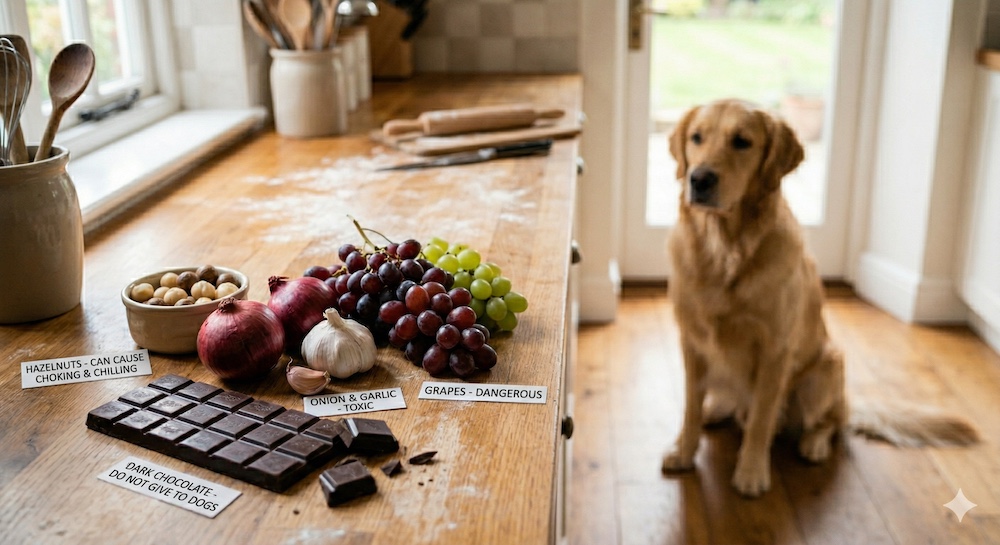
This is the most critical section. These items contain compounds that are highly toxic to dogs, even in small amounts. If you suspect your dog has eaten any of these, seek immediate veterinary attention.
📰 The toxic foods listed in this section were cross-referenced directly with the ASPCA Animal Poison Control Center’s published toxic substance database, verified at aspca.org/pet-care/aspca-poison-control/toxic-and-non-toxic-plants. If you suspect your dog has eaten any of the substances below, the ASPCA Poison Control hotline is available 24/7 at (888) 426-4435—a consultation fee applies. This is the authoritative US resource for veterinary toxicology emergencies and the same database veterinary professionals use when managing poisoning cases.
| ⚠️ Fatal – Xylitol (Sugar-Free Treats): A common sweetener found in sugar-free gum, candy, and some peanut butters. It is incredibly deadly, causing a rapid, life-threatening drop in blood sugar and liver failure within hours. |
| ⚠️ Fatal – Chocolate: Contains theobromine, which dogs cannot metabolize. Darker and more pure chocolate is more dangerous, causing vomiting, diarrhea, seizures, and heart failure. |
| ⚠️ Fatal – Grapes and Raisins: Toxic! The exact toxic compound is unknown, but they cause acute kidney failure in some dogs. There is no safe amount. |
| ⚠️ Fatal – Onions, Garlic, and Chives: Contain thiosulfate, which damages your dog’s red blood cells, causing anemia. This toxicity builds up over time and affects all forms (raw, cooked, or powder). |
| ⚠️ Fatal – Caffeine and Alcohol: Both can cause fatal toxicity in dogs, affecting their central nervous system and heart. |
| ⚠️ High – Macadamia Nuts: Highly toxic even in small amounts. They cause severe neurological reactions, leading to muscle tremors, vomiting, a high fever, and extreme weakness. |
(🩺 Vet’s Note: “Grape and raisin toxicity is particularly unpredictable—some dogs eat them with no reaction while others go into acute kidney failure from just a few. Because we still don’t know the exact toxic compound or why some dogs are affected and others aren’t, the safest rule is zero tolerance”—LovingPetsGuide Veterinary Advisor.)
📰 The xylitol toxicity mechanism is documented by the FDA’s Center for Veterinary Medicine, available at fda.gov/animal-veterinary. The FDA has published multiple consumer warnings about xylitol in pet products, confirming it causes a rapid insulin release in dogs—leading to life-threatening hypoglycemia within 10–60 minutes of ingestion. Grape and raisin toxicity, as noted in the Vet’s Note above, remains under active investigation—the ASPCA Poison Control database confirms no safe threshold has been established, and veterinary toxicologists recommend zero tolerance regardless of the amount or form consumed.
The Yellow Light: Foods to Offer in Moderation
Some foods are not toxic but can cause significant health issues if given too often or in large portions.
- Dairy Products (Cheese, Yogurt): Most dogs are lactose intolerant. A small cube of plain cheese is usually fine as a high-value training treat, but too much leads to gas, diarrhea, and a serious risk of pancreatitis.
- Bread: Small pieces of plain, baked bread are not harmful but offer zero nutritional value. Never feed raw yeast dough, as it can ferment and expand in their stomach, causing bloat.
- Certain Fruits (Strawberries, Blueberries): Safe in moderation but contain high amounts of natural sugar, which can lead to weight gain.
📰 The link between dietary fat and pancreatitis is more nuanced than commonly presented. A 2026 narrative review in the Journal of the American Veterinary Medical Association (JAVMA) found that recent research has failed to confirm a consistent, straightforward association between fat content specifically and pancreatitis onset— challenging older assumptions. What the evidence does support more strongly: obesity roughly doubles pancreatitis risk, and dogs with elevated blood triglycerides are nearly four times more likely to develop it, per veterinary nutrition research summarized by the MSD/Merck Veterinary Manual (merckvetmanual.com). Practically, this means occasional fatty table scraps remain worth avoiding—less because “fat itself” is dangerous, and more because they contribute to the obesity and metabolic patterns that are the better-established risk factors.
Is your dog still dealing with gas or loose stools even on a strict feeding routine? Discover the best dog food for sensitive stomachs, featuring vet-approved options designed to soothe digestive troubles.
Golden Rules for Sharing Your Plate Safely
If you decide to offer a “Green Light” human food, you must follow these rules to keep it a safe, healthy moment, not a trip to the emergency room.
- Preparation is Key: Never feed seasoned food. That delicious piece of roasted chicken is likely covered in garlic powder, onion powder, and too much salt. Foods must be served plain and cooked.
- Small Portions: Treats should never make up more than 10% of your dog’s daily caloric intake. Sharing a small piece is fine; sharing your entire steak is not. This is critical for preventing obesity, especially in senior dogs. Not sure how many calories your dog needs per day? Our guide on how much to feed your dog covers portion sizing for every life stage.
- Remove Pits and Stems: While the flesh of apples and cherries is completely safe, their pits and seeds contain a compound called amygdalin. If the seeds are chewed or crushed, this compound metabolizes into toxic cyanide. While accidentally swallowing a whole pit will usually pass safely through their system, you should always remove them to prevent any risk of toxicity or choking.
By keeping these rules in mind, you can safely monitor your dog’s intake of treats and maintain their weight, which directly impacts their long-term health. If you are focused on preventative care for aging joints, our complete guide on dog nutrition covers senior-specific supplement recommendations.
🐾 KONG Classic Dog Toy 🐾
🧸 KONG Classic (Enrichment Toy) — The safest way to share peanut butter with your dog. Stuff with a small amount of xylitol-free peanut butter and freeze—provides 30–45 minutes of mental stimulation with a controlled, measured amount of the treat.
Conclusion: When in Doubt, Leave it Out
Your dog is not a garbage disposal. Their body has very precise nutritional needs. While the temptation to share your food with that wagging tail is immense, your priority must always be their safety and long-term well-being.
Use safe human foods only as an occasional, special, and plain treat. If you are ever unsure whether a food is safe, don’t risk it—the answer should always be a firm “no.” Instead, focus on providing structured, balanced meals at the right times. Not sure if you are feeding them often enough? Check out our complete dog feeding schedule by age guide to make sure your routine is perfect!
Wondering whether fresh food or kibble is the better choice for your dog? Our fresh dog food vs kibble comparison breaks down the real differences in nutrition, cost, and digestibility.
📝 Editor’s Note: Every toxic substance in this guide was verified against two primary sources: the ASPCA Animal Poison Control Center database at aspca.org/pet-care/aspca-poison-control and the FDA’s Center for Veterinary Medicine at fda.gov/animal-veterinary. These are the same resources veterinary professionals use when treating poisoning cases. The list is reviewed and updated regularly by these organizations—for the most current information on any specific substance, both sources provide direct search tools.

🐕 Browse dog food, treats, toys, health products, supplements, grooming and everything else your dog needs 🐾

🐕 Browse raw dog food, freeze-dried meals, chews, bones and natural treats from Indiana farms 🐾

🐕 Browse science-backed dry dog food, wet food, breed-specific formulas, and veterinary diets for your canin 🐾
(This post contains affiliate links. If you purchase through our links, we may earn a small commission at no extra cost to you. This never influences our editorial opinions.)
Frequently Asked Questions About Safe Human Foods for Dogs
What human foods are highly toxic to dogs?
Some of the most dangerous human foods for dogs include chocolate (especially dark chocolate), xylitol (an artificial sweetener found in gum and peanut butter), grapes, raisins, onions, garlic, macadamia nuts, and alcohol. Even small amounts of these can cause severe, life-threatening reactions.
Is cheese safe for dogs to eat?
Yes, cheese is generally safe for dogs in very small amounts, but it should only be an occasional treat. Most dogs are mildly lactose intolerant, so eating too much cheese can cause gas, diarrhea, or even pancreatitis due to its high fat content. Always choose plain, low-fat varieties and avoid giving cheese to overweight dogs.
What should I do if my dog eats something toxic?
If you suspect your dog has eaten a toxic food, do not wait for symptoms to appear. Immediately contact your local veterinarian or an emergency animal poison control center. Be prepared to tell them exactly what your dog ate, how much they consumed, and your dog’s approximate weight so they can guide you on the next steps.
Can dogs eat peanut butter?
Yes, plain peanut butter is safe for most dogs in small amounts and makes an excellent high-value treat. Always check the label first—some brands contain xylitol, an artificial sweetener that is deadly to dogs. Choose unsalted, unsweetened varieties with no added ingredients.
Are bananas safe for dogs?
Bananas are safe for dogs and most enjoy them. They are a good source of potassium, vitamin B6, and vitamin C. Because of their high natural sugar content, bananas should be an occasional treat rather than a daily snack—a few slices is plenty for most dogs.
Can dogs eat eggs?
Yes, cooked eggs are one of the most digestible protein sources you can offer a dog. Scrambled or hard-boiled are both fine. Avoid raw egg whites, which contain avidin—a compound that blocks biotin absorption and can cause a nutritional deficiency over time.
Is bread safe for dogs?
Plain, fully baked bread is not toxic but offers no real nutritional benefit. An occasional small piece won’t harm a healthy dog. Never give raw dough—yeast continues fermenting inside the stomach, producing alcohol and carbon dioxide, which can cause dangerous bloating and alcohol toxicity.
Can dogs eat carrots every day?
Yes, carrots are one of the best daily snack options for dogs. They are low in calories, high in fiber, and rich in beta-carotene. The crunchy texture also helps clean teeth naturally. Raw or cooked both work—just skip any added butter, salt, or seasoning.
What fruits are safe for dogs?
Several fruits are safe in moderation, including apples (seeds and core removed), bananas, blueberries, watermelon (seedless, no rind), strawberries, and mango (pit removed). Always avoid grapes, raisins, cherries (pits contain toxic compounds), and citrus fruits in large amounts, which can cause digestive upset.