

Finding the best dog food for sensitive stomachs means looking for a single named animal protein, limited ingredients, no artificial additives, and highly digestible carbohydrates like white rice or sweet potato. Brands consistently recommended by vets include Hill’s Science Diet Sensitive Stomach, Purina Pro Plan Sensitive Skin & Stomach, and Royal Canin Digestive Care.
A sensitive stomach in dogs is almost always caused by one of three things: a food ingredient the dog reacts to, a diet that’s too rich or too processed, or a sudden food change that disrupted the gut microbiome. This guide covers exactly what to look for, what to avoid, and which foods deliver consistent results.
Choosing the right food for a sensitive stomach is only one part of canine nutrition. If you want to understand the full picture—from macronutrients to reading ingredient labels like a pro—our complete dog nutrition guide covers everything you need to make confident feeding decisions.
Table of Contents
What Causes a Sensitive Stomach in Dogs?
Before changing your dog’s food, it helps to understand what’s actually going on. “Sensitive stomach” is an umbrella term that covers several distinct issues—and the cause determines the fix.
❗️The most common causes:
- Food intolerance: A reaction to a specific ingredient—most often beef, dairy, wheat, or chicken. Unlike a true allergy, intolerances cause digestive symptoms rather than skin issues.
- Diet too rich in fat: High-fat foods trigger the pancreas to work harder. Dogs prone to pancreatitis need low-fat formulas specifically.
- Highly processed ingredients: Artificial colors, flavors, and preservatives irritate the gut lining in sensitive dogs.
- Rapid diet changes: Switching foods too quickly destroys the gut microbiome balance. Always transition over 7–10 days minimum.
- Eating too fast: Wolfing down food causes excess air ingestion, leading to bloating and vomiting. A slow feeder bowl solves this instantly.
(🩺 Vet’s Note: “Chronic loose stools, vomiting more than once a week, or blood in the stool are not ‘sensitive stomach’ symptoms—they are veterinary symptoms. If your dog has any of these persistently, see your vet before changing food. These can indicate inflammatory bowel disease, parasites, or more serious conditions”—LovingPetsGuide Veterinary Advisor.)
🐾 Purina Pro Plan FortiFlora Dog Probiotic 🐾
💊 Purina FortiFlora (Probiotic Supplement) — Enterococcus faecium SF68—the most clinically studied canine probiotic strain. Sprinkle one sachet over food daily during food transitions or for ongoing digestive support. Also improves palatability for picky eaters during the switch to a new formula.
What to Look for in a Dog Food for Sensitive Stomachs
Not all “sensitive stomach” labels mean the same thing. Here’s what actually matters when you’re reading the bag.
✅ Ingredients to Look For
- Single, named animal protein as first ingredient: “Deboned Chicken” or “Salmon”— not “poultry meal” or “meat and bone meal”.
- Limited ingredient list: Fewer ingredients means fewer potential triggers.
- Highly digestible carbohydrates: White rice, sweet potato, and oatmeal are gentle on the gut.
- Added probiotics or prebiotics: Support healthy gut bacteria—look for Lactobacillus acidophilus on the label.
- Omega-3 fatty acids: Reduce gut inflammation and support the intestinal lining. For standalone supplementation, our fish oil for dogs guide covers dosing and top picks.
- AAFCO “complete and balanced” statement: Non-negotiable—without this, the food isn’t nutritionally complete.
For the complete WSAVA-ranked comparison across all major brands, see our best dog food brands guide.
📰 Beyond the label, brand-level quality matters as much as individual ingredients for sensitive stomach dogs. The WSAVA Global Nutrition Committee criteria—published at wsava.org/global-guidelines— recommend choosing brands that employ a full-time board-certified veterinary nutritionist (DACVN), conduct AAFCO feeding trials rather than formulation only, and publish peer-reviewed research. Hill’s Science Diet, Purina Pro Plan, and Royal Canin are the three mainstream brands that consistently meet all five WSAVA criteria—which is why they appear in our top picks rather than more heavily marketed boutique alternatives.
❌ Ingredients to Avoid
- Artificial preservatives: BHA, BHT, and ethoxyquin irritate the digestive tract.
- Artificial colors and flavors: Zero nutritional value, high irritation potential.
- High fat content: Above 15–16% fat on a dry matter basis is too rich for most sensitive stomach dogs.
- Ingredient splitting: Multiple forms of the same ingredient (corn flour, corn gluten meal, corn syrup) hidden throughout the list.
- Unnamed protein sources: “Meat meal” or “animal by-products” without a named species are red flags for quality and consistency.
Not sure how to read an ingredient label? Our dog nutrition basics guide walks you through every section of the label step by step. Next, check out our dog food brand evaluation guide which covers the WSAVA checklist in full.
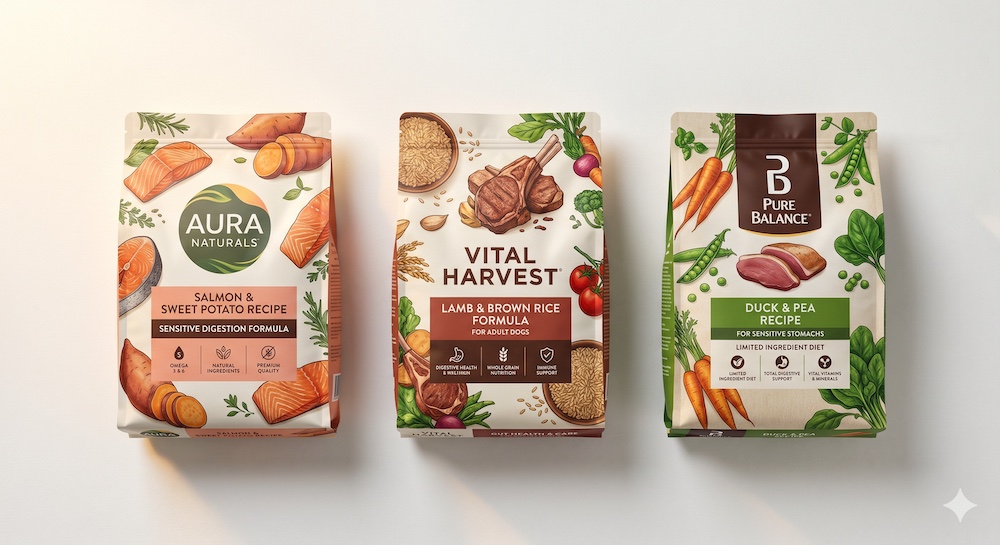
Our Top Picks: Best Dog Foods for Sensitive Stomachs
These recommendations are based on ingredient quality, digestibility research, and consistent veterinary endorsement—not marketing claims.
(⚠️ Not all sensitive stomach formulas are equal—ingredient quality varies enormously between brands.)
🥇 Best Overall: Hill’s Science Diet Adult Sensitive Stomach & Skin
Hill’s Science Diet is the most consistently vet-recommended sensitive stomach formula on the market. It’s formulated by board-certified veterinary nutritionists and uses prebiotic fiber to support a balanced gut microbiome.
Key features:
- Chicken as first ingredient.
- Prebiotic fiber blend (FOS).
- Added Vitamin E and Omega-6 for skin support.
- AAFCO approved for adult maintenance.
- Available in small, medium, and large breed sizes.
✅ Vet’s #1 recommended sensitive stomach brand.
✅ Clinically proven digestibility.
✅ No artificial colors, flavors, or preservatives.
✅ Consistent formula—no random ingredient changes.
❌ Higher price point than budget options.
❌ Not ideal for dogs with chicken intolerance.
🏆 Best for: Adult dogs with chronic loose stools, vomiting, or diagnosed with a sensitive digestive tract.
🐾 Hill’s Science Diet Sensitive Stomach & Skin 🐾
🥇 Hill’s Science Diet (Dry—Sensitive) — The most consistently vet-recommended sensitive stomach formula. Prebiotic fiber blend, clinically proven digestibility, no artificial additives. Formulated by board-certified veterinary nutritionists. Best for adult dogs with chronic loose stools or diagnosed sensitive digestive tract.
🥈 Best Performance Formula: Purina Pro Plan Sensitive Skin & Stomach (Salmon)
Purina Pro Plan is backed by more feeding trial research than almost any other brand. The salmon formula is an excellent choice for dogs who react to chicken—a surprisingly common intolerance.
Key features:
- Salmon as first ingredient (novel protein for many dogs).
- Easily digestible oat meal and rice.
- Fortified with live probiotics.
- Omega-3 and Omega-6 fatty acids.
- AAFCO approved.
✅ Novel protein—ideal for chicken-intolerant dogs.
✅ Live probiotics added post-cooking.
✅ Backed by 400+ Purina scientists and vets.
✅ Excellent palatability—picky eaters tend to love it.
❌ Contains some fish meal alongside salmon.
❌ Slightly higher fat content than Hill’s.
🏆 Best for: Dogs with suspected chicken intolerance or dogs who have refused other sensitive stomach formulas.
🐾 Purina Pro Plan Sensitive Skin & Stomach — Salmon 🐾
🥈 Purina Pro Plan (Dry—Sensitive, Salmon) — Salmon as first ingredient with live Enterococcus faecium SF68 probiotics added post-cooking. AAFCO feeding trial approved. The strongest option for dogs with chicken intolerance—and picky eaters tend to love the salmon formula.
📰 The probiotic strain in Purina Pro Plan Sensitive Skin & Stomach is Enterococcus faecium SF68—the same strain used in Purina’s FortiFlora veterinary probiotic supplement, confirmed directly on Purina’s official product label documentation (purina.com). Each serving delivers a minimum of 1 × 10⁸ CFU (100 million colony-forming units) of this strain, which has been studied in multiple peer-reviewed veterinary trials for its effect on intestinal microflora balance and immune function in dogs.
🥉 Best Breed-Specific Option: Royal Canin Digestive Care
Royal Canin’s Digestive Care formula is engineered around digestibility scores rather than marketing. Every ingredient is selected for its digestibility coefficient—meaning more nutrients are absorbed and less ends up as waste.
Key features:
- Highly digestible proteins and carbohydrates.
- Psyllium husk for stool consistency.
- Prebiotics to support gut flora.
- Precisely balanced fiber blend.
- AAFCO approved.
✅ Exceptionally high digestibility scores.
✅ Noticeably firmer, smaller stools within 2 weeks.
✅ Available in breed-specific sizes.
❌ Ingredient list is less “clean” than Hill’s.
❌ Contains some controversial by-products.
🏆 Best for: Dogs with chronically soft or inconsistent stools who have already tried other formulas without success.
🐾 Royal Canin Digestive Care 🐾
🥉 Royal Canin Digestive Care (Dry) — Engineered around digestibility scores rather than marketing. Psyllium husk for stool consistency, prebiotics for gut flora support, and a precisely balanced fiber blend. Most dogs show noticeably firmer, smaller stools within 2 weeks. Best for chronic soft or inconsistent stools.
💰 Best Budget Pick: Purina ONE Sensitive Skin & Stomach
For owners who need results without the premium price tag, Purina ONE Sensitive is the most reliable budget option. It doesn’t match the research depth of Pro Plan, but it consistently outperforms generic store brands on digestibility.
Key features:
- Real turkey as first ingredient.
- No artificial colors or flavors.
- Easily digestible formula.
- Added Omega-6 fatty acids.
- AAFCO approved.
✅ Significantly more affordable than premium options.
✅ Real named protein as first ingredient.
✅ Widely available in most pet stores.
❌ Less precise formulation than Hill’s or Pro Plan.
❌ Fewer added digestive support ingredients.
🏆 Best for: Budget-conscious owners whose dogs have mild sensitivity rather than chronic issues.
🐾 Purina ONE Sensitive Skin & Stomach 🐾
💰 Purina ONE Sensitive (Dry—Budget Pick) — Real turkey as the first ingredient, no artificial colors or flavors, easily digestible formula. Consistently outperforms generic store brands on digestibility at a significantly lower price than premium options. Best for mild sensitivity without chronic issues.
Comparison Table: At a Glance
| Brand | First Protein | Probiotics | Fat % | Best For | Rating |
|---|---|---|---|---|---|
| Hill’s Science Diet | Chicken | Prebiotic fiber | ~13% | Overall best | ⭐⭐⭐⭐⭐ |
| Purina Pro Plan | Salmon | Live probiotics | ~14% | Chicken intolerance | ⭐⭐⭐⭐⭐ |
| Royal Canin Digestive | Chicken | Prebiotics | ~12% | Stool consistency | ⭐⭐⭐⭐ |
| Purina ONE Sensitive | Turkey | None added | ~12% | Budget pick | ⭐⭐⭐⭐ |
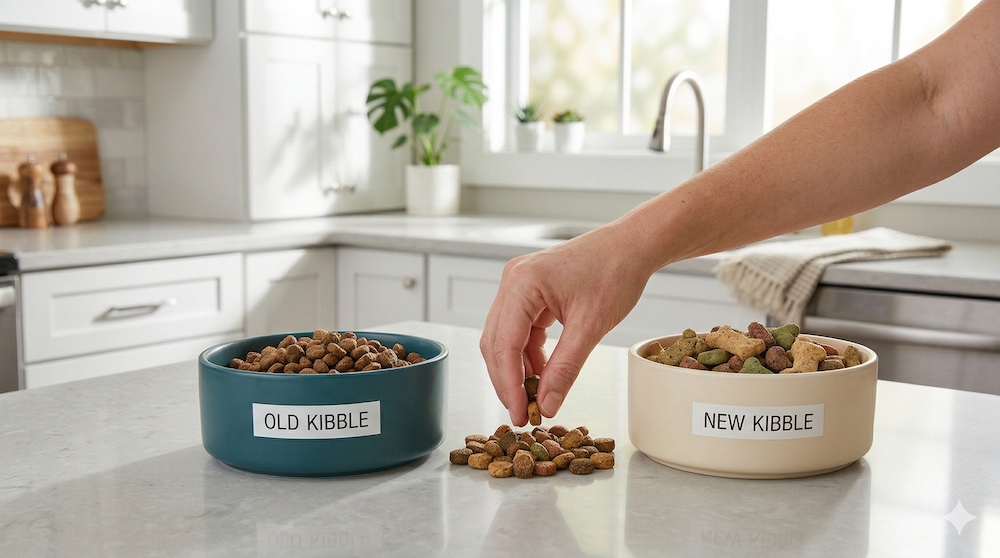
How to Switch Foods Without Making Things Worse
Switching to a sensitive stomach formula while ignoring the transition process is one of the most common mistakes owners make. A sudden change—even to a higher quality food—will almost always cause temporary digestive upset that gets blamed on the new food.
(⚠️ Rush the transition and you’ll undo all the benefits of switching—7–10 days minimum.)
For dogs with very sensitive stomachs, extend this to 14 days. Not sure how often to feed during the transition? Our dog feeding schedule by age covers portioning for every life stage.
The 10-day sensitive stomach transition:
| Day | Old Food | New Food |
|---|---|---|
| 1–3 | 75% | 25% |
| 4–6 | 50% | 50% |
| 7–8 | 25% | 75% |
| 9–10 | 0% | 100% |
Dogs with a history of chronic digestive issues often need the full 14 days rather than 10. If you see significant vomiting or diarrhea at any stage, hold that ratio for an extra 2–3 days before moving forward.
When Food Isn’t the Problem: Other Causes of Digestive Upset
Sometimes the issue isn’t the food at all. Before spending money on premium formulas, rule these out first.
- Eating too fast: A slow feeder bowl or puzzle feeder can eliminate vomiting caused by speed-eating in 24 hours—for around $15 (€15).
- Table scraps: Even small amounts of human food—especially fatty or seasoned foods—can cause acute digestive upset in sensitive dogs. Curious which human foods are safe to share and which are toxic? Our guide to human foods dogs can and can’t eat covers a complete kitchen safety checklist.
- Stress: Dogs experience stress-induced diarrhea just like humans. Moving house, a new pet, or a change in routine can all trigger temporary digestive issues.
- Parasites: Giardia and roundworm are common causes of chronic soft stools in dogs—and no dog food will fix a parasite. A simple fecal test at your vet rules this out quickly.
- Drinking from puddles or stagnant water: A surprisingly frequent cause of acute vomiting, especially in younger dogs.
📰 Giardia is documented by the Companion Animal Parasite Council (capcvet.org) as one of the most common causes of intermittent or chronic soft stools in dogs, and CAPC specifically recommends testing symptomatic dogs using a combination of fecal flotation with centrifugation and a sensitive antigen-based test—since Giardia cysts shed intermittently, a single standard fecal exam can miss an active infection. Cornell University College of Veterinary Medicine confirms that a second, antigen-specific fecal test is often needed precisely because of this intermittent shedding pattern—which is why a dog food switch that “isn’t working” may actually be an undiagnosed parasite rather than the wrong formula.
🐾 Outward Hound Fun Feeder Slow Bowl 🐾
🥣 Outward Hound Fun Feeder (Slow Feeder Bowl) — Slows eating by up to 10x—eliminates vomiting caused by speed-eating in 24 hours for around $15 (€15). The fastest and cheapest fix for dogs that wolf down food and immediately vomit. Available in multiple sizes for all breeds.
Conclusion: Start With the Cause, Then Fix the Food
A sensitive stomach is one of the most fixable dog health issues—when you approach it correctly. Identify whether the problem is ingredient-based, transition-related, or behavioral (eating too fast). Then choose a limited-ingredient, high-digestibility formula with a named protein and transition slowly.
Most dogs show clear improvement within 2–4 weeks of the right food. If yours doesn’t, that’s your signal to see a vet rather than try another bag.

Key takeaways:
- ✅ Single named protein, limited ingredients.
- ✅ Avoid artificial preservatives and unnamed proteins.
- ✅ Always transition over 7–10 days minimum.
- ✅ Add a probiotic if symptoms are slow to resolve.
- ✅ Rule out parasites before blaming the food.
- ✅ Persistent symptoms = vet visit, not another food switch.
(⚠️ Persistent symptoms always warrant a vet visit—food is not always the answer.)
📝 Editor’s Note: When researching this guide, I verified the probiotic strain in Purina Pro Plan Sensitive directly from Purina’s product documentation—Enterococcus faecium SF68 at 1 × 10⁸ CFU per serving. I also cross-referenced all three top picks against the WSAVA Global Nutrition Committee criteria at wsava.org and checked the FDA recall database at fda.gov/animal-veterinary for each brand. I also verified AAFCO feeding trial status for the Sensitive Skin & Stomach formula directly against Purina’s official product label documentation—the formula carries the “animal feeding tests” statement, confirming genuine feeding trial substantiation rather than formulation-only status.
👉🏼 Complete Dog Nutrition Guide — everything from label reading to life-stage feeding.
👉🏼 Best Dog Food for Puppies — gentle formulas designed for developing stomachs.
👉🏼 Dog Feeding Schedule by Age — how often to feed for optimal digestion.
👉🏼 Human Foods Dogs Can and Can’t Eat — stop accidental dietary triggers.
👉🏼 Fresh Dog Food vs Kibble — which supports better overall health.

🐕 Browse dog food, treats, toys, health products, supplements, grooming and everything else your dog needs 🐾

🐕 Browse raw dog food, freeze-dried meals, chews, bones and natural treats from Indiana farms 🐾

🐕 Browse science-backed dry dog food, wet food, breed-specific formulas, and veterinary diets for your canin 🐾
(This post contains affiliate links. If you purchase through our links, we may earn a small commission at no extra cost to you. This never influences our editorial opinions.)
FAQ: Sensitive Stomach Dog Food—Your Questions Answered
What is the best dog food for a dog with a sensitive stomach?
Hill’s Science Diet Sensitive Stomach & Skin is the most consistently vet-recommended option, thanks to its prebiotic fiber blend, high digestibility, and clean ingredient list. For dogs with chicken intolerance, Purina Pro Plan Sensitive Skin & Stomach (Salmon) is the strongest alternative.
What ingredients cause sensitive stomachs in dogs?
The most common dietary triggers are beef, dairy, wheat, soy, and artificial additives. Contrary to popular belief, grains like rice and oatmeal are rarely the culprit—they are actually among the most digestible ingredients in commercial dog food.
How long does it take for a new dog food to work?
Most dogs show noticeable improvement in stool consistency and vomiting frequency within 2–4 weeks of switching to an appropriate sensitive stomach formula—provided the transition was done gradually over 7–10 days. Full gut microbiome stabilization can take up to 8 weeks.
Should I add probiotics to my dog’s food?
Yes, if your dog has chronic digestive issues. A daily canine probiotic—such as Purina Fortiflora or Zesty Paws Probiotic Bites—can significantly accelerate gut microbiome recovery when switching foods. Always choose dog-specific probiotics, not human supplements.
When should I see a vet about my dog’s sensitive stomach?
See a vet if your dog vomits more than twice a week, has blood in their stool, is losing weight, shows signs of pain when eating, or hasn’t improved after 6 weeks on a new sensitive stomach formula. These are symptoms of conditions that food alone cannot fix—including IBD, pancreatitis, or parasites.