
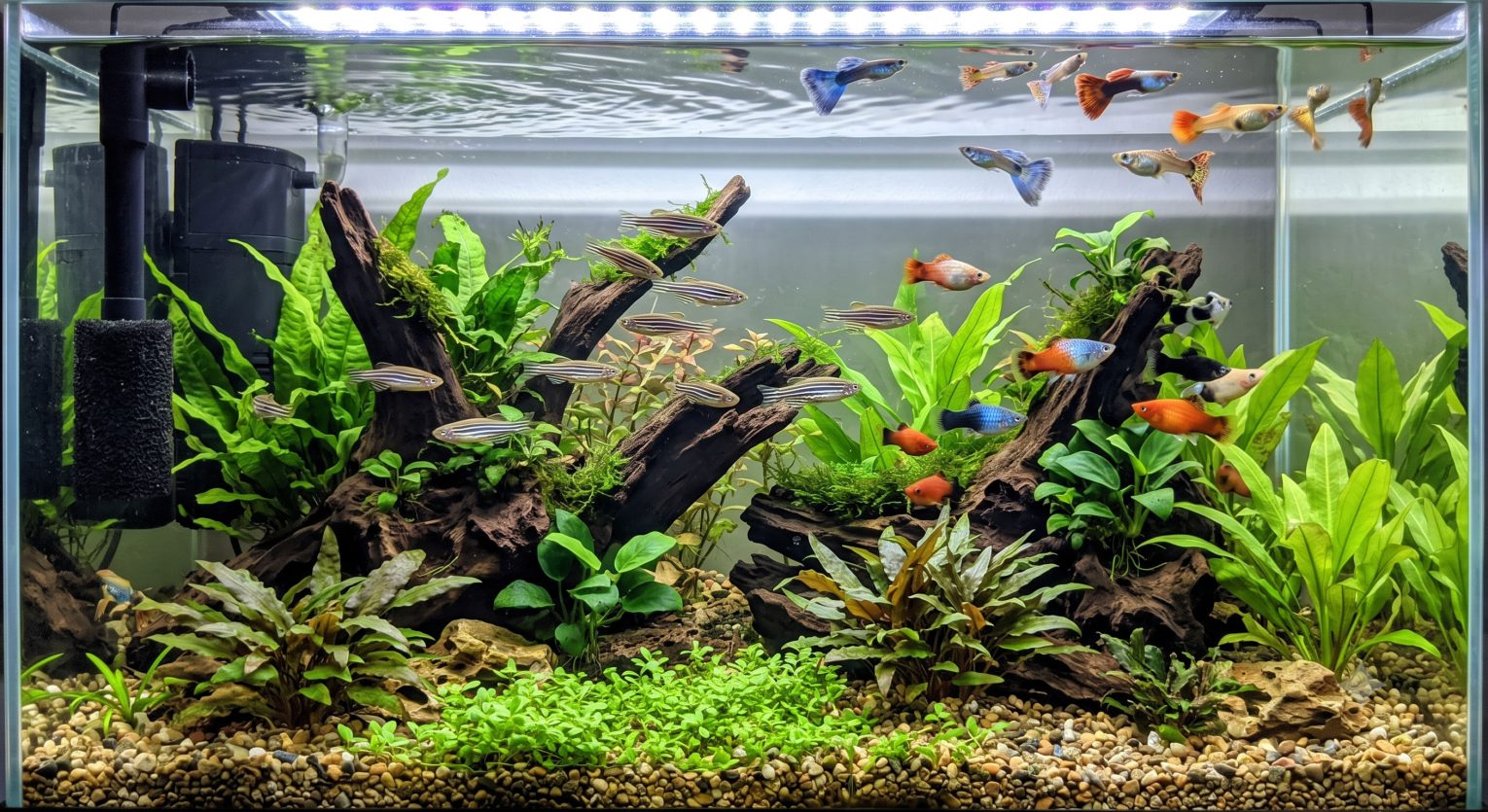
The best beginner fish combine hardiness, peaceful temperament, and easy availability: zebra danios, guppies, platies, cherry barbs, and white cloud mountain minnows tolerate the inevitable small mistakes of a first aquarium far better than more delicate species. Two popular “beginner” picks— neon tetras and otocinclus catfish—are commonly recommended but actually need an already-established, fully cycled tank to thrive, not a brand-new setup.
Before choosing any fish from this list, make sure your tank has completed its nitrogen cycle—see our How to Cycle an Aquarium: The Nitrogen Cycle Explained guide if you haven’t confirmed this yet. Adding even the hardiest fish to an uncycled tank undermines everything else on this list.
Fish selection is one part of a much bigger picture covered in our Fish Care Guide—the complete hub for freshwater aquarium setup and maintenance.
(💡 A well-chosen community tank combines hardy, peaceful species that tolerate a beginner’s inevitable small mistakes.)
What Makes a Fish “Beginner-Friendly”
Before the list itself, three qualities separate a genuinely good beginner fish from one that simply looks easy in a pet store display tank:
1️⃣ Hardiness: Tolerance for the small, inevitable fluctuations in temperature, pH, and water quality that happen in every new aquarium—especially during and shortly after cycling.
2️⃣ Peaceful temperament: Compatible with a mixed community of other small, non-aggressive species without constant fin-nipping or bullying.
3️⃣ Appropriate adult size for a starter tank: Able to live its entire life comfortably in a 10–20 gallon (38–76 L) tank without needing to be rehomed as it grows.
⚠️ Being sold as a “beginner fish” in a store doesn’t guarantee all three. Several genuinely popular picks—covered honestly below—need a more mature, established tank environment than a brand new setup provides.
(🐠 Aquarist’s Note: “The fish on this list forgive mistakes. That’s the entire point of a beginner pick— not that they need zero care, but that a missed water change or a slightly-off parameter won’t kill them the way it might a more sensitive species”—LovingPetsGuide Aquatics Advisor.)
The Top 10 Beginner Community Fish
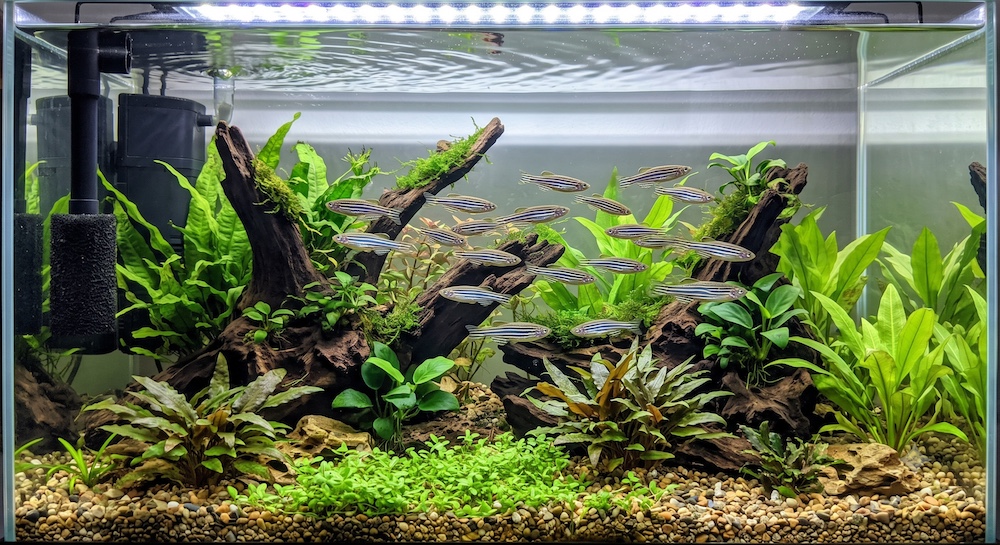
1. Zebra Danio
- 🟦 Tank size: 10 gal (38 L) minimum, group of 6+.
- 🎭 Temperament: Very peaceful, active schooling fish.
- 📏 Adult size: ~2 in (5 cm).
Zebra danios are among the hardiest community fish available — fast, active, and highly tolerant of minor water quality swings.
One of the hardiest community fish available and a genuinely good first-fish choice. Fast-moving, active swimmers that tolerate a wide temperature range and minor water quality swings better than almost any other species on this list.
❗️Common mistake: Keeping too few. Danios are schooling fish that show stress and reduced color when kept in groups smaller than 6.
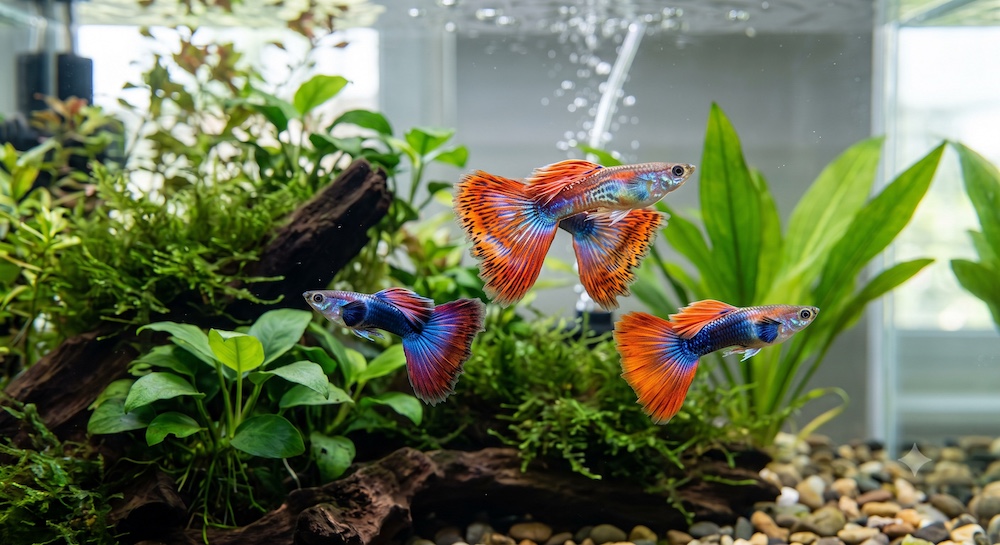
2. Guppy
- 🟦 Tank size: 10 gal (38 L) minimum.
- 🎭 Temperament: Peaceful, livebearer.
- 📏 Adult size: 1.5–2.4 in (4–6 cm).
Guppies come in dozens of color varieties and tolerate a wide range of water conditions, making them a classic beginner choice.
Colorful, easy, and endlessly popular for good reason—guppies tolerate a wide range of water conditions and are readily available in dozens of color varieties.
❗️Common mistake: Mixing males and females without a plan. Guppies are livebearers and breed prolifically—a tank can become overstocked within weeks. Keep males only, or plan for regular fry management.
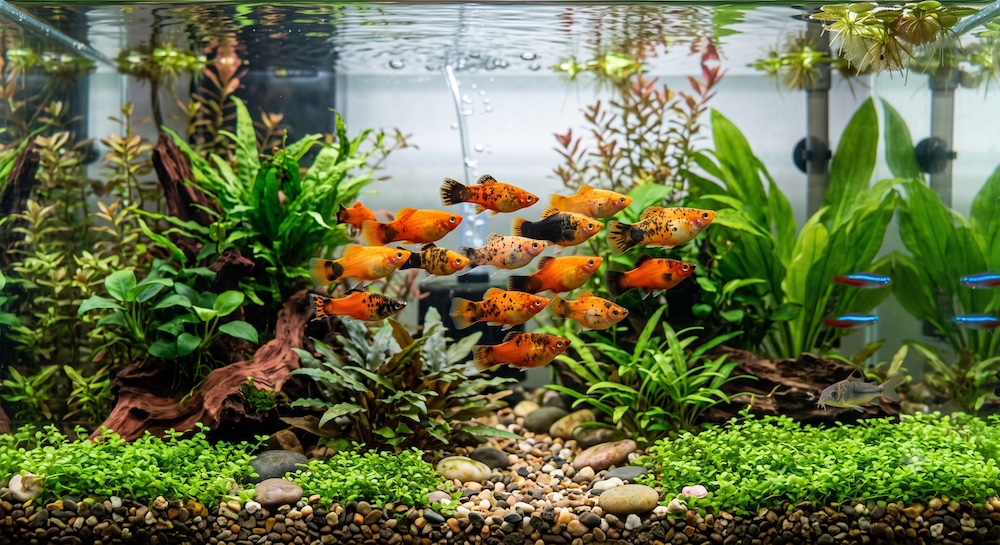
3. Platy
- 🟦 Tank size: 10–20 gal (38–76 L).
- 🎭 Temperament: Peaceful, livebearer.
- 📏 Adult size: ~2.5 in (6 cm).
Platies are calm, sturdy livebearers that handle a beginner’s early mistakes well while adding mild algae control.
Similarly hardy to guppies, with a calmer, slightly sturdier build. Platies handle minor mistakes well and contribute mild algae control as a bonus.
❗️Common mistake: Same livebearer overpopulation risk as guppies—same solution applies.
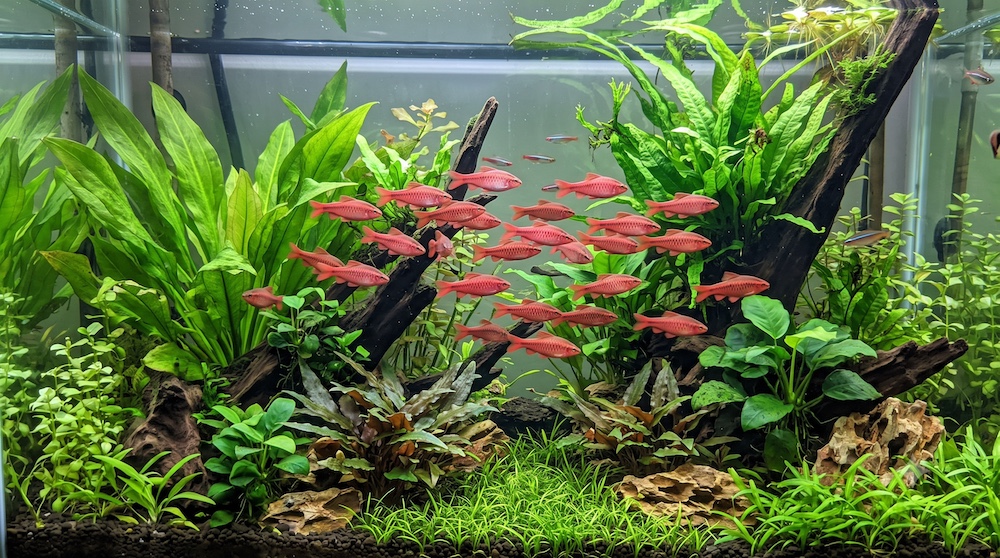
4. Cherry Barb
- 🟦 Tank size: 15–20 gal (57–76 L), group of 6+.
- 🎭 Temperament: Peaceful (unlike some nippier barb species).
- 📏 Adult size: ~2 in (5 cm).
Unlike some nippier barb species, cherry barbs are genuinely peaceful and safe for a mixed community tank.
A genuinely peaceful barb species—an important distinction, since several other barb species have a reputation for fin-nipping that makes them poor community fish. Cherry barbs avoid that issue entirely.
🐾 Community Fish Flakes & Pellets 🐾
🐟 Community Tropical Fish Food — A quality flake or micro-pellet formula covers the nutritional needs of most community species on this list. Feed only what fish consume within 2–3 minutes to avoid fouling water quality.
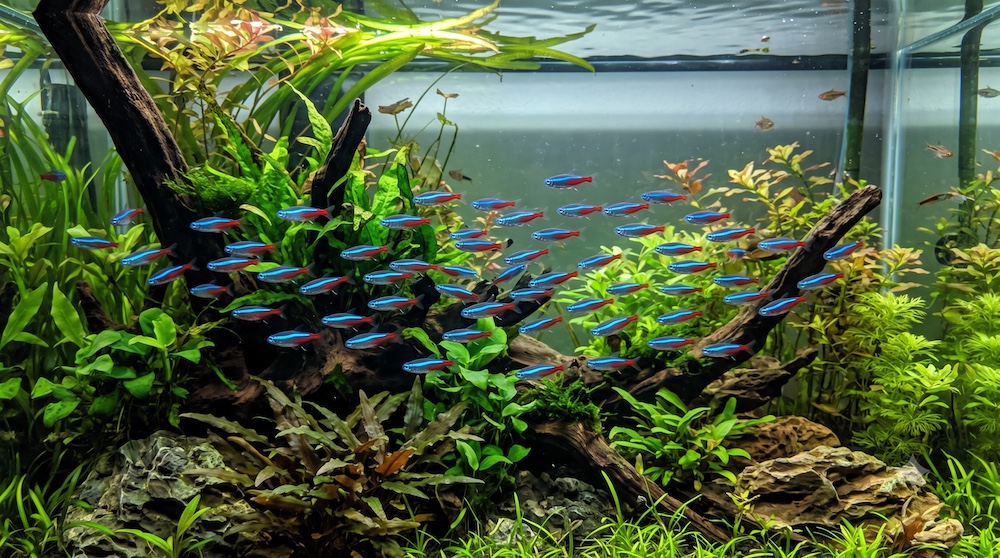
5. Neon Tetra — ⚠️ Needs an Established Tank
- 🟦 Tank size: 10–20 gal (38–76 L), group of 6+.
- 🎭 Temperament: Very peaceful schooling fish.
- 📏 Adult size: ~1.5 in (4 cm).
Neon tetras are popular and peaceful, but do best in an already-established tank rather than a brand-new setup.
One of the most iconic community fish—but its “easy beginner fish” reputation deserves an honest caveat. Neon tetras are meaningfully more sensitive to unstable water parameters than the other fish on this list, and are frequently among the first casualties when added too early to a newly cycled tank. Add neons only after your tank has been fully cycled and stable for several weeks, not on day one.
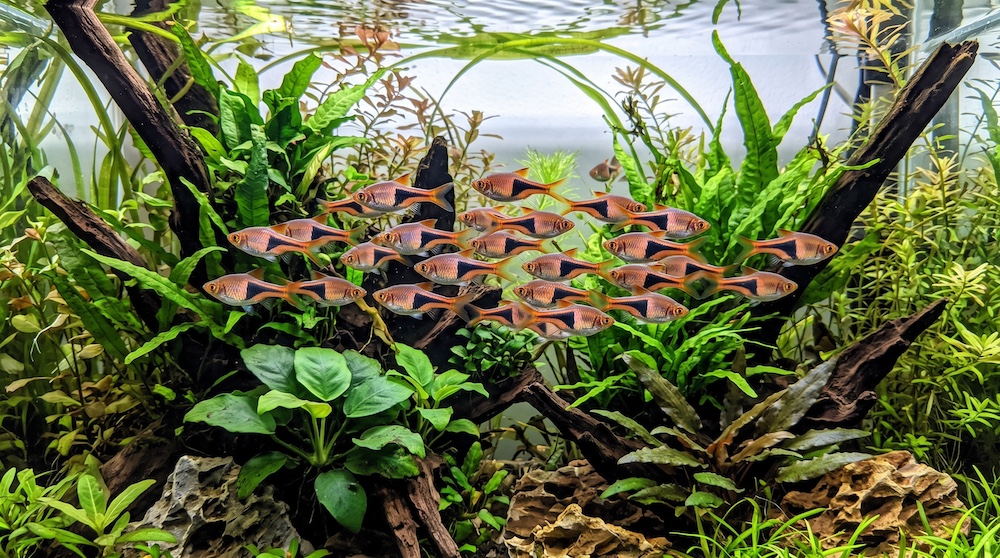
6. Harlequin Rasbora
- 🟦 Tank size: 10–20 gal (38–76 L), group of 6+.
- 🎭 Temperament: Very peaceful schooling fish.
- 📏 Adult size: ~2 in (5 cm).
Harlequin rasboras deliver the same schooling visual appeal as neon tetras with noticeably better tolerance for early mistakes.
A genuinely hardy alternative that delivers similar schooling visual appeal to neon tetras with noticeably better tolerance for a beginner’s early mistakes. A strong substitute if you want that classic schooling-nano-fish look without the neon tetra’s sensitivity.
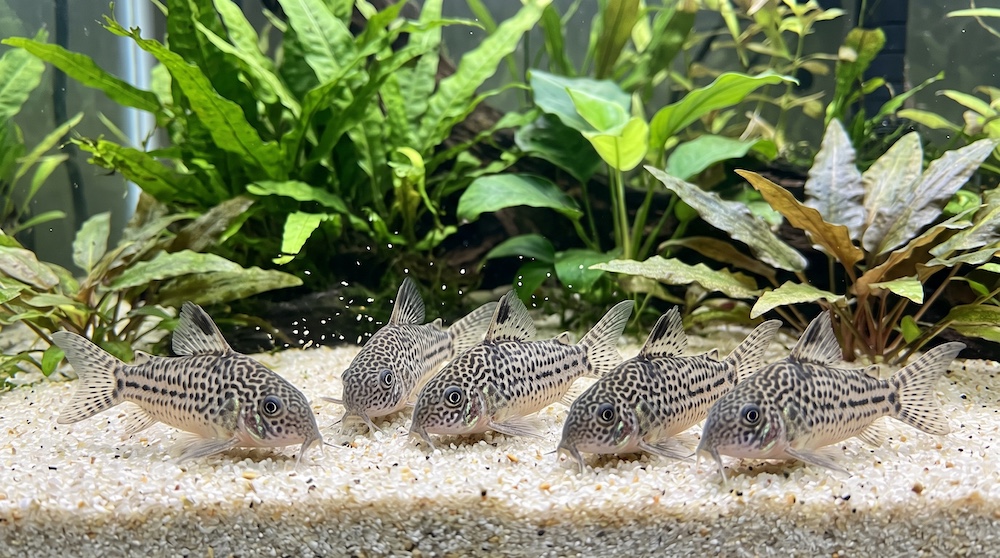
7. Corydoras Catfish
- 🟦 Tank size: 10–20 gal (38–76 L), group of 6+.
- 🎭 Temperament: Very peaceful bottom-dweller.
- 📏 Adult size: 1–2.5 in (2.5–6 cm) depending on species.
Corydoras are social bottom-dwellers that need groups of six or more to feel secure and thrive.
A peaceful bottom-dwelling species that spends its time sifting substrate and cleaning up leftover food. Corys are social and must be kept in groups— a single cory left alone shows clear signs of stress.
❗️Common mistake: Keeping just one or two. Corys need groups of at least 6 to feel secure, and sand or smooth substrate protects their sensitive barbels from injury.
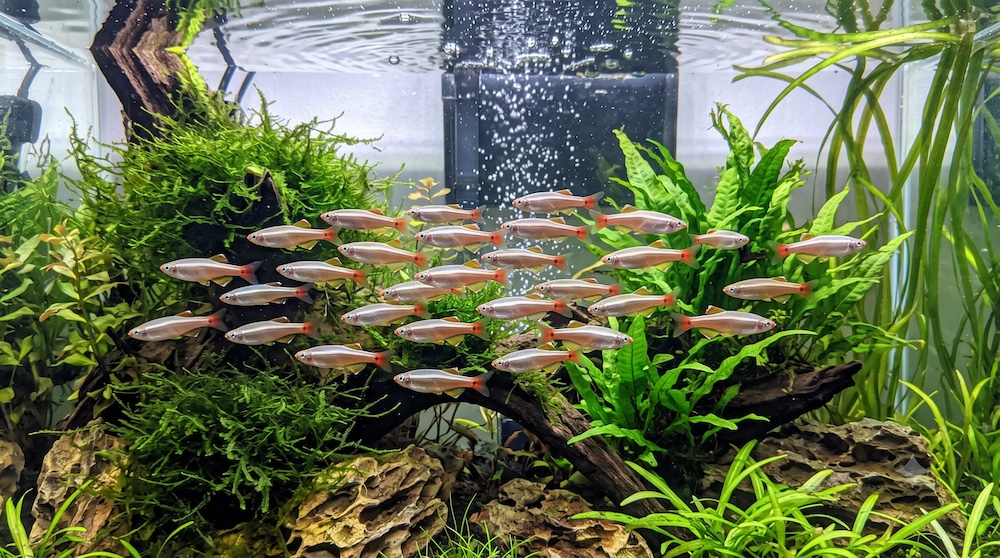
8. White Cloud Mountain Minnow
- 🟦 Tank size: 10 gal (38 L) minimum, group of 6+.
- 🎭 Temperament: Very peaceful, extremely hardy.
- 📏 Adult size: ~1.5 in (4 cm).
Arguably the hardiest fish on this list — white cloud mountain minnows tolerate unheated, room-temperature tanks better than most tropical species.
Arguably the single hardiest fish on this entire list—capable of tolerating room-temperature, unheated tanks far better than most tropical species. An excellent genuine first-fish choice, particularly for a cooler or unheated starter setup.
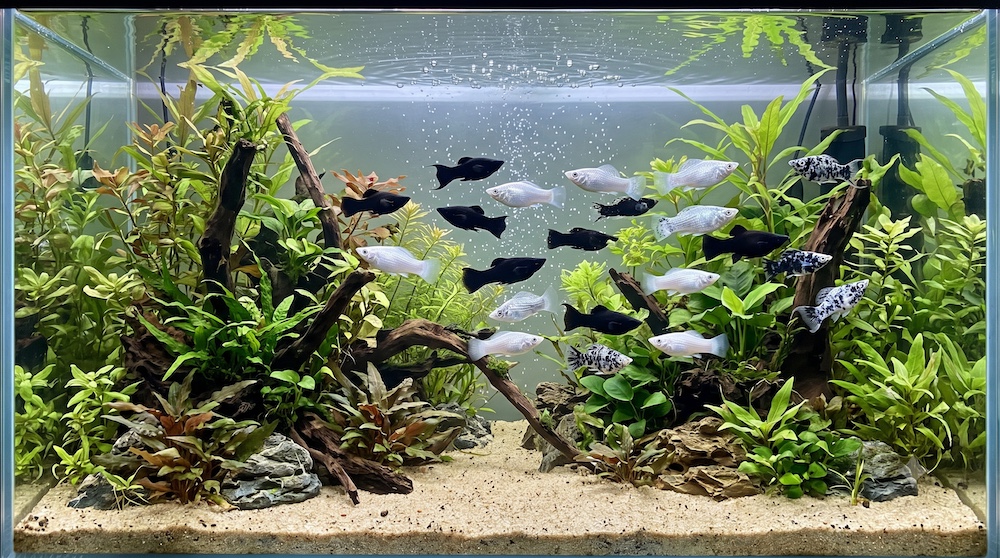
9. Molly
- 🟦 Tank size: 15–20 gal (57–76 L).
- 🎭 Temperament: Peaceful, livebearer.
- 📏 Adult size: 3–4.5 in (7.5–11 cm).
Mollies grow larger than many beginners expect and appreciate more swimming room than a small starter tank provides.
Larger and hardier than guppies or platies, mollies tolerate harder water well and can even adapt to slightly brackish conditions. Like other livebearers, expect breeding if males and females are kept together.
❗️Common mistake: Undersized tanks. Mollies grow larger than many beginners expect and need more swimming room than a small starter tank provides.
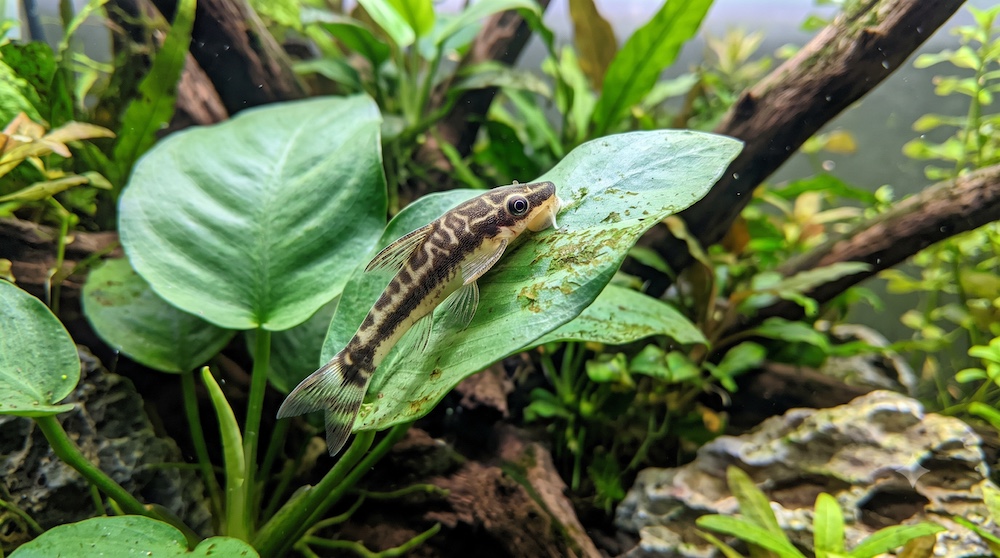
10. Otocinclus Catfish (Oto Cat) — ⚠️ Needs an Established Tank
- 🟦 Tank size: 10–20 gal (38–76 L), group of 6+.
- 🎭 Temperament: Very peaceful, shy algae-eater.
- 📏 Adult size: 1.5–2 in (4–5 cm).
Otocinclus rely on grazing natural algae and do best in an established planted tank rather than a freshly cycled new setup.
A popular, genuinely useful algae-control fish for planted tanks—but like neon tetras, otocinclus have an “easy beginner fish” reputation that doesn’t match their actual needs. They rely heavily on grazing natural algae for nutrition and generally do poorly in a brand-new tank that hasn’t yet grown any. Add otos only to an established, several- months-old planted tank with visible algae growth, not a freshly cycled new setup.
🐾 Aquarium Heaters 🐾
🌡️ Submersible Aquarium Heaters — Most fish on this list are tropical species needing a stable 75–80°F (24–27°C). A reliable heater with an adjustable thermostat prevents the temperature swings that stress fish most.
Comparison Table
| Fish | Min. Tank | Group Size | Difficulty |
|---|---|---|---|
| 🐠 Zebra Danio | 10 gal (38 L) | 6+ | Easiest |
| 🐠 Guppy | 10 gal (38 L) | Any | Easiest |
| 🐠 Platy | 10–20 gal (38–76 L) | Any | Easiest |
| 🐠 Cherry Barb | 15–20 gal (57–76 L) | 6+ | Easy |
| 🐠 Neon Tetra | 10–20 gal (38–76 L) | 6+ | Easy* |
| 🐠 Harlequin Rasbora | 10–20 gal (38–76 L) | 6+ | Easy |
| 🐠 Corydoras | 10–20 gal (38–76 L) | 6+ | Easy |
| 🐠 White Cloud Minnow | 10 gal (38 L) | 6+ | Easiest |
| 🐠 Molly | 15–20 gal (57–76 L) | Any | Easy |
| 🐠 Otocinclus | 10–20 gal (38–76 L) | 6+ | Easy* |
*Easy once tank is established—not for a brand-new cycle. See notes above.
📰 The species characteristics, tank size requirements, and temperament data in this guide are consistent with veterinary-reviewed content published by PetMD (petmd.com), which identifies hardiness, peaceful temperament, and appropriate adult size as the core criteria for beginner-suitable freshwater fish, and specifically notes that stable water parameters remain important for species like neon tetras despite their popularity among new aquarium keepers.
Common Stocking Mistakes
| ❌ Adding fish before the tank is cycled: No fish on this list—regardless of hardiness—should go into water that hasn’t completed its nitrogen cycle. See How to Cycle an Aquarium if you haven’t confirmed this yet. |
| ❌ Trusting “beginner fish” labeling without checking the specific species: As covered above, neon tetras and otocinclus are commonly sold as easy beginner fish but actually need an established tank to thrive. |
| ❌ Understocking schooling species: Danios, tetras, rasboras, and corydoras are all social species that need groups of 6 or more to feel secure—a lone individual shows visible signs of stress. |
| ❌ Ignoring livebearer population growth: Guppies, platies, and mollies breed readily when males and females are kept together. Plan for this before it becomes an overstocking problem. |
| ❌ Underestimating adult size: Mollies in particular grow larger than many beginners expect. Always plan tank size around adult size, not the size fish are sold at in stores. |
Conclusion
The best beginner fish aren’t necessarily the most popular ones sold in stores—they’re the species that genuinely tolerate the small mistakes every new aquarium owner makes. Zebra danios, guppies, platies, cherry barbs, and white cloud mountain minnows are the most forgiving true first-fish choices. Save neon tetras and otocinclus for a few months in, once your tank is established and stable.
Key takeaways:
- ✅ Confirm your tank is fully cycled before adding any fish—no exceptions.
- ✅ Zebra danios and white cloud minnows are among the hardiest genuine beginner picks.
- ✅ Neon tetras and otocinclus need an established tank, not a brand-new one.
- ✅ Livebearers (guppies, platies, mollies) breed readily—plan for population growth.
- ✅ Schooling species need groups of 6+ to feel secure.
- ✅ Always plan tank size around adult size, not store size.
📝 Editor’s Note: Species characteristics, tank size requirements, and beginner suitability in this guide were cross-referenced with PetMD (petmd.com/fish/care/best-aquarium-fish-for-beginners) and consistent guidance across established aquarium hobbyist resources regarding hardiness and community compatibility.
👉🏼 Fish Care Guide—complete hub for freshwater aquarium setup and maintenance.
👉🏼 How to Cycle an Aquarium: The Nitrogen Cycle Explained—the essential first step before any fish.
👉🏼 The Best Tank Mates for Betta Fish—if a betta is part of your stocking plan.
👉🏼 Aquarium Water Quality: pH, Ammonia & Nitrates Guide—ongoing testing once your fish are in.
👉🏼 Best Aquarium Filters: HOB, Sponge & Canister Compared—filtration to support your new community.

🐠 Browse fish fish food, tanks, filters, heaters, decor and everything else your aquarium needs 🐾
(This post contains affiliate links. If you purchase through our links, we may earn a small commission at no extra cost to you. This never influences our editorial opinions.)
FAQ: Best Fish for Beginners
What is the easiest fish to keep for a total beginner?
Zebra danios and white cloud mountain minnows are generally the two hardiest, most forgiving choices for a genuine first fish—both tolerate temperature and water quality fluctuations better than almost any other community species, and white clouds can even handle unheated, room-temperature tanks.
Are neon tetras really not good for beginners?
Neon tetras are peaceful and popular, but they are more sensitive to unstable water parameters than their “easy beginner fish” reputation suggests. They do best added to a tank that has already completed its nitrogen cycle and remained stable for several weeks, rather than a brand new setup.
How many fish can I add to a new tank at once?
Add fish gradually rather than fully stocking a tank on day one, even after cycling is complete. Adding too many fish at once can temporarily overwhelm the bacterial colony’s capacity, causing a mini-ammonia spike similar to an uncycled tank.
Do guppies and platies really need separate male-only tanks?
Not necessarily, but keeping both sexes together means breeding is essentially guaranteed—these are livebearers that reproduce readily in home aquarium conditions. If you don’t want ongoing fry, keep males only, or have a plan for rehoming offspring.
Can I mix all 10 of these fish in one tank?
Not all at once in a small starter tank—stocking depends on tank size, and several of these species need groups of 6 or more to thrive, which adds up quickly. A 20-gallon (76 L) tank comfortably supports a thoughtful combination of 2–3 of these species; consult a stocking calculator or aquarium specialist for your specific tank size.
Why do my corydoras seem stressed even though I have two of them?
Corydoras are highly social and need groups of at least 6 to feel secure—two is not enough. A cory kept alone or in a pair often shows reduced activity and hides constantly, mistaken by owners for a naturally shy personality rather than a stocking issue.