
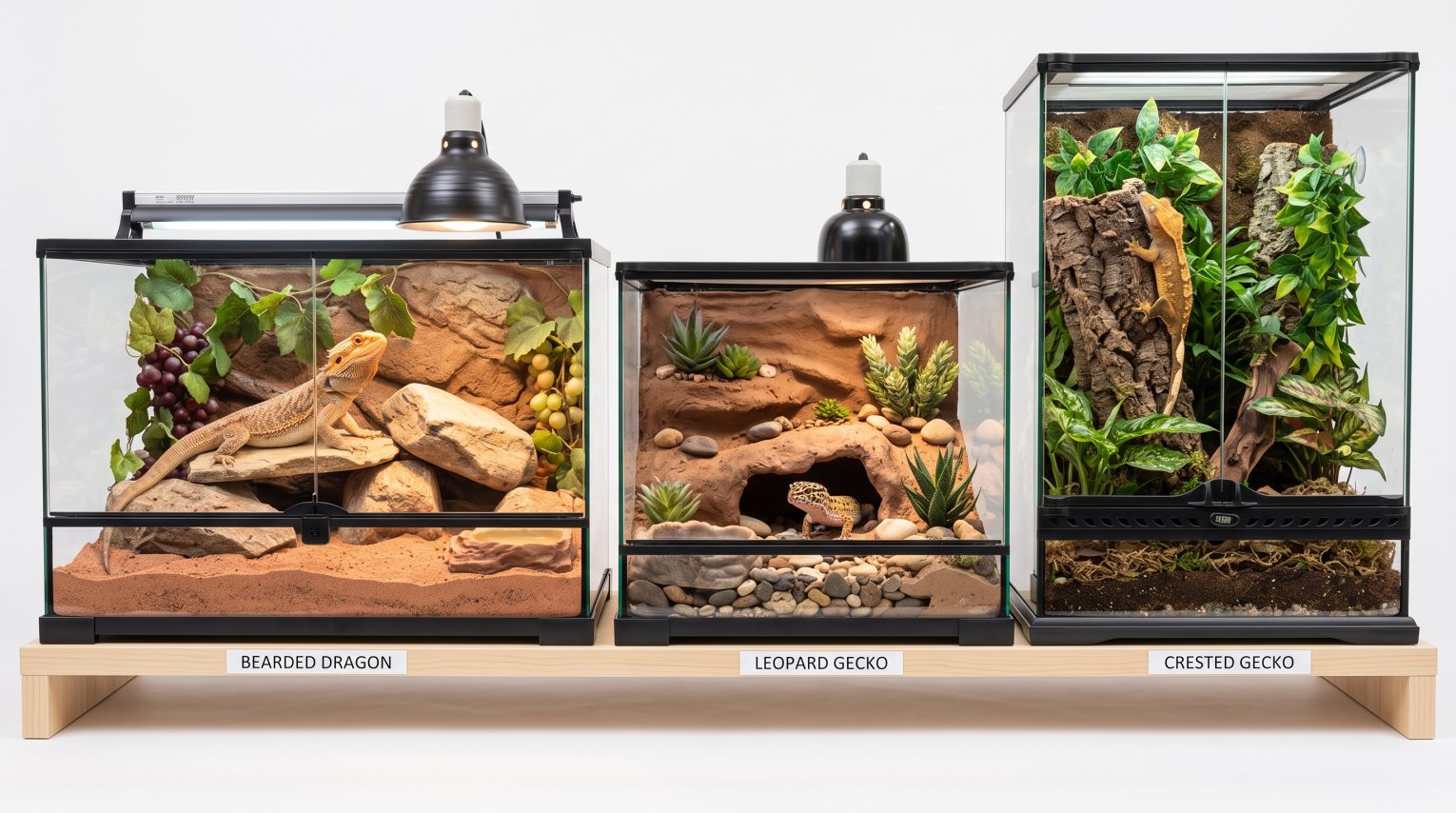
The easiest beginner reptiles are leopard geckos, crested geckos, and corn snakes—each has forgiving care requirements, docile temperament, and widely available setup guidance. Bearded dragons and ball pythons are also excellent beginner choices but involve slightly more setup complexity (stronger UVB and larger enclosures for bearded dragons; feeding consistency considerations for ball pythons).
Care complexity varies most by three factors: UVB requirements, diet type, and temperature precision needed. Crested geckos and leopard geckos both require little to no UVB and comparatively simple diets, making them the lowest-complexity starting points; bearded dragons need stronger UVB and a more involved diet ratio that shifts with age. This guide compares real care requirements across species so you can choose based on what you’re actually able to provide, not just popularity.
Species selection is one part of a much bigger picture covered in our Exotic Pet Care Guide—the complete hub for reptile diet, lighting, and habitat setup. Whichever species you choose, correct UVB setup remains essential—see UVB Lighting for Reptiles: Which Bulb Does Your Pet Need? for the complete guide once you’ve decided.
(💡 “Beginner reptile” covers genuinely different care profiles—UVB needs, diet type, and temperature precision all vary meaningfully by species.)
Table of Contents
What Actually Makes a Reptile “Beginner-Friendly”
Before comparing species, it helps to understand what genuinely separates an easier reptile from a more demanding one—since “beginner-friendly” gets applied loosely across very different care profiles.
💡 UVB complexity. Some species need strong, precisely placed UVB (bearded dragons); others need low-level UVB as a beneficial addition rather than a strict requirement (leopard geckos, crested geckos); none are genuinely UVB-free regardless of older marketing claims.
🥣 Diet complexity. A strict insectivore diet (leopard gecko) is simpler to manage than an omnivore diet ratio that shifts with age (bearded dragon), which is simpler again than tracking live prey feeding schedules for a snake.
🌡️ Temperature precision. Some species tolerate a wider workable range; others—like crested geckos, which can overheat more easily than most reptiles— need closer attention to staying within a narrower band.
🎭 Handling tolerance and temperament. Most commonly recommended beginner species share genuine docility, but individual variation exists within every species.
(🦎 Reptile Keeper’s Note: “‘Beginner reptile’ gets used as a marketing label more than a precise description. The species on this list genuinely earn it—but earn it for different reasons, with different trade-offs. Match the species to what you can realistically provide, not just to popularity.”—LovingPetsGuide Reptile Advisor)
Comparison Table
| Species | UVB Need | Diet | Temperature Precision | Lifespan |
|---|---|---|---|---|
| 🦎 Leopard Gecko | Low (beneficial, not strict) | Strict insectivore | Moderate (heat mat) | 15–20 years |
| 🦎 Crested Gecko | Very low/optional | Powdered diet, very simple | High (heat-sensitive) | 15–20 years |
| 🦎 Bearded Dragon | High (strong UVB required) | Omnivore, ratio shifts with age | Moderate | 10–15 years |
| 🐍 Corn Snake | Low | Whole prey, simple schedule | Moderate | 15–20 years |
| 🐍 Ball Python | Low (beneficial) | Whole prey, feeding can be inconsistent | Moderate | 20–30 years |
| 🐢 Russian Tortoise | Moderate | Herbivore, leafy greens | Moderate | 50+ years |
Already Covered in Depth
Two species featured throughout this hub already have complete, dedicated care guides—brief summaries here, full detail at the links.
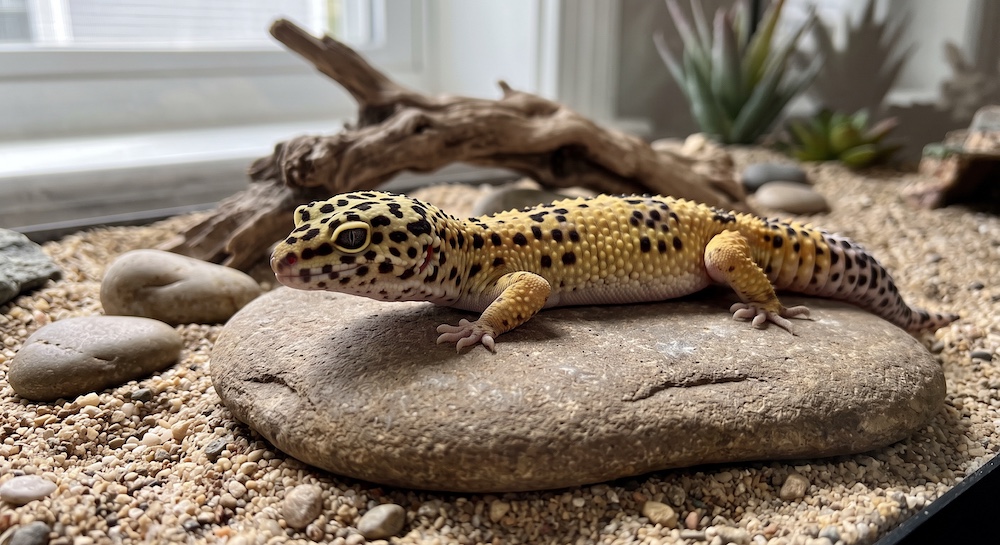
Leopard Gecko
🦎 Leopard geckos combine a strict insectivore diet with minimal UVB needs — the most forgiving overall lizard for genuine beginners.
The most consistently recommended lizard for genuine beginners: strict insectivore diet with no plant-matter component to track, heat delivered via a simple under-tank heat mat rather than an overhead basking bulb, and—contrary to older advice—low-level UVB now considered a real health benefit rather than an unnecessary extra. See Leopard Gecko Care Guide: The Best Beginner Reptile for the complete setup.
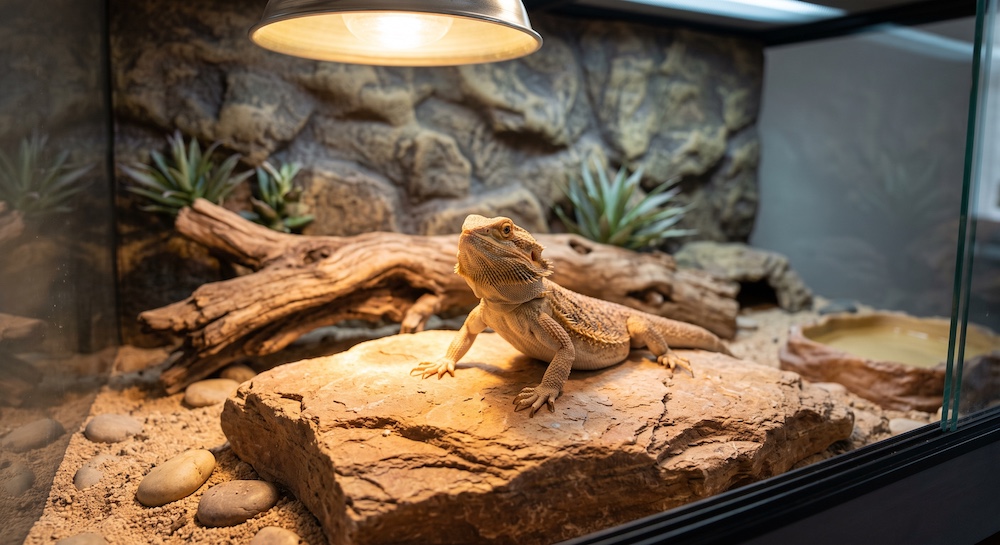
Bearded Dragon
🦎 Bearded dragons offer daytime interaction and activity, at the cost of stronger UVB and a diet ratio that shifts with age.
More involved than a leopard gecko, but still genuinely beginner-appropriate: strong UVB and a diet ratio that shifts meaningfully from juvenile (more insects) to adult (mostly leafy greens) are the two systems requiring the most attention. See Bearded Dragon Care Guide: Diet, Heat & Habitat for the complete setup.
🐾 Reptile Starter Kits 🐾
📦 Species-Specific Starter Kits — Bundled kits combine a correctly sized enclosure, heating, and UVB in one package, taking the guesswork out of initial equipment shopping. Chewy carries dedicated kits for both bearded dragons and leopard geckos.
New to This Guide
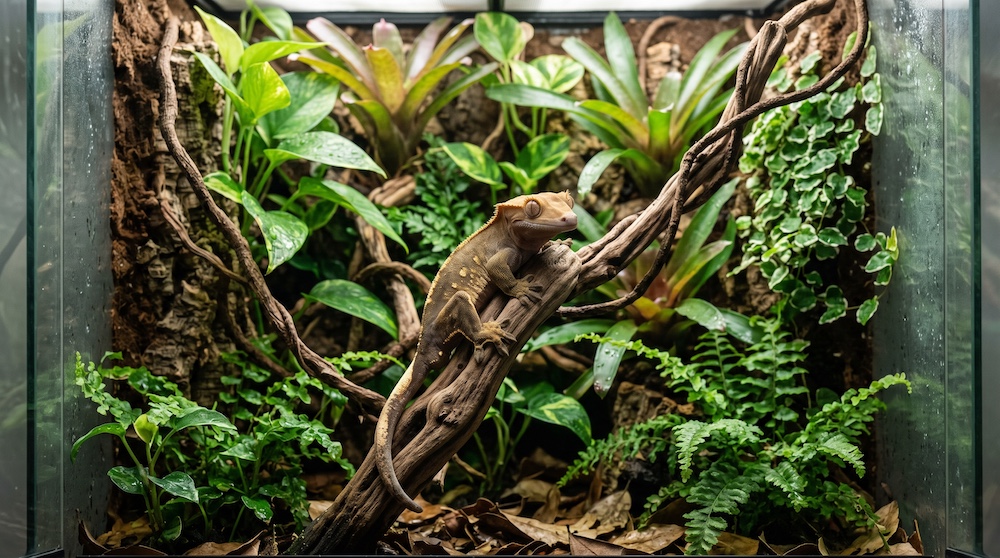
Crested Gecko
🦎 Crested geckos are arboreal, needing vertical climbing space rather than the horizontal floor space most other beginner reptiles require.
❔Why it’s beginner-friendly: Arguably even lower- maintenance than a leopard gecko in some respects. Crested geckos don’t strictly require UVB to survive, and many owners keep them successfully without it—though, echoing the same evolving consensus already covered for leopard geckos, low- level UVB (targeting roughly 1.0 UVI or less) is now considered a genuine benefit when provided at correct low strength and distance, not an unnecessary addition.
🥣 Diet: The simplest feeding routine of any species on this list—a commercial powdered diet mixed with water serves as a complete, primary food source. Live insects can be offered as occasional enrichment but aren’t required the way they are for strict insectivores.
🌡️ Temperature: This is the one area where crested geckos need more attention than their reputation suggests. They’re genuinely heat-sensitive and can overheat more easily than most commonly kept reptiles—room temperature in the 72–80°F (22–27°C) range is typically sufficient without supplemental heat, but any heat source used absolutely needs thermostat control.
🏡 Enclosure: Arboreal—crested geckos live in trees in the wild and need a vertical enclosure with climbing branches and plants, a different shape requirement than the horizontal floor space bearded dragons and leopard geckos need.
📰 The evolving UVB recommendation for crested geckos—not strictly required for survival, but genuinely beneficial when provided at low strength (targeting approximately 1.0 UVI or less)—mirrors the same shift in herpetological consensus already documented for leopard geckos elsewhere in this hub. This reflects a broader pattern across shade-dwelling and crepuscular species generally, where species once assumed to receive no meaningful natural UV exposure are now understood to benefit from correctly dosed low-level UVB.
🐾 Crested Gecko Powdered Diet 🐾
🥣 Complete Powdered Crested Gecko Diet — Mix with water to create a complete, primary food source—no live insect tracking required as a baseline. Offer occasional insects as enrichment if desired, not as a nutritional necessity.
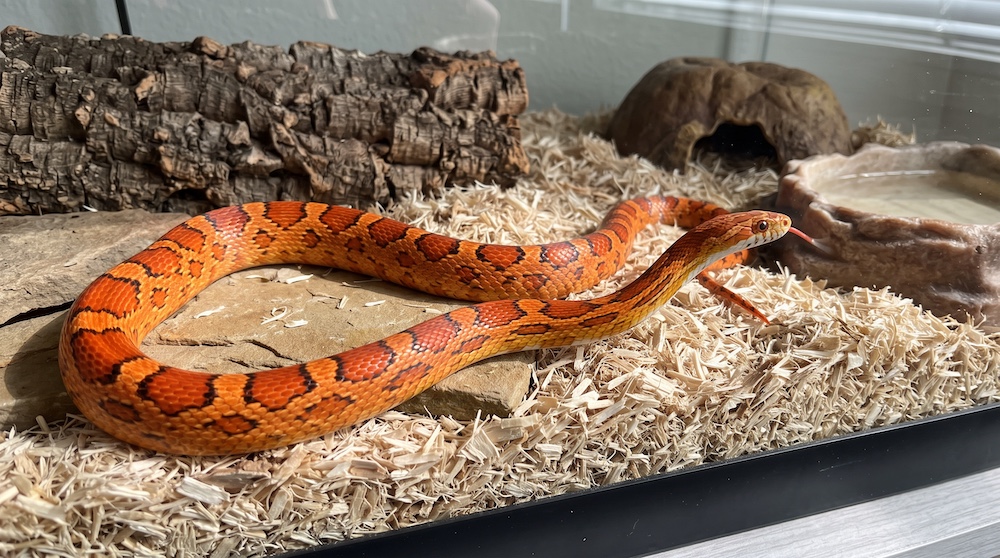
Corn Snake
🐍 Corn snakes are widely considered the most beginner-appropriate pet snake, largely due to reliable, consistent eating.
❔Why it’s beginner-friendly: Widely considered the most beginner-appropriate pet snake, largely because of one specific advantage: reliable eating. Corn snakes rarely refuse food, which removes one of the most common sources of new-owner anxiety with pet snakes.
🥣 Diet: Appropriately sized frozen-thawed mice, fed on a simple, predictable schedule. A single prey type at the correct size is genuinely simpler to manage than tracking multiple insect species and ratios.
📏 Size and handling: Stays at a manageable adult size (roughly 4–5 ft / 120–150 cm), hardy, and generally docile with regular, gentle handling.
🏡 Housing: Simple habitat requirements—secure enclosure (corn snakes are accomplished escape artists, so a genuinely secure lid matters), a hide on each temperature zone, and appropriate substrate for burrowing behavior.
⚠️ A note on ball pythons for comparison: Ball pythons are equally popular and similarly docile, but are more prone to periods of appetite loss or food refusal—particularly as juveniles or during stress—which can cause genuine anxiety for new owners even when it isn’t medically serious. Corn snakes’ more reliable eating makes them the slightly lower-stress first-snake choice for most people.
📰 Corn snakes’ comparative reliability as feeders, relative to ball pythons’ more frequently documented tendency toward periods of appetite loss—particularly in juveniles or during stress—is a consistently noted distinction across reptile husbandry resources when comparing beginner-appropriate snake species. This is generally considered normal species behavior for ball pythons rather than a medical concern, though it remains a genuine source of new-owner anxiety that corn snakes largely avoid.
🐾 Frozen-Thawed Feeder Rodents 🐾
🐁 Frozen-Thawed Mice — Appropriately sized frozen-thawed prey is the standard, safest feeding approach for corn snakes and ball pythons alike, removing the risks associated with live prey. Always thaw completely and warm to room temperature before offering.
Also Worth Considering
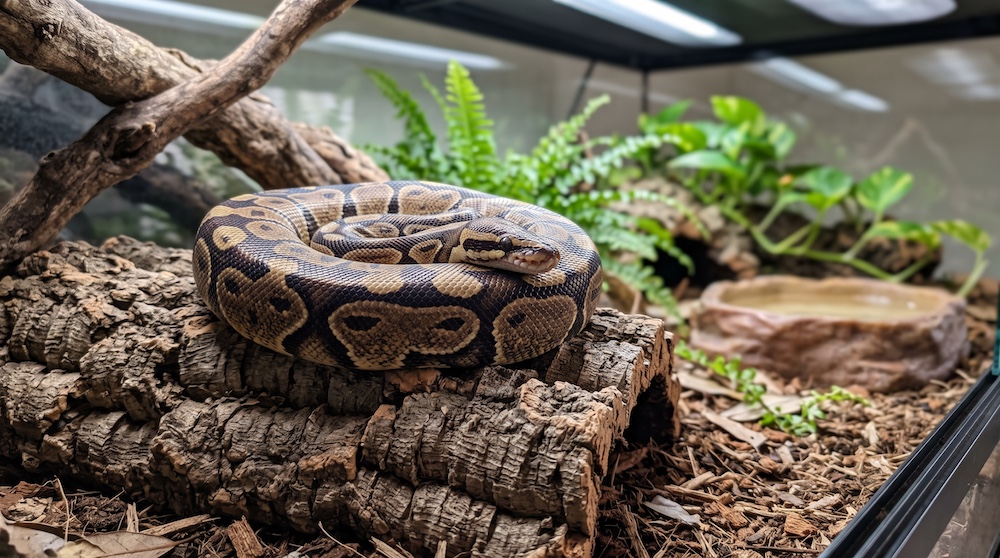
Ball Python
🐍 Ball pythons are docile and popular, though more prone to periods of appetite loss than corn snakes — usually normal, not medically concerning.
Docile, popular, and genuinely beginner-appropriate despite the feeding inconsistency noted above—many owners successfully keep ball pythons long-term once they understand this is normal species behavior rather than a problem to fix. Benefits from low-intensity UVB on a consistent 12-hour cycle, similar to the evolving consensus already covered for geckos.
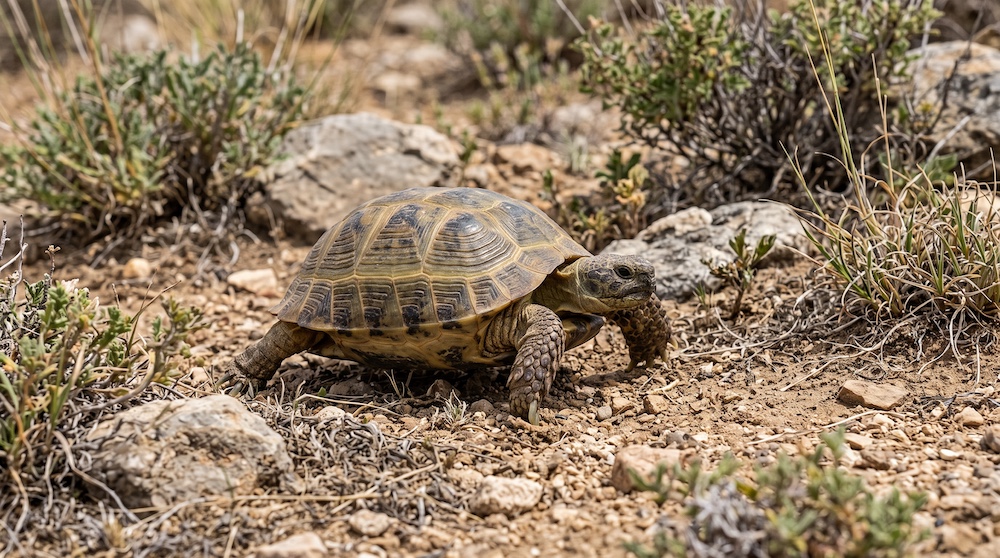
Russian Tortoise
🐢 Russian tortoises represent a genuinely different care model — herbivorous, diurnal, and an extraordinarily long-lived commitment.
A genuinely different care model from every lizard and snake on this list— herbivorous, diurnal, and an extraordinarily long- lived commitment (50+ years is common with proper care). Worth serious consideration only if you’re prepared for a pet that may outlive your own expected lifespan planning.
🐾 Snake Hideouts 🐾
🕳️ Secure Hide Boxes — Ball pythons are naturally secretive and feel far more secure with a tight, enclosed hide on both the warm and cool sides of the enclosure. Reduced stress from adequate hiding options can also help with the feeding inconsistency this species is known for.
🐾 Tortoise Food & Calcium Supplements 🐾
🥬 Tortoise-Specific Diet & Supplements — Russian tortoises need a high-fiber, calcium-rich herbivore diet distinctly different from any other species on this list. Chewy carries tortoise-formulated food and calcium supplements suited to this diet type.
Matching Species to Your Situation
✔️ Want the simplest possible feeding routine? Crested gecko (powdered diet) or corn snake (single prey type) both minimize feeding complexity compared to insectivore or age-shifting-diet species.
✔️ Limited floor space but have vertical room? Crested gecko’s arboreal, vertical enclosure needs fit differently than the horizontal floor space every other species on this list requires.
✔️ Want a more interactive, actively-visible daytime pet? Bearded dragons and Russian tortoises are both diurnal (active during the day); leopard geckos, crested geckos, and most snakes are more active at dusk, night, or when hunting rather than constantly visible.
✔️ Prepared for a multi-decade-plus commitment? Ball pythons (20–30 years) and especially Russian tortoises (50+ years) require significantly longer planning than gecko species (15–20 years) or bearded dragons (10–15 years).
Conclusion
There’s no single “easiest” reptile—only the species whose specific requirements best match what you can realistically provide. Leopard geckos and crested geckos offer the lowest overall complexity across UVB, diet, and temperature; corn snakes offer the most predictable feeding routine among snakes; bearded dragons offer more engagement and daytime activity at the cost of stronger UVB and a more involved diet.
Key takeaways:
- ✅ No commonly kept reptile is genuinely “UVB-free”— even low-UVB species benefit from correctly provided low-level exposure.
- ✅ Crested geckos have the simplest diet (powdered, mixed with water) of any species covered here.
- ✅ Corn snakes’ reliable eating makes them the lower-stress first-snake choice compared to ball pythons.
- ✅ Crested geckos are more heat-sensitive than their low-maintenance reputation suggests.
- ✅ Lifespan varies enormously—from 10–15 years (bearded dragons) to 50+ years (Russian tortoises).
- ✅ Match species to your specific situation—space shape, activity pattern preference, and commitment length all matter as much as raw care difficulty.
📝 Editor’s Note: Species care requirements and comparative complexity in this guide reflect consistent documentation across established herpetoculture and veterinary-adjacent reptile care resources. The evolving UVB consensus for crested geckos parallels the same shift already documented for leopard geckos in this hub, reflecting broader current herpetological practice rather than an isolated recommendation.
👉🏼 Exotic Pet Care Guide—complete hub for reptile care essentials.
👉🏼 Bearded Dragon Care Guide: Diet, Heat & Habitat—full setup for this popular diurnal species.
👉🏼 Leopard Gecko Care Guide: The Best Beginner Reptile—full setup for the lowest-complexity lizard option.
👉🏼 UVB Lighting for Reptiles: Which Bulb Does Your Pet Need?—species-specific bulb strength once you’ve chosen.
👉🏼 Metabolic Bone Disease in Reptiles: Prevention & Treatment—why correct UVB and calcium matter regardless of species.

🐍 Browse exotic pet food, terrariums, lighting, heating, supplements and everything else your reptile needs 🐾
(This post contains affiliate links. If you purchase through our links, we may earn a small commission at no extra cost to you. This never influences our editorial opinions.)
FAQ: Best Reptiles for Beginners
What is the single easiest reptile to take care of?
Leopard geckos and crested geckos are generally considered the two lowest-complexity options, combining minimal UVB requirements, simple diets, and docile temperament. Crested geckos edge out slightly on diet simplicity (powdered food only); leopard geckos edge out slightly on temperature tolerance, since crested geckos are more heat-sensitive.
Is a corn snake or ball python better for a first snake?
Both are genuinely beginner-appropriate, but corn snakes are generally the lower-stress choice due to more reliable eating—ball pythons are more prone to periods of appetite loss, particularly as juveniles, which can worry new owners even when it isn’t medically concerning.
Do crested geckos really not need any special lighting?
They can survive without UVB, and many owners keep them successfully this way. However, current evidence suggests low-level UVB (roughly 1.0 UVI or less) provides a genuine health benefit when correctly provided—similar to the evolving consensus for leopard geckos—making it a worthwhile addition even though it isn’t strictly mandatory for survival.
Which beginner reptile lives the longest?
Russian tortoises can live 50 years or more, substantially longer than any other species on this list. Ball pythons follow at 20–30 years, with gecko species and corn snakes typically living 15–20 years, and bearded dragons generally living 10–15 years.
Are any of these reptiles good for young children to handle?
Leopard geckos and corn snakes are generally considered among the more tolerant options for supervised gentle handling by older children, though all reptiles should be handled under adult supervision and none should be considered a fully “hands-off maintenance” pet regardless of species.
Do all of these reptiles need a heat lamp?
No. Leopard geckos use an under-tank heat mat rather than an overhead bulb, and crested geckos often need no supplemental heat at all if room temperature stays within their preferred range. Bearded dragons are the species on this list with the most involved overhead basking bulb requirement.