
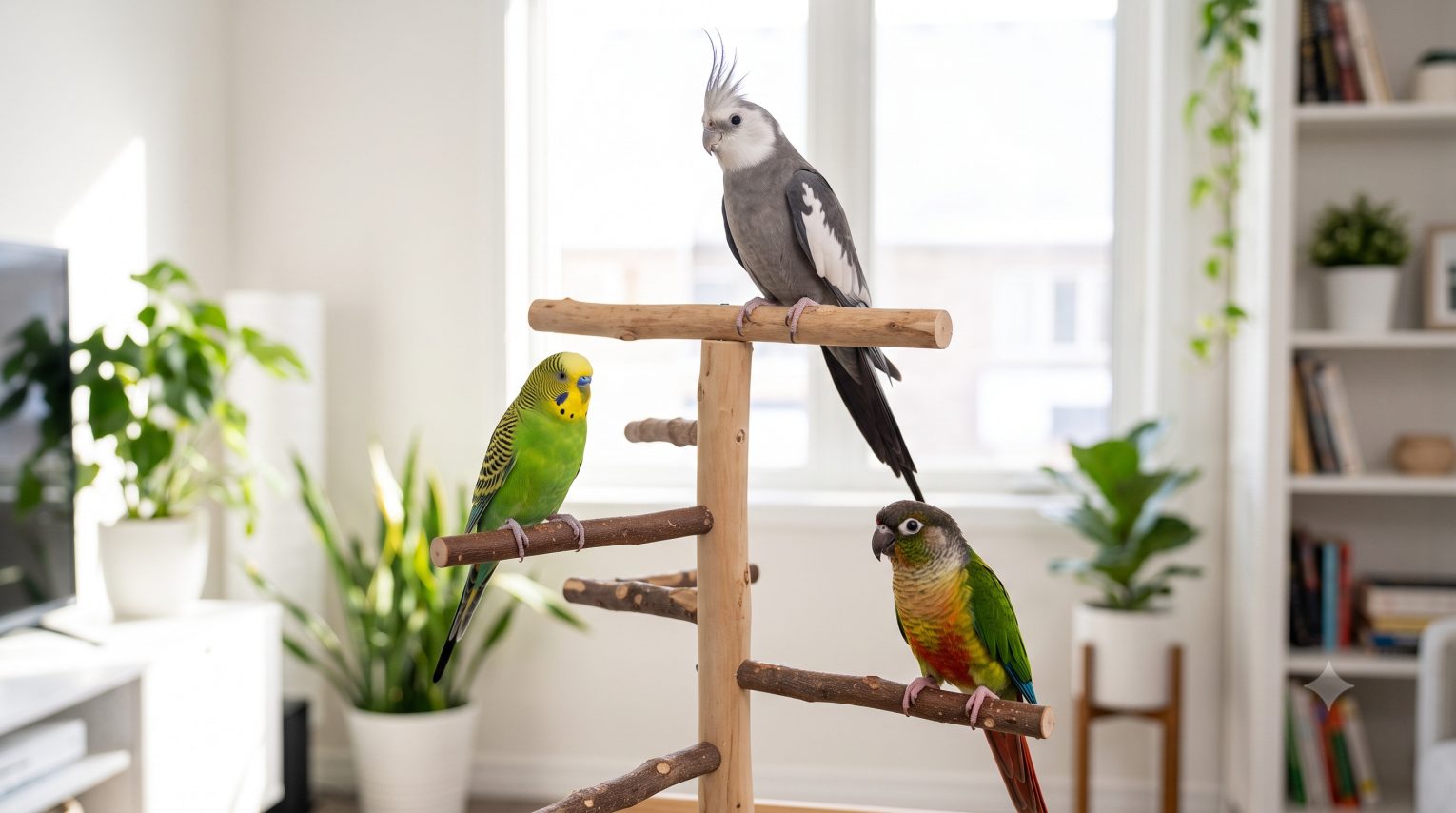
Pet birds need a pellet-based diet supplemented with fresh vegetables (not a seed-only diet), a correctly sized cage with safe, non-galvanized materials, gradual trust-building rather than forced handling, and a home free of common but dangerous items like non-stick cookware and scented candles. Species matters enormously: a budgie and a macaw have almost nothing in common in terms of lifespan, noise level, or care complexity, despite both being “pet birds.”
This guide covers the essential foundation for every pet bird species, compares the most common companion birds side by side, and links to complete guides for diet, cage setup, taming, noise management, and household safety. Use it as your starting point whether you’re choosing your first bird or looking for a quick reference across topics.
(💡 Pet bird covers an enormous range—from an 8-year lifespan budgie to a 60-year commitment macaw. Species fit matters as much as care quality.)
Table of Contents
Which Pet Bird Is Right for You?
Before covering care specifics, this comparison helps set realistic expectations—”pet bird” spans an enormous range of commitment levels.
| Species | Lifespan | Noise Level | Beginner-Friendly |
|---|---|---|---|
| 🦜 Budgie | 5–10 years | 🔈 Low | ✅ Yes |
| 🦜 Cockatiel | 20–25 years | 🔉 Moderate (loud AM/PM bursts) | ✅ Yes |
| 🦜 Green-Cheek Conure | 15–20 years | 🔈 Low–Moderate | ⚠️ Intermediate |
| 🦜 African Grey | 40–60 years | 🔉 Moderate (loud alarm calls) | ❌ Advanced |
| 🦜 Macaw | 50–60+ years | 🔊 Very loud (100+ dB) | ❌ Advanced |
| 🦜 Cockatoo | 40–60+ years | 🔊 Very loud | ❌ Advanced (very high bonding needs) |
❔What this table doesn’t capture: All pet birds— even “easy” species—require daily interaction, species-appropriate diet, and a genuine long-term commitment. There is no truly low-maintenance pet bird, only species with different specific demands.
(🩺 Vet’s Note: “The single biggest mismatch I see is between a bird’s actual needs and what the owner expected going in—usually with larger, longer-lived species bought on impulse for their looks or talking ability. A macaw is a 50-year commitment that will outlive many owners. That’s not a detail to gloss over”—LovingPetsGuide Veterinary Advisor.)
📰 Species-specific lifespan and noise level data referenced in this comparison is consistent with Chewy’s own veterinary-reviewed bird care education content (chewy.com/education), which confirms budgies typically live 5–10 years compared to 40–60+ years for larger parrot species including African Greys, Amazons, and macaws, and identifies noise tolerance and space requirements as key factors in species- lifestyle matching for prospective bird owners.
How to Prepare Your Home Before Bringing a Bird Home
Getting the environment right before your bird arrives prevents the most common early mistakes. Follow these steps in order:
Choose and set up the cage first
Confirm correct bar spacing for your species and choose safe, non-galvanized materials. Set the cage up completely—including perches of varied diameter— before bringing your bird home, not after.
Designate a bird-safe room
Identify the room where the cage will live and remove or address hazards in that space specifically: no non-stick cookware use nearby, no candles or air fresheners, ceiling fan access considered, and toxic houseplants removed.
Stock the correct diet before arrival
Have formulated pellets on hand—not just seed mix— along with a small selection of safe fresh vegetables. If your bird is coming from a seed-heavy background, plan for a gradual transition rather than an abrupt switch.
Position the cage in a social area
Place the cage against at least one solid wall in a family living space, away from the kitchen, direct drafts, and unfiltered temperature extremes.
Plan for a quiet adjustment period
Prepare to give your bird at least a week of calm, low-pressure presence before attempting any handling. Resist the urge to interact heavily on day one.
Locate an avian veterinarian in advance
Find and, ideally, register with a vet experienced in avian medicine before you need one—not during an emergency.
Introduce handling gradually, starting in week two
Begin with calm presence near the cage, progressing slowly through trust-building stages rather than attempting to handle your bird immediately.
🪽 Bird Cages & Enclosures 🪽
🏠 Powder-Coated & Stainless Steel Cages—Set up completely before your bird arrives, with correct bar spacing and varied perch diameters. Chewy carries a range of sizes and finishes suited to every species covered in this guide.
Diet: Beyond the Seed Mix
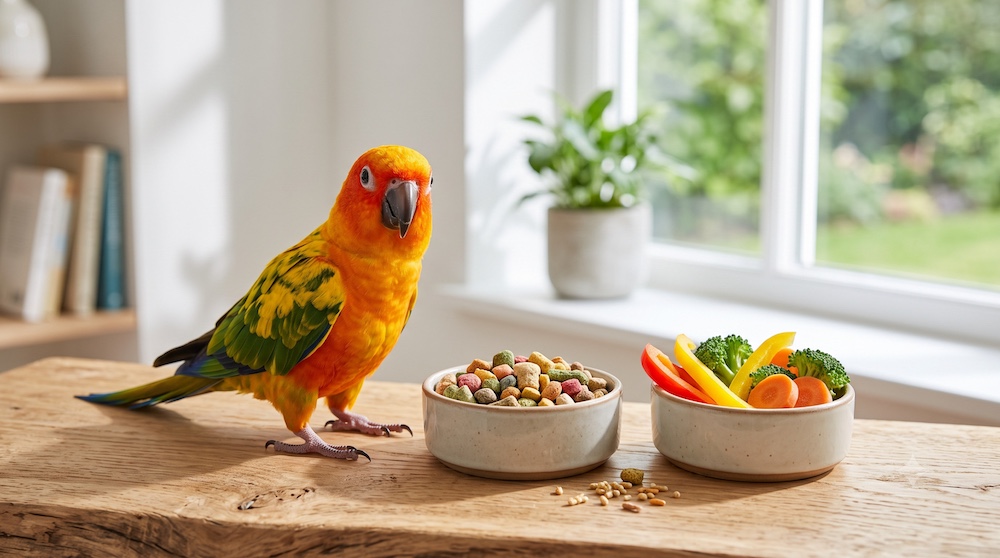
The single most common and most preventable welfare problem in pet birds is a seed-only diet. Seeds are high in fat and severely deficient in vitamin A and calcium—two of the most frequently diagnosed nutritional deficiencies in companion birds.
(💡 A healthy bird diet is built on pellets (60–80%), not seeds—fresh vegetables and limited fruit fill most of the remainder.)
The single most common and most preventable welfare problem in pet birds is a seed-only diet. Seeds are high in fat and severely deficient in vitamin A and calcium—two of the most frequently diagnosed nutritional deficiencies in companion birds.
❕The correct target ratio: 60–80% formulated pellets, 15–35% fresh vegetables and limited fruit, 5% or less seeds and nuts as occasional treats.
❗️One food deserves special mention: avocado is never safe for birds, in any form or quantity—it contains a toxin that can be fatal within 24–48 hours with no available antidote.
For the complete breakdown of why seeds fall short and how to transition safely, see Why Seeds Aren’t Enough: A Complete Bird Diet Guide. For the full safe and unsafe produce list, see Safe Fruits & Vegetables for Pet Birds.
🪽 Formulated Bird Pellets 🪽
🦜 Formulated Pellet Diets—The dietary foundation for every pet bird species covered in this guide. Chewy carries pellet brands and sizes suited to everything from budgies to large parrots.
Cage Setup: Bar Spacing, Materials, and Perches
Correct cage setup prevents two very different categories of harm: physical entrapment injuries from incorrect bar spacing, and zinc poisoning from unsafe galvanized materials.
✅ The three non-negotiables:
- Bar spacing matched to your species—too wide risks head or body entrapment.
- Safe materials only—stainless steel or properly powder-coated steel; never galvanized wire.
- Varied perch diameter and material—prevents pressure sores from constant contact on one surface.
For the complete bar spacing chart by species size, material safety breakdown, and perch guidance, see Bird Cage Setup Guide.
Building Trust: Taming Without Force
Birds are prey animals by evolutionary design—their default response to anything unfamiliar is caution, not curiosity. Taming works through hundreds of small, low-stakes, positive interactions, never through force.
❗️The core principle: Read body language before anything else. Leaning away, wide eyes, a raised crest, or wing quivering all signal fear—the correct response is to slow down, not push forward.
For the complete step-by-step process—from calm presence through target training to the step-up command—see How to Tame Your Bird: Building Trust Step by Step.
🪽 Bird Training Treats 🪽
🎯 High-Value Training Treats—A genuinely motivating treat, reserved specifically for training sessions, makes trust-building significantly faster. Chewy carries options suited to species from budgies to large parrots.
Managing Noise: Normal Calls vs Excessive Screaming
Some vocalization—especially short bursts at dawn and dusk—is completely normal flock behavior and shouldn’t be a target for elimination. Problem screaming usually comes from one of two sources: an unmet need (diet, enrichment, space) or a learned attention-seeking pattern.
❗️The core fix: Never respond to screaming with attention—including yelling back or covering the cage as a reaction. Reward quiet, calm behavior instead, and expect the behavior to briefly worsen before it improves.
For the complete method, species-specific noise patterns, and when to suspect a medical cause, see Why Does My Bird Scream? How to Stop Excessive Noise.
Household Safety: What’s Actually Dangerous
The single most dangerous common household item for pet birds is non-stick cookware—overheated Teflon (PTFE) releases fumes that can be fatal within minutes, often without warning. Birds’ unique respiratory system, which circulates air in a continuous loop rather than a simple in-and-out pattern, makes them far more vulnerable to airborne toxins than dogs or cats.
❗️Also worth knowing: scented candles, air fresheners, and aerosol products pose real respiratory risks, and several common houseplants are toxic if chewed.
For the complete household hazards checklist, including PTFE prevention and a bird-safe room setup, see Toxic Foods and Household Dangers for Pet Birds.
🪽 Bird Foraging & Enrichment Toys 🪽
🧩 Foraging & Enrichment Toys—A bird with adequate mental stimulation is less prone to boredom-driven screaming and destructive behavior. Rotate toys regularly to keep engagement high.
What All Pet Birds Have in Common
Despite enormous differences between species, a few care principles apply universally:
| 🩺 All birds need an avian-experienced veterinarian: Standard dog-and-cat vets often lack training in avian medicine. Locate one before you need one. |
| 🗣️ All birds need daily interaction: Even independent species suffer from prolonged isolation—birds are social animals by nature. |
| 🍚 All birds need species-appropriate diet: No bird thrives on seeds alone, regardless of size or species. |
| ☢️ All birds are more vulnerable to airborne toxins than mammals: Products safe around dogs and cats can still harm a bird due to their unique respiratory system. |
| 🧩 All birds need mental enrichment: Foraging opportunities and toy rotation prevent boredom-driven behavioral problems, including excessive screaming. |
Choosing a Pet Bird: Summary
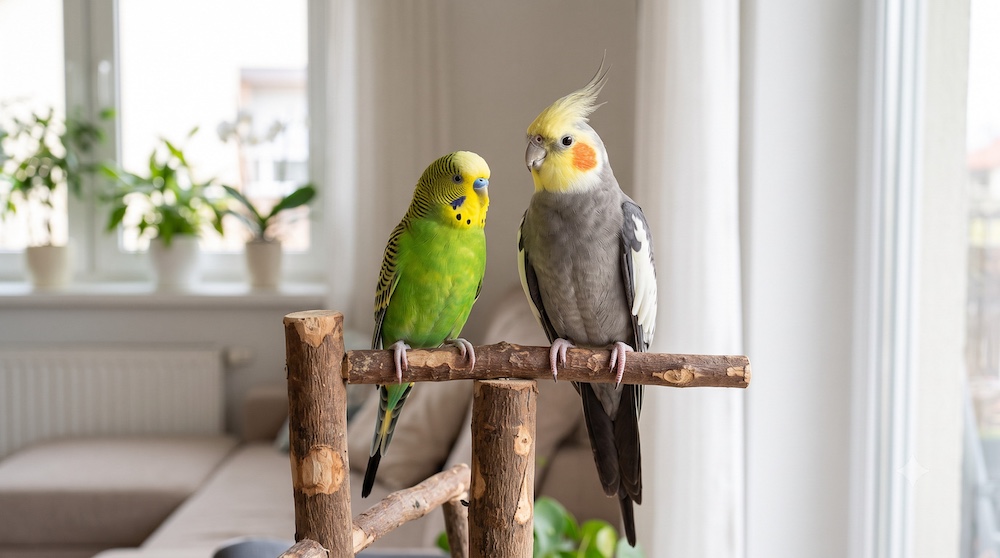
🦜 Choose a budgie or cockatiel if:
- This is your first bird.
- You want a shorter-term or more manageable commitment (5–25 years).
- You have limited space.
- You want a generally quieter companion.
- You’re looking for a companion that’s forgiving of a beginner’s early mistakes while you learn the basics of bird care.
(💡 Budgies and cockatiels are the strongest starting point for first-time bird owners—smaller space needs, quieter overall, and a more manageable 5–25 year commitment.)
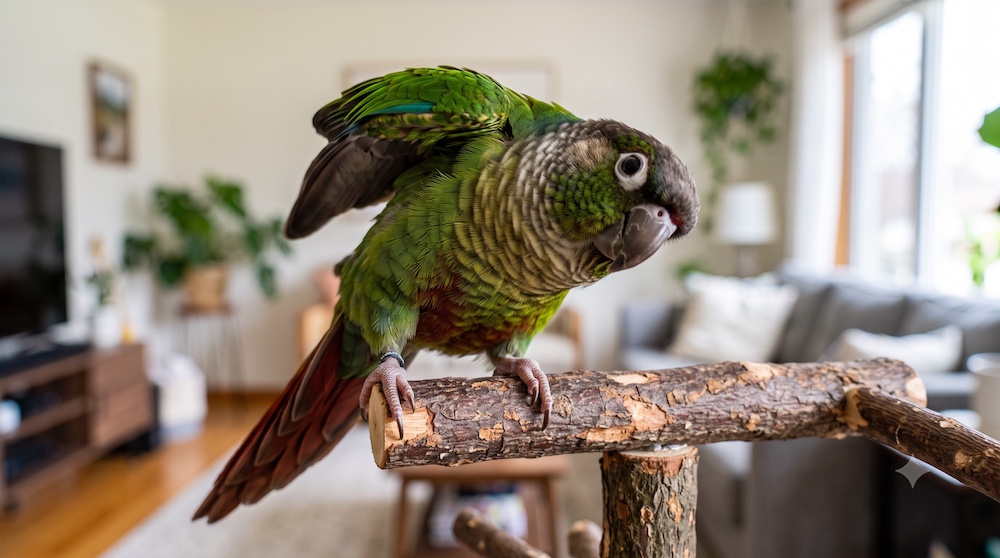
🦜 Choose a conure if:
- You want more personality and interaction than a budgie offers.
- You’re comfortable with a moderate step up in noise and care complexity.
- You have prior small-bird experience.
- You want a bird with a bigger, more expressive personality without committing to the size, noise, or multi-decade lifespan of a larger parrot.
(💡 Conures offer more personality and interaction than a budgie, with a moderate step up in noise and care demands—best suited to owners with some prior small-bird experience.)
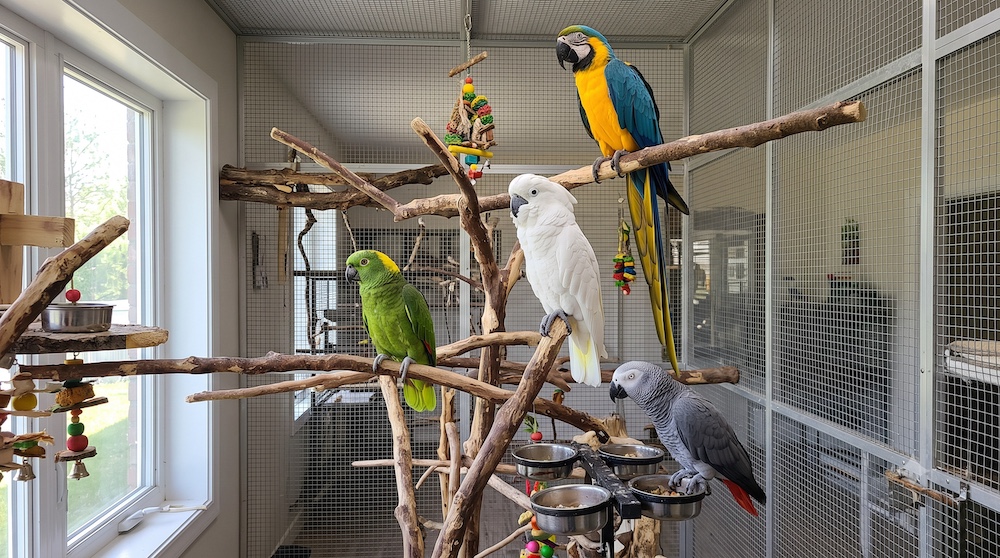
🦜 Choose a larger parrot if:
- You are prepared for a multi-decade commitment— potentially longer than your own remaining lifespan.
- You have significant space and can tolerate substantial noise.
- You have prior bird-handling experience or are working closely with an avian behaviorist.
- You can commit to daily, substantial interaction— these species bond intensely and suffer significantly from neglect.
(💡 Large parrots—African Greys, Amazons, macaws, and cockatoos—represent a multi-decade commitment requiring significant space, tolerance for noise, and daily substantial interaction.)
Conclusion: Right Species, Right Setup, Right Expectations
Successful pet bird ownership starts before the bird even arrives home—with the right species choice for your lifestyle, a correctly set up cage, and realistic expectations about diet, noise, and the multi-decade commitment many species represent.
Complete guides for every topic:
👉🏼 Why Seeds Aren’t Enough: A Complete Bird Diet Guide—the correct pellet-to-fresh-food ratio.
👉🏼 Safe Fruits & Vegetables for Pet Birds—the complete safe and unsafe produce list.
👉🏼 How to Tame Your Bird: Building Trust Step by Step—reading body language and building trust.
👉🏼 Why Does My Bird Scream? How to Stop Excessive Noise—normal vs problem vocalization.
👉🏼 Bird Cage Setup Guide—bar spacing, materials, and perches.
👉🏼 Toxic Foods and Household Dangers for Pet Birds—the complete household hazards checklist.

🦜 Browse bird food, cages, perches, toys, supplements and everything else your bird needs 🐾
(This post contains affiliate links. If you purchase through our links, we may earn a small commission at no extra cost to you. This never influences our editorial opinions.)
FAQ: Bird Care Guide
What is the easiest pet bird for a beginner?
Budgies and cockatiels are generally considered the most beginner-friendly pet birds—they have more manageable noise levels, shorter (though still substantial) lifespans of 5–25 years, and don’t demand the intensity of daily interaction that larger parrot species require. Even these “beginner” species still need daily attention, correct diet, and genuine long-term commitment.
How long do pet birds live?
It varies enormously by species. Budgies typically live 5–10 years, cockatiels 20–25 years, and larger parrots including African Greys, Amazons, and macaws can live 40–60 years or more—potentially outliving their original owner. Lifespan should be a central factor in choosing a species, not an afterthought.
Do all pet birds need the same diet?
The core principle is the same across species—a pellet-based diet supplemented with fresh vegetables, not a seed-only diet—but exact portions and some species-specific considerations vary. See Why Seeds Aren’t Enough for the full breakdown and species notes.
Can I keep just one bird, or do birds need companions?
This varies by species and individual temperament. Highly social species can develop stronger bonds with a companion bird, though a single bird can thrive with sufficient daily human interaction. Research your specific species’ social needs before deciding, and never assume a bird is “fine alone” without providing substantial daily attention.
Why do larger parrots need so much more care than small birds?
Larger parrot species (African Greys, Amazons, macaws, cockatoos) are exceptionally intelligent and emotionally complex, which means they need more mental stimulation, more social interaction, larger enclosures, and more consistent handling to remain psychologically healthy. Without this, they’re prone to problem behaviors including feather plucking, excessive screaming, and aggression.
What’s the biggest mistake new bird owners make?
Underestimating the combination of lifespan, noise, and social needs before choosing a species—often followed closely by continuing a seed-only diet because it’s what the bird arrived already eating. Both mistakes are entirely preventable with research done before bringing a bird home rather than after.