
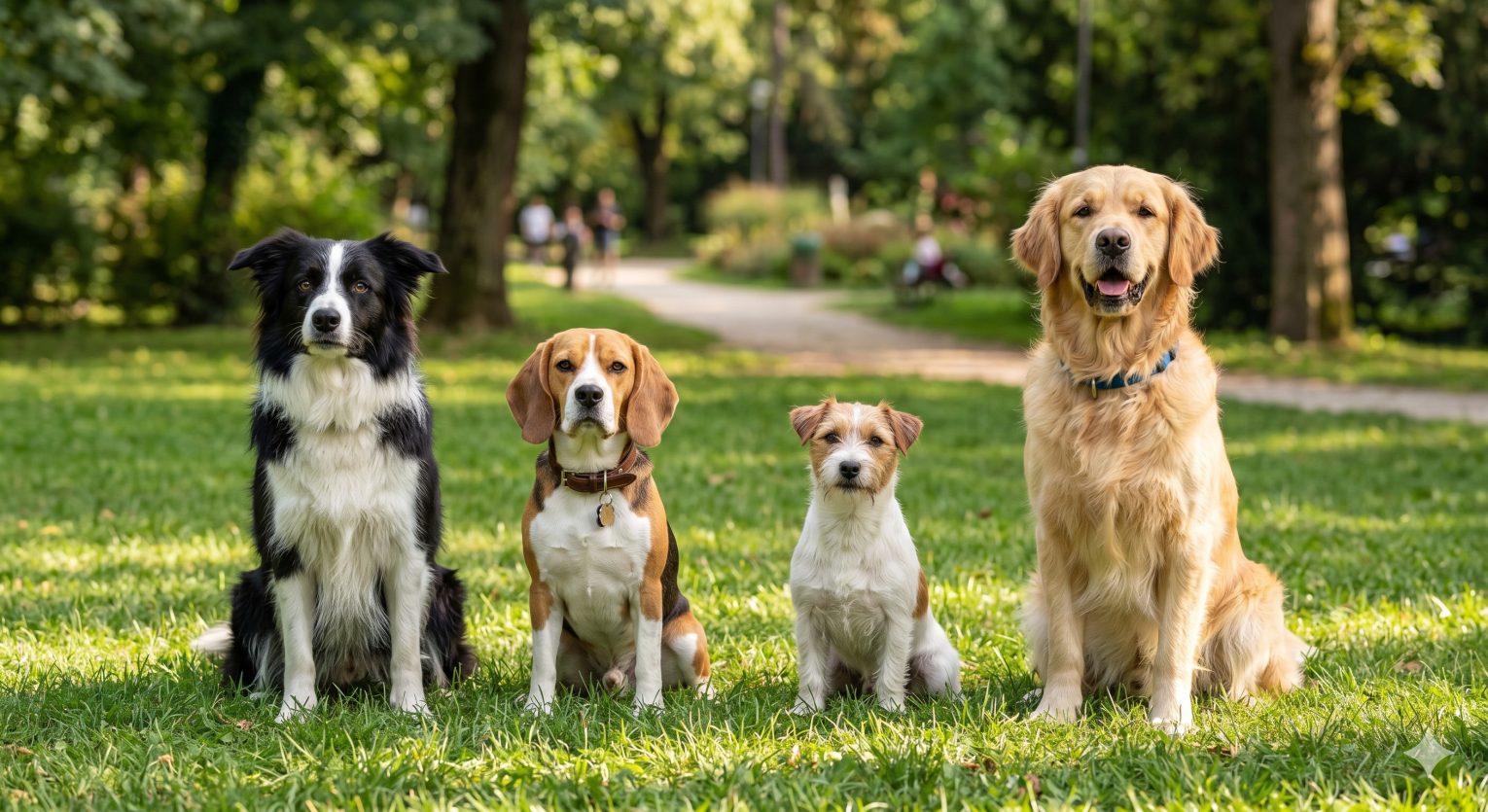
Dog training by breed type works because different breeds were developed for different purposes—and those purposes are still encoded in their DNA. A Beagle trained with the same approach as a Border Collie will frustrate both the owner and the dog. Understanding what your dog was bred to do is the single fastest shortcut to training success.
The fundamentals of positive reinforcement apply universally—every breed responds to reward-based training. What changes is the motivation, the pace, the reward type, and the realistic expectations for each group. This guide breaks down the most important breed categories and exactly how to adjust your approach for each one.
Breed-specific strategies build on a foundation of universal training principles. If you haven’t covered the basics yet, our complete dog training guide covers positive reinforcement, core commands, and socialization for every breed before you specialize your approach.
Table of Contents
Why Breed Type Changes Everything
Every modern dog breed was created for a purpose. Border Collies were bred to work 12-hour days herding livestock, responding to subtle body language from a handler 550 yards (500 m) away. Beagles were bred to follow a scent trail independently for hours, ignoring distractions. Jack Russell Terriers were bred to go underground after prey without backup.
These aren’t historical curiosities—they are behavioral blueprints that are fully operational in your living room today.
When a Border Collie herds your children or a Beagle goes selectively deaf on a walk, they are not being difficult. They are doing exactly what thousands of years of selective breeding designed them to do. Fighting this instinct is exhausting and largely futile. Working with it—using it as a training tool—is transformative.
(🎓 Trainer’s Note: “I always ask new clients one question before we start: what was this dog bred to do? The answer tells me more about the training plan than anything else. A dog’s genetics are not an obstacle to training—they are the map”—LovingPetsGuide Training Advisor.)
Herding Breeds
🐾 Border Collies, Australian Shepherds, German Shepherds, Shetland Sheepdogs, Corgis
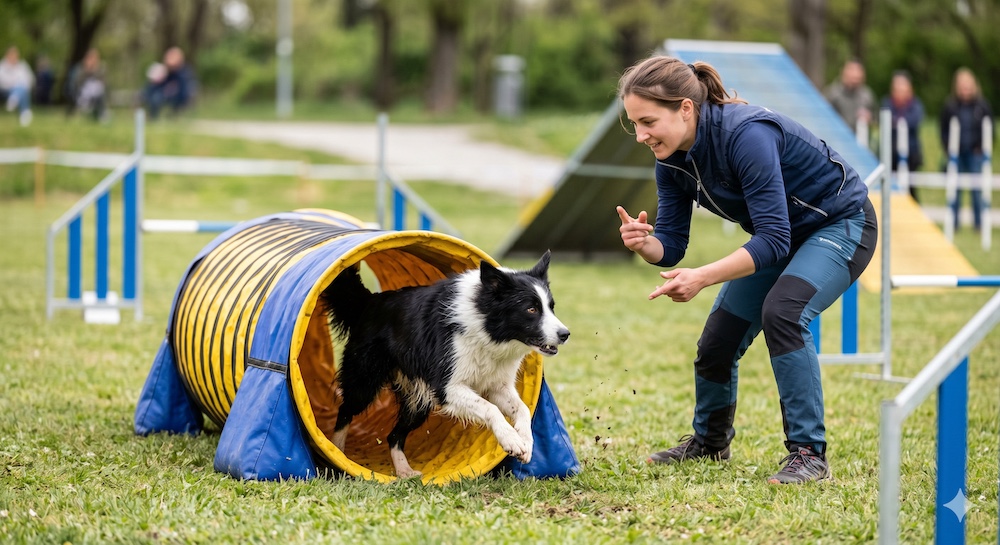
Herding breeds are widely considered the most intelligent group of dogs—and the most demanding to own. They were bred to make independent decisions at speed while staying attuned to a handler’s every signal. That combination of intelligence and independence means they are exceptional training partners when channeled correctly, and exhausting behavioral problems when they are not.
(💡 Herding breeds need a job—without one, they create their own, and you won’t like it.)
🐕 What makes them different
Drive level: Extremely high. These dogs want to work and will become neurotic, destructive, or obsessive if their need for mental stimulation is not met.
Sensitivity: Highly sensitive to body language, tone of voice, and environmental changes. A training session with too much frustration or harsh correction can shut them down completely.
Instinct: Herding instinct—chasing, circling, nipping at heels—will redirect onto children, cyclists, and other pets if not managed. This is normal and manageable, not aggression.
✅ Training strategies that work
Give them a job. Herding breeds are happiest with a role to fulfill. Advanced trick training, agility, nose work, herding trials, and flyball all satisfy this need. A herding breed that has a structured daily “job” is dramatically calmer indoors than one that does not.
Mental stimulation over physical exercise. A 20-minute nose work or puzzle-solving session taps a herding breed’s problem-solving drive in a way that physical exercise alone doesn’t reach.
🐾 Nina Ottosson Dog Puzzle Toy 🐾
🧩 Nina Ottosson Dog Brick—Built specifically for high-drive breeds that need mental work, not just physical exercise. A 20-minute puzzle-solving session taps the same problem-solving instinct herding breeds were bred to use—tiring the mind in a way a long walk never will.
Short, high-intensity training sessions. These dogs learn quickly and get bored fast. Keep sessions to 5–10 minutes, vary the exercises, and always end while they are still engaged. Multiple short sessions throughout the day outperform one long session.
Use calm, clear signals. Herding breeds are so attuned to body language that accidental signals—shifting weight, looking away, changing position—can confuse them mid-exercise. Work on delivering consistent, clean cues.
Manage the herding instinct. Teach a solid “Leave It” and “Place” command before allowing free interaction with children or small animals. Do not attempt to punish the instinct—redirect it.
Realistic expectations
Herding breeds can reach very high levels of obedience and are often seen at the top of competitive dog sports. However, they require a committed owner who treats training as an ongoing lifestyle, not a one-time project. Expect 15–20 minutes of structured mental activity every single day, indefinitely.
Hounds and Scent Dogs
🐾 Beagles, Basset Hounds, Bloodhounds, Dachshunds, Rhodesian Ridgebacks, Basenjis
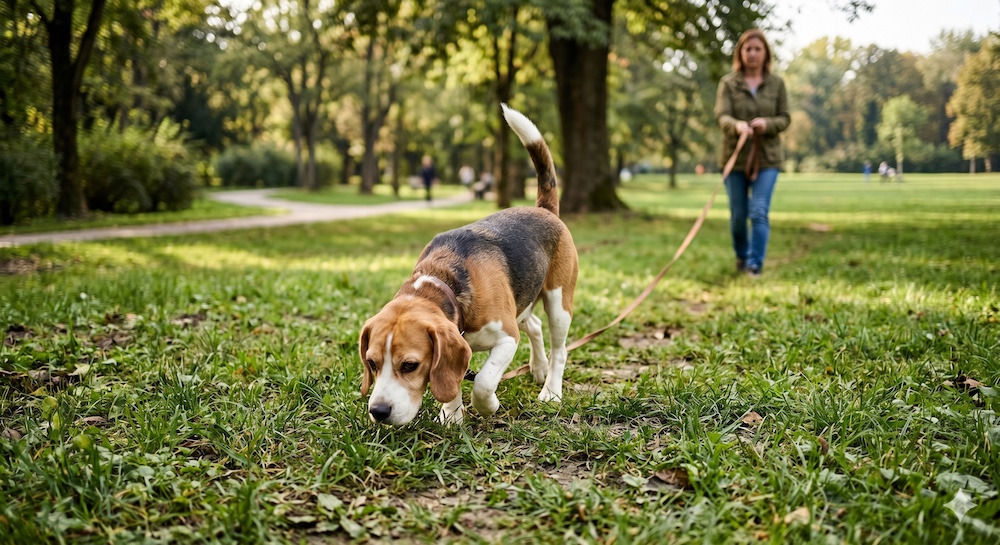
Hounds present one of the most common training frustrations—the dog that ignores you the moment something more interesting appears. This is not stubbornness. It is a dog doing precisely what they were bred to do, at a level of intensity that is difficult to override with standard motivators.
(💡 To a Beagle, a scent trail from three hours ago is more compelling than any treat. Work with the nose, not against it.)
🐕 What makes them different
Scent drive: A Beagle has approximately 220 million scent receptors compared to a human’s 5 million. When their nose is engaged, almost nothing else gets through. This is biological, not behavioral.
📰 The 220 million scent receptor figure for Beagles compared to approximately 5 million in humans is widely corroborated across veterinary sources, including Embrace Pet Insurance’s veterinary-reviewed content (embracepetinsurance.com), and is consistent with research conducted at Lake Erie College of Osteopathic Medicine involving Beagles trained for scent-based cancer detection. This receptor difference is the biological basis for why standard food or toy rewards struggle to compete with an active scent trail during training.
Independence: Unlike herding breeds that were bred to constantly check in with a handler, scent hounds were bred to work independently and follow a trail to its conclusion without direction. They do not have the same built-in desire to please a handler.
Vocalization: Many hounds bay, howl, and bark excessively—especially when scenting. This is breed-normal but requires management in urban environments.
✅ Training strategies that work
Use their nose as the reward. The most powerful motivator for a scent hound is not a treat—it is access to sniffing. Use “Sit + look at me” as the prerequisite for releasing them to sniff. “If you check in with me, you get to go sniff that bush.” This transforms their greatest distraction into your greatest training tool.
Master recall in stages. Never expect a Beagle to have reliable off-leash recall in a stimulating outdoor environment without extensive proofing. Build recall with a long line (30–65 ft / 10–20 m) before attempting off-leash work, and always choose enclosed spaces for off-leash exercise.
High-value food rewards. Hounds are typically very food-motivated when not in scent-drive mode. Use the highest-value treats available—real meat, not kibble— and keep training sessions before meals when motivation peaks.
Short sessions in high-distraction environments. Rather than fighting the distraction, train in it. Start at a distance from the distraction where your dog can still function, reward heavily for check-ins, and gradually decrease the distance.
Nose work and tracking sports. Channel the scent drive productively. Formal nose work is one of the most tiring and satisfying activities available for scent hounds—it burns energy far faster than physical exercise.
🐾 Outward Hound Snuffle Mat 🐾
👃🏼 Outward Hound Snuffle Mat—Channels powerful scent drive into a structured activity instead of fighting it on walks. Hide kibble or treats in the fabric folds and let your hound’s nose do what it was bred to do—formal nose work in miniature, right on your living room floor.
Realistic expectations
Hounds will likely never have the same level of off-leash reliability in open environments as herding or sporting breeds. Set expectations accordingly. A well-trained Beagle is a joy— but their definition of “well-trained” includes reliable check-ins on a long line, not off-leash sprint recalls in a forest.
Terriers
🐾 Jack Russell Terriers, West Highland Terriers, Airedale Terriers, Bull Terriers, Staffordshire Bull Terriers, Schnauzers
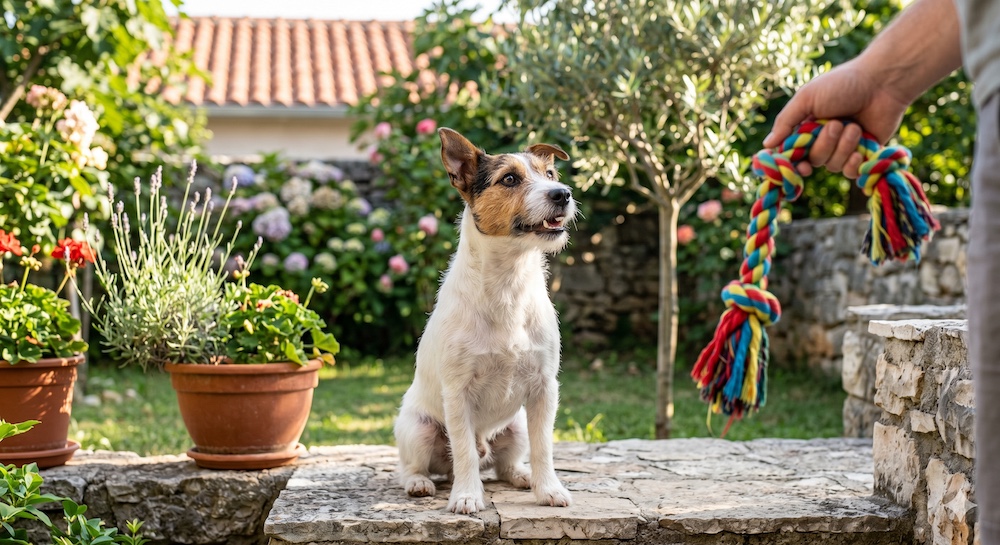
Terriers were bred to be bold, independent, and persistent enough to pursue dangerous quarry underground without backup. These traits make them enormous fun to live with—and genuinely challenging to train with conventional methods.
(💡 Terriers are all in—but only if the session moves fast enough to hold their attention.)
🐕 What makes them different
Tenacity: Terriers do not give up. When they want something, they pursue it with single-minded focus. This persistence can work brilliantly for training—or against it, depending on what they are focused on.
Independence: Like hounds, terriers were bred to make their own decisions in the field. They do not have the handler-focus of herding breeds. They respond to training when it feels like their idea.
Reactivity: Many terriers have strong predatory instincts and can be reactive toward small animals, moving objects, and other dogs. Early socialization is critical.
Sensitivity to boredom: Terriers get bored extremely fast. A 20-minute training session that repeats the same exercise will lose a terrier by minute three.
✅ Training strategies that work
Keep sessions fast, short, and gamelike. Terriers are competitive and love to win. Treat every training session like a fun challenge they are trying to beat. Vary exercises constantly, keep the energy high, and end before they disengage.
Use play as a reward. Many terriers respond better to a brief game of tug than to food rewards. Find your dog’s highest-value reward and use it exclusively for training. A terrier that goes wild for a squeaky toy can be trained with that toy as the jackpot reward.
Capture and shape, don’t force. Terriers resist being put into positions physically. Luring and capturing natural behaviors works far better than forced positioning.
Make them think it’s their idea. A terrier that believes training is their decision is a terrier that participates enthusiastically. Use shaping (rewarding approximations toward a goal behavior) to engage their problem-solving instinct.
Manage prey drive carefully. A solid “Leave It” command is essential before allowing terriers off-leash around small animals. Recall proofing must include distractions that involve movement—squeaky toys, running children, small animals—before you can trust it in the field.
Realistic expectations
Terriers can reach high levels of obedience but rarely become the effortlessly biddable dogs that herding breeds can be. They will always have an independent streak—and that is part of what makes them endearing. Manage expectations and celebrate the wins.
Toy Breeds
🐾 Chihuahuas, Pomeranians, Maltese, Yorkshire Terriers, Shih Tzus, Cavalier King Charles Spaniels

Small dogs are chronically under-trained—not because they can’t learn, but because their owners underestimate both their capacity and their need for structure. “Small Dog Syndrome”— the anxious, reactive, barky small dog that runs the household—is almost always a training problem, not a breed problem.
(💡 Small dogs need the same training as large ones—getting down to their level makes every session more effective.)
🐕 What makes them different
Intimidation factor: A human standing over a Chihuahua is a genuinely intimidating experience. Physical size differential means that standard training positions and approaches can feel threatening without the trainer realizing it.
Fragility: Toy breeds can be physically fragile. Training methods that involve physical guidance must be extremely gentle. This is not coddling—it is appropriate handling.
High metabolic rate: Small breeds have faster metabolisms, which means they can handle more frequent small meals and their energy patterns differ from large breeds. Training sessions should be kept very short— 3–5 minutes maximum—and highly rewarding.
Tendency toward anxiety: Many toy breeds are prone to anxiety, which can manifest as barking, resource guarding, and reactivity. Early socialization is as critical for small breeds as for large ones.
✅ Training strategies that work
Get down to their level. Train on the floor or with the dog on a raised surface at your eye level. Looming over a small dog inhibits engagement and increases stress.
Use tiny, high-value treats. Pea-sized pieces of real chicken, cheese, or commercial training treats. Adjust daily food intake to account for training treats—toy breeds can gain weight quickly with frequent rewards.
Hold them to the same standards as large breeds. A Chihuahua that bites must be trained with the same consistency as a German Shepherd that bites. The size of the dog does not determine whether a behavior is acceptable.
Prioritize socialization early. Small dogs that are not exposed to a variety of people, surfaces, and situations in puppyhood become fearful, reactive adults. Their small size makes owners protective in ways that inadvertently prevent healthy exposure.
Short, frequent sessions. Three 3-minute sessions spread through the day outperform one 15-minute session for toy breeds. Their concentration spans are short but their capacity to learn is high.
Realistic expectations
A well-trained small dog is an absolute joy— confident, friendly, and responsive. The work required is no different from training a large dog. The rewards are identical. Do not let size determine your training ambitions.
Working and Guardian Breeds
🐾 Rottweilers, Dobermans, Great Danes, Bernese Mountain Dogs, Mastiffs, Boxers
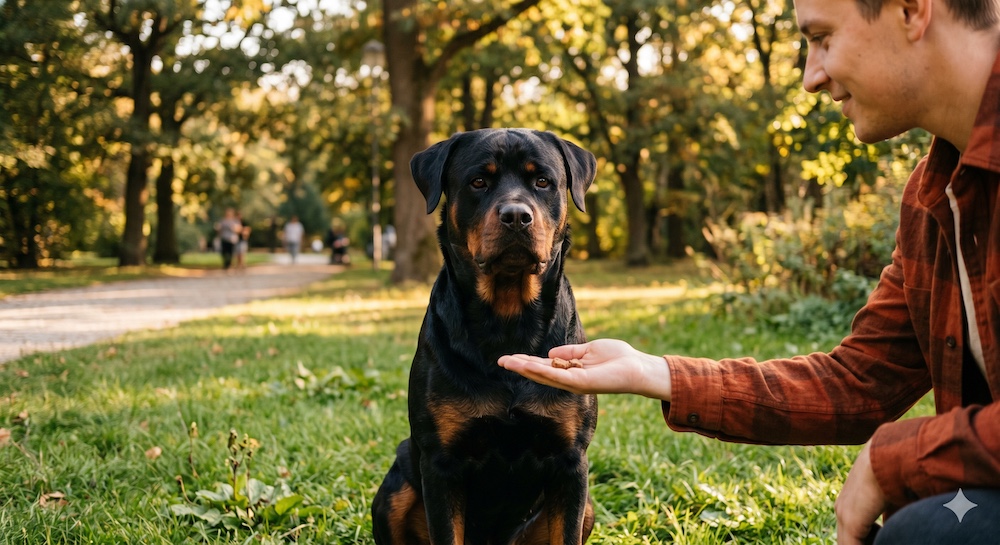
Working breeds were developed to perform specific protection, pulling, or service tasks alongside humans. They are generally highly intelligent, physically powerful, and deeply bonded to their family—which makes them exceptional dogs and serious training commitments.
(💡 Working breeds are powerful and sensitive—positive reinforcement produces far better results than dominance-based methods.)
🐕 What makes them different
Power: A 110 lb (50 kg) Rottweiler that has not learned leash manners is a genuine physical safety concern. Training is not optional for working breeds—it is a responsibility.
Loyalty and protectiveness: Guardian breeds can be reserved or wary with strangers. Early, ongoing socialization prevents protective instincts from becoming reactive aggression.
Sensitivity: Despite their size, many working breeds are emotionally sensitive and do not respond well to harsh training methods. Positive reinforcement produces significantly better results than dominance-based approaches.
Strength and endurance: Working breeds need substantial physical exercise alongside training. An under-exercised working breed is a behaviorally challenging working breed.
✅ Training strategies that work
Early training is non-negotiable. A 10-week-old Rottweiler puppy is manageable. A 2-year-old untrained Rottweiler is not. Start formal training from day one.
Reward-based training with high physical exercise. The combination of mental stimulation through training and adequate physical exercise produces the calmest, most responsive working breeds.
Extensive socialization. Introduce working breeds to as many people, dogs, environments, and situations as possible in the first 16 weeks. A well-socialized guardian breed is confident and stable. An under-socialized one can become dangerously reactive.
Build duration and distance in commands early. “Stay” and “Come” need to be highly reliable before a powerful dog is given any off-leash freedom. Build these commands to a very high standard before expanding freedom.
Sporting and Retriever Breeds
🐾 Labrador Retrievers, Golden Retrievers, Cocker Spaniels, Vizslas, Weimaraners, Irish Setters
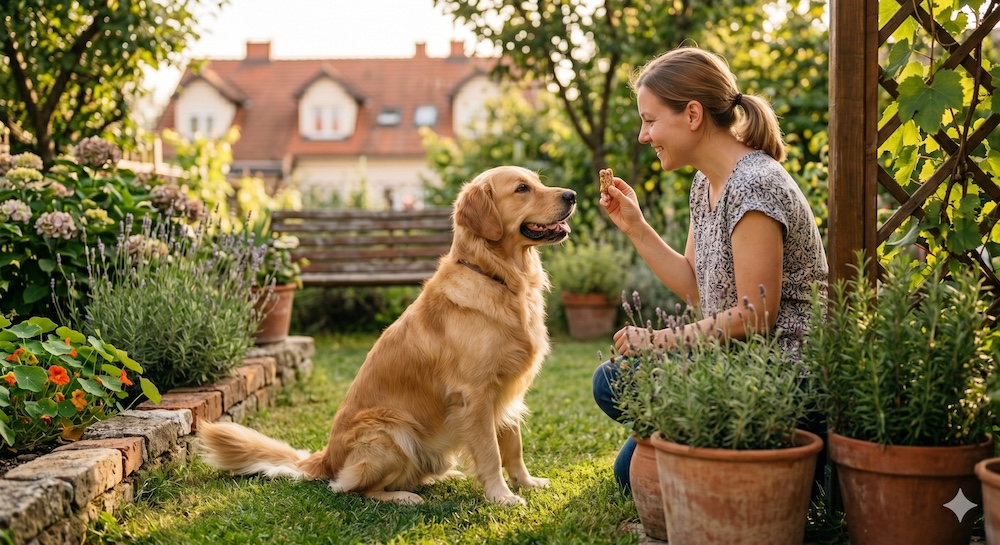
Sporting and retriever breeds consistently rank among the easiest to train—and for good reason. They were bred to work closely alongside hunters, which required intense handler focus, high trainability, and a strong desire to please.
(💡 Retrievers are among the most trainable breeds—their eagerness to please makes them fast learners at every level.)
🐕 What makes them different
Handler focus: Retrievers genuinely want to interact with and please their handler. This makes them highly responsive to positive reinforcement and very sensitive to their owner’s emotional state.
Food and retrieve drive: Most retrievers are strongly food-motivated and have a powerful retrieve instinct. Both can be used as training rewards.
Mouth sensitivity: Retrievers were bred to carry game without damaging it, which means they have naturally soft mouths. Bite inhibition typically develops more easily than in terriers.
Adolescent regression: Despite their trainability, retriever adolescence (6–18 months) can involve significant regression, increased energy, and loss of focus. This is normal and temporary.
✅ Training strategies that work
Use retrieve as a reward. A Labrador that is obsessed with a tennis ball can be trained using ball access as the primary reward— more powerfully than any food treat.
🐾 Chuckit! Ball Launcher 🐾
🎾 Chuckit! Classic Launcher—Turns retrieve drive into your most powerful training reward. Use access to a throw as the payoff for a solid sit-stay or recall—retrievers obsessed with the ball will work harder for one throw than for any treat.
Channel the food drive carefully. Labradors and Goldens are famously food-obsessed, which can lead to obesity. Use small, low-calorie training treats and subtract from daily food allowance. A food-motivated dog is a training asset—an obese dog is not.
Keep sessions engaging and varied. Despite their eagerness, retrievers can become robotic if sessions are too repetitive. Vary the exercises and keep the energy positive.
Push toward advanced training. Retrievers are capable of very high-level obedience, scent work, therapy work, and service training. If you have a retriever, do not stop at basic commands—they have the capacity and the desire for much more.
Mixed Breed Dogs: Reading the Individual
Mixed breed dogs do not fit neatly into any single category—but they are not unknowable. Most mixed breeds have a visually or behaviorally dominant breed type that gives you a starting point.
🐾 How to assess your mixed breed:
- Observe their natural behaviors—what do they do when left to their own devices? Chase, sniff, herd, guard?
- Identify the physical type—body shape, ear set, coat type often indicate breed group.
- Use a canine DNA test for a clearer picture if needed—results can genuinely improve your training approach.
The same principles apply: find their highest motivator, work with their instincts rather than against them, and adjust pace and session length to match their drive level.
Universal Principles That Apply to Every Breed
Despite all the variation above, these rules apply regardless of breed type:
- Positive reinforcement is always the foundation. Every breed responds better to reward than punishment. Aversive methods increase anxiety, damage trust, and produce suppressed behavior, not genuine learning.
- Socialization window is universal. Every breed has a critical socialization window that closes at 14–16 weeks. Missing it has consequences regardless of breed type. Our puppy training 101: first 7 days at home, covers early socialization priorities.
- Consistency is non-negotiable. A Border Collie and a Basset Hound both need consistent rules from every person in the household. Inconsistency produces confusion in every breed.
- Life stage matters for every breed. Adolescence is challenging across all types. Our full dog training guide covers how to handle the adolescent phase regardless of breed.
- Mental stimulation prevents behavioral problems in every breed. Boredom-driven chewing, barking, and destruction affect every breed type—some more than others. Our guide on how to stop dog chewing covers breed-relevant solutions.
📰 The 3-to-14-week critical socialization window referenced here—and its closure around 14-16 weeks—is documented by the American Veterinary Society of Animal Behavior (avsab.org) in their official puppy socialization position statement, which applies identically across every breed type covered in this guide regardless of temperament or drive level.
Conclusion: Your Dog’s Breed Is Your Training Blueprint
Understanding what your dog was bred to do is not an excuse for bad behavior—it is the starting point for effective training. A Beagle that pulls toward every scent on a walk and a Border Collie that tries to herd the children are both dogs whose instincts are running ahead of their training. The solution in both cases is the same: work with the instinct, not against it.
Find what motivates your specific breed, adjust your pace and reward type accordingly, and set expectations that are genuinely achievable for their genetic blueprint. That combination produces results faster than any single training method.
Key takeaways:
- ✅ Breed instincts are not obstacles—they are tools.
- ✅ Herding breeds need jobs and mental stimulation.
- ✅ Hounds respond to nose-based rewards and management.
- ✅ Terriers need fast, game-like sessions.
- ✅ Toy breeds need the same training as large breeds.
- ✅ Working breeds require early, consistent training.
- ✅ Retrievers are highly trainable with food and retrieve drive.
- ✅ Positive reinforcement works for every breed.
📝 Editor’s Note: The scent receptor comparison in this guide was cross-referenced with Embrace Pet Insurance’s veterinary-reviewed content and research conducted at Lake Erie College of Osteopathic Medicine (LECOM). The socialization window referenced across multiple breed sections aligns with the American Veterinary Society of Animal Behavior’s official position statement on puppy socialization. Breed purpose and temperament descriptions reflect standard breed group classifications published by the American Kennel Club.
Ready to apply these principles?
👉🏼 Detailed Guide to Dog Training — universal commands and behavioral strategies for every breed.
👉🏼 Leash Training: Stop Your Dog Pulling on Walks — breed-specific pulling challenges covered.
👉🏼 How To Stop Dog Chewing — breed-relevant solutions for destructive chewing.
👉🏼 Crate Training a Puppy — works for every breed when introduced correctly.

🐕 Browse dog food, treats, toys, health products, supplements, grooming and everything else your dog needs 🐾

🐕 Browse raw dog food, freeze-dried meals, chews, bones and natural treats from Indiana farms 🐾

🐕 Browse science-backed dry dog food, wet food, breed-specific formulas, and veterinary diets for your canin 🐾
(This post contains affiliate links. If you purchase through our links, we may earn a small commission at no extra cost to you. This never influences our editorial opinions.)
FAQ: Dog Training by Breed Type — Your Questions Answered
Are some breeds impossible to train?
No breed is impossible to train—but some breeds require more experience, patience, and creativity than others. Independent breeds like Basenjis, Chow Chows, and Afghan Hounds have lower handler focus and require a trainer who understands how to motivate them effectively. “Difficult to train” almost always means “requires a different approach than the owner is currently using.”
Is a mixed breed harder to train than a purebred?
Not necessarily. Mixed breeds often combine traits in unpredictable ways, which can make identifying the right approach slightly less straightforward. However, many mixed breeds benefit from hybrid vigor and can be highly trainable once you identify their dominant instincts and strongest motivators.
My breed is not on this list. How do I find the right approach?
Research your breed’s original function—what were they specifically developed to do? That purpose tells you their drive level, independence level, and primary motivators. A dog bred to pull sleds (high endurance, independent) needs a different approach than a dog bred to flush birds (handler-focused, highly biddable). Most breeds fall into one of the broad categories covered in this guide.
Can you change a breed’s instincts through training?
No—but you can redirect and manage them effectively. A Border Collie will always have herding instinct; a well-trained Border Collie has learned to redirect that instinct appropriately. Training does not eliminate genetic drives—it teaches dogs how to operate within human households despite those drives.
At what age should breed-specific training start?
The breed-specific approach can begin the moment your puppy arrives home. However, the first 8–16 weeks should focus primarily on socialization, name recognition, and basic impulse control—laying the universal foundation before breed-specific refinement. Our Puppy Training 101: First 7 Days covers exactly what to prioritize first.
Do male and female dogs of the same breed train differently?
In most breeds, the behavioral differences between male and female are less significant than individual personality variation. However, intact (unneutered) males can show more distraction and territorial behavior during adolescence, and intact females may show behavioral changes during heat cycles. Spaying and neutering timing is a separate conversation best had with your veterinarian.