
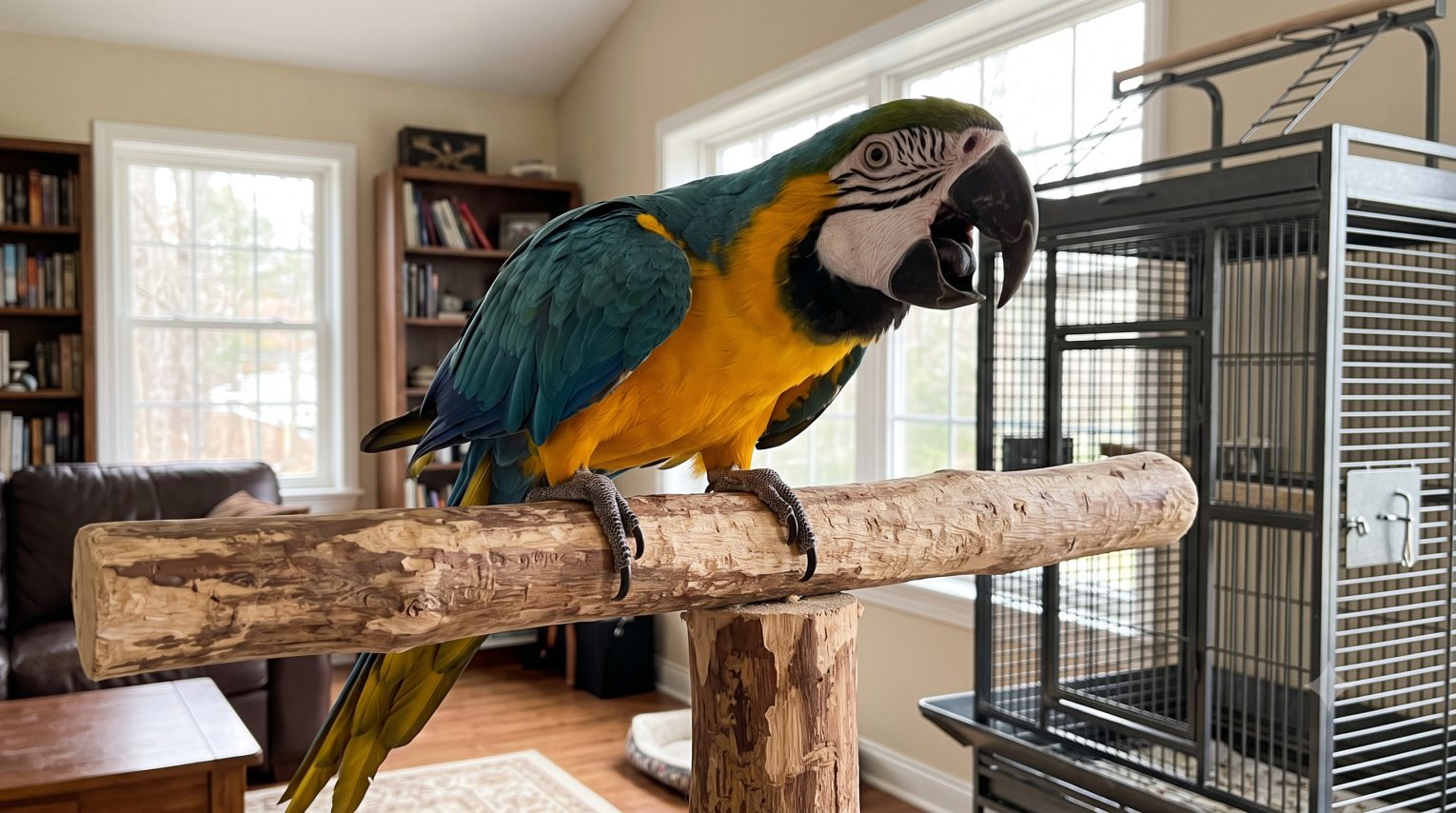
Birds scream for two main reasons: normal communication (contact calls and alarm calls, especially at dawn and dusk) or a learned habit of getting attention through noise. The fix for excessive screaming is to completely withdraw attention the moment screaming starts—no yelling back, no rushing over, no covering the cage as a reaction—then reward calm, quiet behavior the moment it appears. Most owners see screaming temporarily increase before it improves; real change typically takes 4–6 weeks of consistent effort.
Not all bird noise is a problem. Parrots are naturally vocal animals, and some calling— particularly short bursts at sunrise and sunset— is completely normal flock behavior that cannot and shouldn’t be eliminated entirely. This guide covers how to tell normal vocalization from excessive screaming, why common owner responses make it worse, and the specific method that actually reduces it.
Excessive screaming is one of several behavioral topics covered in our Bird Care Guide—the complete hub for parrots, budgies, cockatiels, and other pet birds. This issue often overlaps with trust and communication—our How to Tame Your Bird: Building Trust Step by Step guide covers the same reinforcement principles that apply here.
(💡 Short bursts of calling at dawn and dusk are completely normal—the goal is reducing excessive screaming, not eliminating all vocalization.)
Table of Contents
Normal Vocalization vs Problem Screaming
Before addressing “excessive” screaming, it’s important to know what normal sounds like—trying to eliminate all vocalization is both unrealistic and unfair to a naturally vocal species.
Two types of normal vocalization:
🎵 Contact calls: In the wild, parrots call out to locate flock members who are out of sight. When you leave the room, your bird’s instinct is to call and check that you (their flock) are still nearby. A single call-and-response is healthy communication, not a problem.
🎶 Alarm calls: A sudden, sharp vocalization signaling perceived danger. Always rule out an actual threat (a new object, a shadow, a loud outside noise) before assuming this is behavioral.
These two call types—and how to tell them apart from problem screaming—are documented in detail by LafeberVet at lafeber.com/pet-birds/decipher-your-pet-parrots-vocalizations, a resource frequently cited by avian behavior consultants.
🎵 What’s genuinely normal: Many species call loudly for 15–20 minutes, several times a day— especially around sunrise and sunset. This mirrors wild flock behavior and is not a sign of a problem on its own.
🎶 What crosses into “excessive”: Repeated, prolonged screaming well beyond these natural bursts, especially when it appears to specifically target getting your attention or reaction.
📰 The distinction between normal and problem vocalization is documented by Arizona Exotics (avianexoticvetcare.com), a veterinary practice specializing in avian medicine. Normal parrot vocalizations include alarm calls and contact calls, and it is considered normal for some species to call for 15 to 20 minutes several times daily, particularly in the morning—a behavior rooted in wild flock communication where distant calls signal flock boundaries to other groups. Prolonged, repeated vocalization beyond this pattern is considered abnormal and often indicates an unmet need or a learned attention-seeking pattern rather than typical flock behavior.
Why Bird Screaming Becomes Excessive
Problem screaming develops from one of two root causes—and the fix is different depending on which applies.
🚩 Cause 1: Unmet Needs
Poor diet, an undersized enclosure, insufficient exercise, lack of enrichment or foraging opportunity, hormonal cycles, fear of something new (neophobia), or an underlying medical issue can all drive excessive vocalization.
A thorough review of husbandry—diet, cage setup, daily enrichment, and overall demeanor—often identifies the root cause, and addressing it frequently resolves the screaming alongside other problem behaviors. If your bird is still primarily seed-fed, our Why Seeds Aren’t Enough: A Complete Bird Diet Guide covers the nutritional foundation that supports overall behavioral wellbeing.
🚩 Cause 2: Learned Attention-Seeking
This is the more common cause in pet birds, and it develops through an entirely understandable but avoidable owner pattern.
❓How it happens: Quiet calls and pleasant talking often become background noise that owners naturally tune out. It’s only the loud, disruptive screaming that reliably gets a response—so the bird learns that loud is the volume that works.
Once this pattern starts, well-meaning attempts to fix it often make things worse: covering the cage in response still means approaching and reacting; yelling back is still attention, and can even sound like the bird’s own alarm or contact call being “answered”; inconsistently ignoring the behavior (sometimes responding, sometimes not) reinforces it more strongly than responding every time would.
(🎓 Trainer’s Note: “This is the exact same reinforcement trap that shapes biting during taming—owners scream back or yank their hand away, and the bird learns dramatic reactions get a result. Screaming and biting are solved with the same underlying principle: don’t reward the behavior you don’t want, and proactively reward the one you do”—LovingPetsGuide Training Advisor.)
📰 The attention-based reinforcement mechanism behind excessive screaming is documented by the Veterinary Center for Birds and Exotics (avianexoticsvet.com). Pet parrots typically scream for their owners’ attention rather than to wake others or gather a flock for food, and owners inadvertently reinforce this by consistently responding—even if the response is simply coming to yell at the bird to stop. This creates a self-perpetuating cycle: the parrot screams, the owner responds, and the screaming continues because it reliably produces a reaction. The same source notes this identical reinforcement mechanism also shapes biting behavior during handling, when owners react dramatically and withdraw their hand in response to a bite.
The Fix: Breaking the Reinforcement Cycle
🪽 Step 1: Rule Out Unmet Needs First
Before assuming the screaming is purely attention-seeking, confirm your bird’s diet, cage size, daily enrichment, and physical health are all adequate. Addressing a genuine unmet need resolves the screaming without any specific “training” required.
🪽 Step 2: Withdraw All Attention During Screaming
The moment screaming starts, completely withdraw your attention—no eye contact, no talking, no walking toward the cage, and no verbal correction of any kind. If you are in the same room, turn away or leave. If you are in another room, do not call out or come check on the noise.
⚠️ Do not cover the cage as a reaction to screaming. Approaching to cover the cage is still attention and can reinforce the exact behavior you’re trying to reduce.
🪽 Step 3: Reward Quiet the Moment It Happens
The instant your bird stops screaming or drops to an acceptable volume, calmly re-engage—praise, a favorite treat, or simply your calm presence. This is the step most owners skip, and it’s arguably the most important one: withdrawing attention only teaches what doesn’t work; reward teaches what does.
🪽 Step 4: Expect an “Extinction Burst”
This is the step that causes most owners to give up too early. When you stop responding to a behavior that has worked reliably before, it’s common for that behavior to temporarily increase in intensity or frequency before it decreases— the bird is essentially trying harder at a strategy that used to work.
A documented case involving two Amazon parrots with a 13-year screaming habit showed measurable improvement using this exact method—but owners had to wait roughly six weeks before seeing real change, and noted an initial increase in screaming before the improvement began.
📰 The “extinction burst” pattern—a temporary increase in an undesired behavior after reinforcement stops—is a well-established principle referenced across behavioral training resources for parrots. A documented case study involving two Amazon parrots with a screaming habit persisting for 13 years found that consistent application of ignoring screaming while rewarding quiet behavior produced measurable improvement, though owners observed increased screaming initially and needed approximately six weeks of consistent effort before seeing the behavior meaningfully decrease. This timeline is a realistic expectation to set before starting, not a sign the method has failed.
Addressing Root Causes Alongside the Behavioral Fix
Withdrawing attention from screaming works far better when paired with proactively meeting your bird’s needs the rest of the time.
Enrichment and foraging: A bored bird has more motivation to scream for stimulation. Foraging toys and daily out-of-cage time reduce the underlying drive.
🐾 Bird Foraging & Enrichment Toys 🐾
🧩 Foraging & Enrichment Toys—A bird working to access hidden food is a bird with less energy left over to scream for stimulation. Rotating toys regularly keeps engagement high and prevents boredom-driven noise from becoming a habit.
Trust and predictable interaction: A bird that doesn’t trust handling may scream out of generalized stress. Building trust through gradual, positive interaction reduces baseline anxiety—see our How to Tame Your Bird guide for the full step-by-step process.
Diet: Nutritional deficiencies and imbalanced diets are linked to a range of behavioral issues, including problem vocalization—see Why Seeds Aren’t Enough for the correct diet foundation.
Species-Specific Noise Patterns
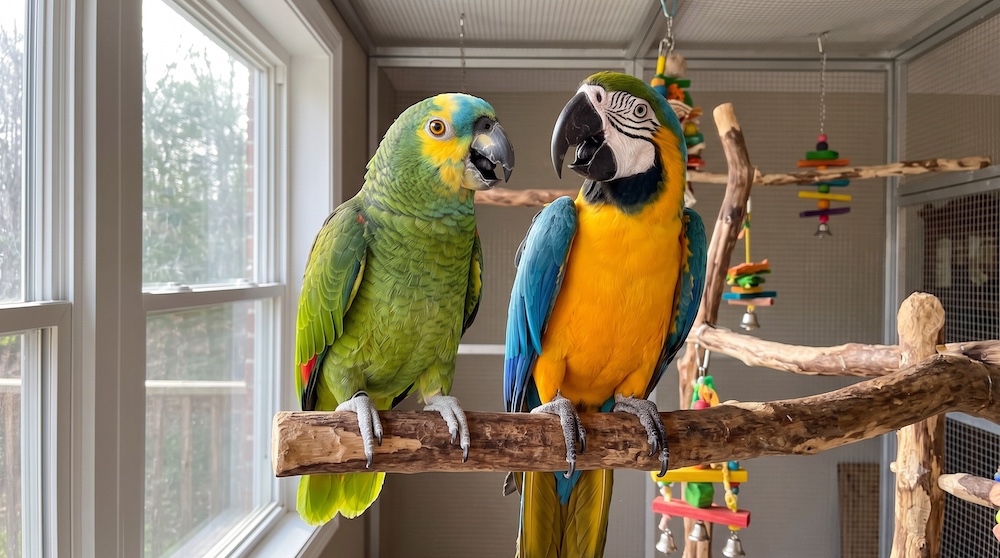
🦜 Amazons and Macaws
Often scream more during hormonal or breeding-related cycles. This is a temporary, biologically driven increase rather than a training failure—patience and consistency still apply, but expectations should adjust seasonally.
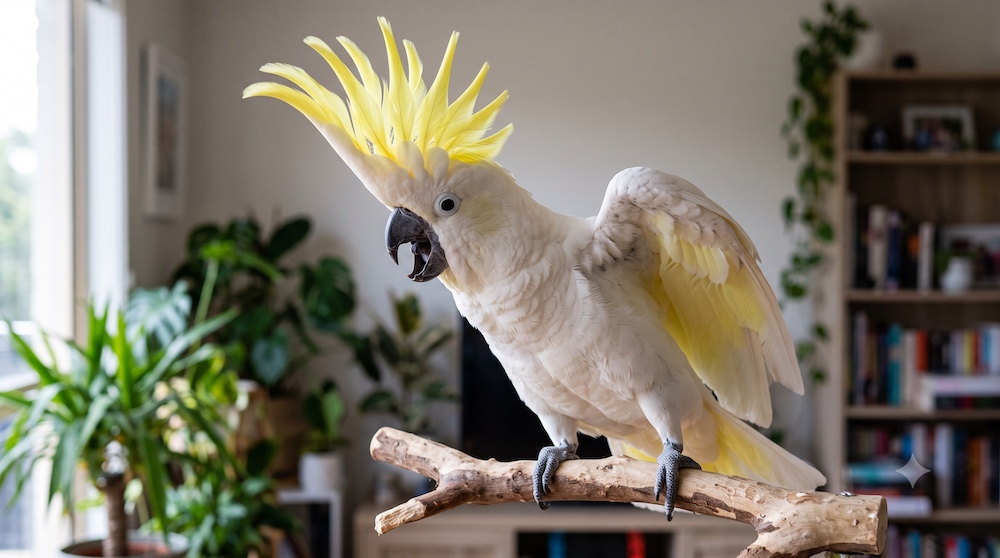
🦜 Cockatoos
Naturally among the loudest pet bird species by nature. Realistic expectations matter here—the goal is reducing excessive, attention-driven screaming, not achieving silence from a species that is simply loud by design.
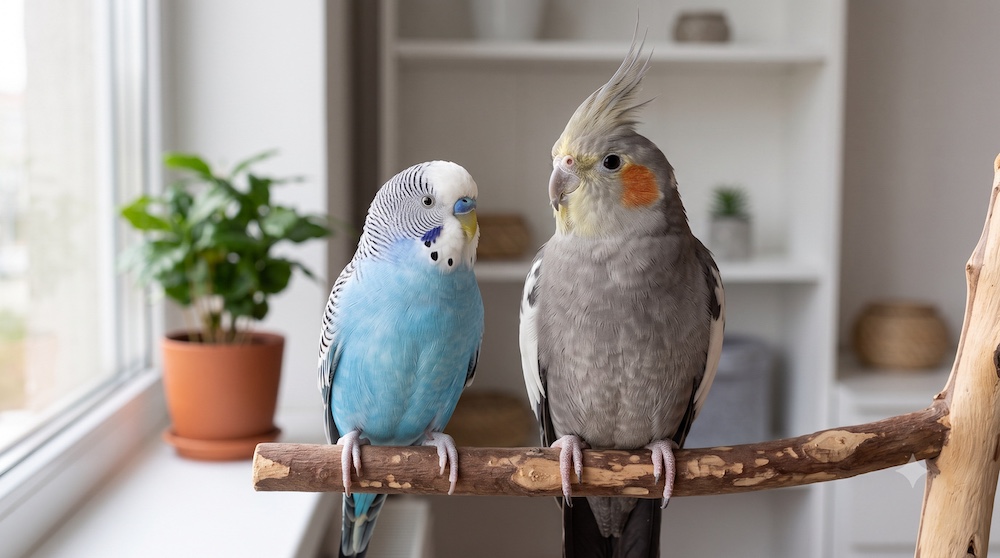
🦜 Smaller species
(budgies, cockatiels)
Generally quieter overall, but can still develop learned attention-seeking screaming through the same reinforcement pattern.
Common Mistakes That Make Screaming Worse
| ❌ Yelling back: This is still attention, and to a bird, it can even resemble an alarm or contact call being “answered.” |
| ❌ Covering the cage as a punishment: Approaching to cover the cage is still a direct response to the screaming. |
| ❌ Inconsistent responses: Ignoring screaming most of the time but occasionally giving in when frustrated reinforces the behavior more strongly than consistently responding would. |
| ❌ Giving up during the extinction burst: Stopping the method the moment screaming temporarily worsens—right when it’s about to start improving—is the single most common reason this approach appears “not to work.” |
| ❌ Ignoring genuine unmet needs: If the root cause is boredom, poor diet, or fear, the ignore-and-reward method alone won’t fully resolve the screaming until the underlying need is addressed. |
When to See an Avian Veterinarian
Sudden changes in vocalization—new screaming in a previously quiet bird, or vocalization alongside other symptoms like fluffed feathers, reduced appetite, or lethargy—can indicate pain or illness rather than a behavioral issue. Rule out medical causes with an avian veterinarian before assuming the change is purely behavioral, particularly if the screaming appeared suddenly rather than developing gradually.
Conclusion
Excessive screaming is rarely about a bird “being difficult”—it’s almost always either an unmet need or a communication pattern that developed because loud noise reliably worked. The fix requires patience and consistency: rule out real needs first, then completely withdraw attention from screaming while proactively rewarding calm behavior, and expect the behavior to get louder before it gets quieter.
Key takeaways:
- ✅ Some calling—especially at dawn and dusk—is completely normal and shouldn’t be eliminated.
- ✅ Problem screaming comes from unmet needs or learned attention-seeking.
- ✅ Never respond to screaming with attention, including yelling back or covering the cage.
- ✅ Reward quiet, calm behavior proactively—this step is often skipped.
- ✅ Expect an extinction burst—screaming often worsens before it improves.
- ✅ Real change typically takes 4–6 weeks of consistent effort.
- ✅ Sudden new screaming warrants a vet check to rule out pain or illness.
📝 Editor’s Note: The normal-versus-problem vocalization distinction and behavioral guidance in this article were cross-referenced with avian veterinary practice resources documenting screaming behavior in pet birds, alongside published case material on the extinction burst pattern and its resolution timeline in long-term screaming cases.
👉🏼 Bird Care Guide—complete hub for parrots, budgies, and other pet birds.
👉🏼 How to Tame Your Bird: Building Trust Step by Step—the same reinforcement principles applied to handling and biting.
👉🏼 Why Seeds Aren’t Enough: A Complete Bird Diet Guide—the nutritional foundation for overall behavioral health.
👉🏼 Bird Cage Setup Guide—enrichment and space considerations that reduce boredom-driven noise.
👉🏼 Safe Fruits & Vegetables for Pet Birds— foraging-friendly fresh foods for enrichment.

🦜 Browse bird food, cages, perches, toys, supplements and everything else your bird needs 🐾
(This post contains affiliate links. If you purchase through our links, we may earn a small commission at no extra cost to you. This never influences our editorial opinions.)
FAQ: Why Does My Bird Scream?
Is it normal for my bird to scream at sunrise and sunset?
Yes. Calling loudly for 15–20 minutes, particularly around dawn and dusk, is normal flock behavior in many pet bird species and mirrors how wild parrots communicate across distances. This pattern alone is not a sign of a behavioral problem.
Why does yelling at my bird to be quiet make it worse?
Yelling back is still attention from your bird’s perspective, and it can even resemble an alarm or contact call being answered. Rather than discouraging the behavior, it reinforces that screaming reliably gets a reaction from you.
How long does it take to reduce excessive screaming?
Most cases show meaningful improvement within 4–6 weeks of consistently withdrawing attention from screaming while rewarding calm behavior. Expect the screaming to temporarily increase before it improves—this “extinction burst” is normal and doesn’t mean the method has failed.
Should I cover my bird’s cage to stop screaming?
Not as a direct reaction to screaming—approaching to cover the cage is still a response and can reinforce the behavior. Covering the cage on a consistent daily schedule (unrelated to screaming episodes) is a different, appropriate practice.
My bird suddenly started screaming a lot more than usual. Should I be concerned?
Yes—a sudden increase in vocalization, especially alongside other symptoms like fluffed feathers, reduced appetite, or lethargy, can indicate pain or illness. Schedule an avian veterinary check before assuming the change is purely behavioral.
Can I completely stop my bird from ever screaming?
No, and this shouldn’t be the goal. Vocalization, including loud calling, is a natural and healthy part of being a bird. The realistic goal is reducing excessive, attention-driven screaming while accepting normal species-typical calling as part of bird ownership.