
Metabolic bone disease (MBD), medically known as nutritional secondary hyperparathyroidism, develops when a reptile’s blood calcium runs chronically low— from inadequate dietary calcium, an inverted calcium-to-phosphorus ratio, or insufficient UVB exposure preventing vitamin D3 synthesis. The body responds by pulling calcium out of the bones to maintain blood levels, causing progressively weaker, softer bones over weeks to months. Left untreated, MBD is fatal; even with treatment, some deformities that develop before diagnosis are permanent.
This is not a condition to attempt treating at home. Diagnosis requires veterinary examination, bloodwork, and often X-rays, and treatment frequently involves prescription or injectable calcium therapy. What this guide covers is recognizing the early signs, understanding why it happens, and—most importantly—the prevention measures covered throughout this hub that make MBD almost entirely avoidable.
MBD prevention ties together several topics covered in our Exotic Pet Care Guide—the complete hub for reptile diet, lighting, and habitat setup. Correct UVB setup is the primary prevention tool—see UVB Lighting for Reptiles: Which Bulb Does Your Pet Need? for the complete species-specific guide.
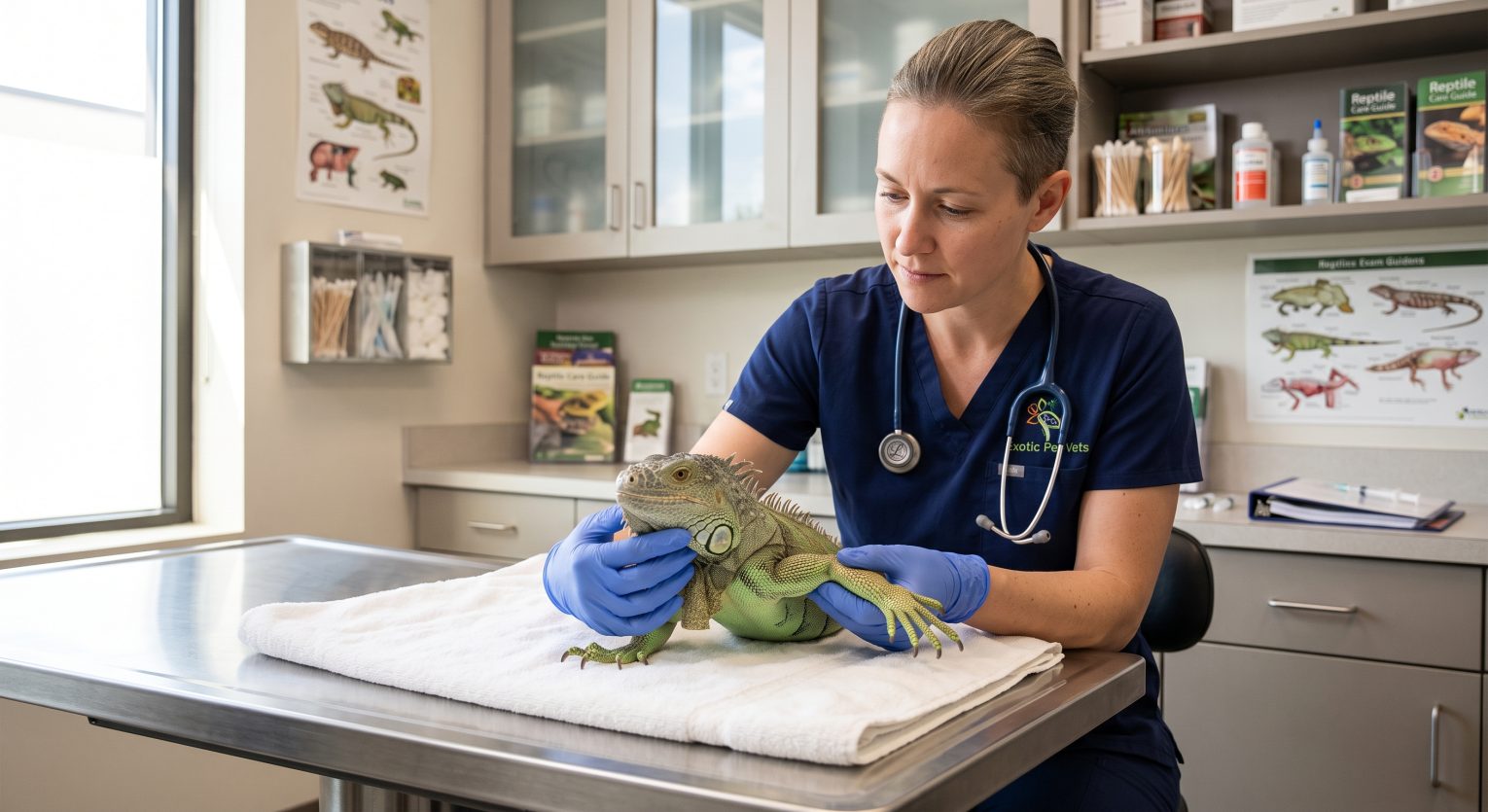
(💡 Early signs of metabolic bone disease are often subtle—regular health checks catch what a casual glance can miss.)
Table of Contents
What Metabolic Bone Disease Actually Is
MBD isn’t a single disease so much as the visible end result of a metabolic breakdown—understanding the mechanism explains both why it develops slowly and why prevention is so much more effective than treatment.
🧬 The chain of events:
- Blood calcium drops due to inadequate dietary calcium, an inverted calcium-to-phosphorus ratio (too much phosphorus relative to calcium), or insufficient UVB exposure preventing the vitamin D3 synthesis needed to absorb dietary calcium at all.
- The parathyroid gland detects low blood calcium and releases parathyroid hormone (PTH) to correct it.
- PTH stimulates osteoclasts—cells that break down bone tissue—to pull calcium out of the skeleton and release it into the bloodstream.
- Blood calcium normalizes temporarily, but bone density and structural strength decline.
- Repeated over weeks to months, bones become progressively softer, weaker, and prone to deformity or fracture.
This mechanism has a formal name: nutritional secondary hyperparathyroidism (NSHP)—the medical term for the most common form of metabolic bone disease in reptiles.
Why insect-eating and plant-eating species are both at risk. It might seem like diet type would protect one group over another, but both face the same underlying challenge: balancing dietary calcium against phosphorus is genuinely difficult in captivity. Most feeder insects and many plant foods have naturally poor calcium-to-phosphorus ratios without proper supplementation and gut-loading.
(🦎 Reptile Keeper’s Note: “MBD develops slowly enough that owners often don’t notice anything wrong until the disease is already well established. The subtle early signs matter more than people realize—by the time bones are visibly deformed, weeks or months of damage have already happened.”—LovingPetsGuide Reptile Advisor)
📰 Nutritional secondary hyperparathyroidism as the most common form of reptile metabolic bone disease is documented by Veterinary Partner (VIN) (veterinarypartner.vin.com) and the Merck Veterinary Manual (merckvetmanual.com), both confirming the same underlying mechanism: inadequate dietary calcium, an inverted calcium-to-phosphorus ratio, and insufficient UVB-driven vitamin D3 synthesis all trigger excess parathyroid hormone release, which resorbs calcium from bone to maintain blood calcium levels at the skeleton’s expense.
Recognizing the Signs
Signs typically progress gradually, and early indicators are easy to miss during a casual glance.
🟡 Early Signs
- → Reduced activity or appetite.
- → “Rubber jaw”—a soft, pliable lower jaw that should normally be firm; this is one of the most recognized early indicators and gives the condition its common nickname.
- → Subtle reluctance to move or bear weight normally.
🟠 Progressive Signs
- → Swollen limbs, particularly hind legs—these often look muscular and feel firm rather than obviously “sick,” which can mislead owners.
- → Difficulty lifting the body or tail off the ground while moving, sometimes described as a “swimming” motion.
- → Spinal curvature, kinking, or visible bumps along the spine; kinked tail.
- → Jerky, uncoordinated movements or tremors.
- → In turtles and tortoises specifically: a shell that appears too small for the animal, or develops visible curvature.
🔴 Advanced/Emergency Signs
- → Pathologic fractures—bones breaking from normal activity or minimal trauma, not an obvious accident.
- → Tremors progressing to tetany (sustained muscle contraction) or seizures—these reflect dangerously low blood calcium directly affecting nerve and muscle function, separate from the bone-level damage.
- → Inability to right itself or significant paralysis.
⚠️ Tremors, seizures, or paralysis are always an emergency. Contact an exotic-experienced veterinarian or emergency clinic immediately—don’t wait to see if symptoms resolve.
Who’s Most at Risk
Young, rapidly growing animals face the highest risk, since calcium demand relative to body size peaks during active growth—exactly when mistakes in diet or lighting setup do the most damage.
Reproducing or egg-laying females face significantly elevated calcium demand from egg production, making correct supplementation especially important during this period.
Any reptile with inadequate UVB or calcium supplementation, regardless of species or diet type—both insectivorous species (like Leopard Gecko Care Guide) and omnivorous species (like Bearded Dragon Care Guide) are documented at risk when husbandry falls short.
📰 Young, rapidly growing reptiles and reproducing females are identified as the highest-risk groups for nutritional secondary hyperparathyroidism by Veterinary Partner (VIN), which confirms this elevated risk reflects increased physiological calcium demand during these life stages relative to non-growing, non-reproducing adults.
Why This Requires Veterinary Care
MBD is genuinely dangerous to attempt treating at home, for reasons specific to how the condition works.
❗️Diagnosis requires clinical tools you don’t have access to. A veterinarian typically combines a detailed diet and husbandry history with a physical exam, bloodwork to check calcium and phosphorus levels, and often X-rays to assess bone density and track treatment response over time.
❗️Treatment often requires prescription or injectable therapy. Depending on severity, this can include oral prescription calcium supplementation, injectable calcium for animals with dangerously low blood calcium, and in cases that don’t respond, additional hormone therapy—all requiring veterinary administration and monitoring, not home dosing.
❗️Severe cases need emergency stabilization first. Animals presenting with tetany or seizures need immediate calcium correction under clinical supervision before any other treatment can safely proceed.
❗️Some damage is permanent even with successful treatment. Physical deformities that develop before diagnosis—including jaw and spinal changes— often don’t fully resolve even once blood chemistry normalizes and bone density improves. This is precisely why prevention matters more than any available treatment.
❗️The prognosis genuinely depends on timing. Most reptiles with untreated MBD die from the condition. Animals that receive treatment early, while still eating and before severe deformity develops, have a meaningfully better outlook than those diagnosed late.
📰 Treatment of critical MBD cases requiring fluid therapy, injectable calcium for hypocalcemic animals, and phosphate binders for elevated phosphorus is documented by the Merck Veterinary Manual (merckvetmanual.com), which confirms that correcting the underlying diet and husbandry problems remains the foundation of successful therapy alongside medical treatment, and that prognosis is notably better when the animal is still eating at the time of diagnosis. Veterinary Partner (VIN) separately confirms that physical deformities such as jaw and spinal changes are often irreversible even following bone density recovery.
Prevention: What Actually Works
Because MBD develops from a small number of identifiable, controllable factors, prevention is genuinely achievable—this is the section that matters most for most readers.
| ✅ Correct UVB for your species’ Ferguson zone. The single most common contributing factor. See UVB Lighting for Reptiles: Which Bulb Does Your Pet Need? for species-specific bulb strength, distance, and replacement guidance. |
| ✅ Consistent calcium supplementation. Dust feeder insects or produce according to your species’ specific schedule—covered in Bearded Dragon Care Guide and Leopard Gecko Care Guide for two different dietary approaches. |
| ✅ Gut-load feeder insects before dusting. Feeding insects a calcium-rich diet for 24–48 hours before offering them to your reptile improves their own calcium content, complementing—not replacing— direct calcium dusting. |
| ✅ Correct basking and ambient temperatures. Digestion and calcium metabolism are temperature- dependent in reptiles; inadequate warmth compounds calcium absorption problems even when supplementation is otherwise correct. |
| ✅ Track your UVB bulb’s actual age. A bulb that’s stopped producing usable UVB but still lights up is a common, entirely invisible contributing factor—replace on schedule, not by appearance. |
| ✅ Schedule regular veterinary check-ups, not just visits when something already seems wrong. Early detection during a routine exam catches subtle signs long before they progress to visible deformity. |
🐾 Gut-Loading Diet for Feeder Insects 🐾
🦗 Feeder Insect Gut-Load Formulas — Improves the calcium content of crickets, roaches, and other feeder insects before they’re offered, complementing direct calcium dusting rather than replacing it.
Common Prevention Mistakes
| ❌ Assuming a calcium supplement alone covers everything. Supplementation without adequate UVB (or vice versa) still leaves a real gap—both systems need to work together, not substitute for each other. |
| ❌ Inconsistent dusting schedule. Occasional supplementation doesn’t provide the same protection as a consistent routine matched to your species’ needs. |
| ❌ Not gut-loading feeder insects. Dusting alone helps, but insects with genuinely poor baseline nutrition still provide a weaker overall calcium contribution than gut-loaded, then dusted, insects. |
| ❌ Treating subtle early signs as “just how this individual is”. A slightly soft jaw or minor reluctance to move is far easier to address early than after weeks of progression. |
| ❌ Skipping veterinary checkups because the reptile “seems fine”. MBD’s gradual, often-invisible early progression is exactly why routine exams catch what daily observation alone can miss. |
Conclusion
Metabolic bone disease is one of the most common, and most preventable, health problems in captive reptiles. The mechanism is well understood, the risk factors are identifiable, and the prevention measures are entirely within an owner’s control—which is exactly why getting UVB, calcium, and temperature right from the start matters so much more than knowing how to respond after the fact.
Key takeaways:
- ✅ MBD develops when the body pulls calcium from bones to correct chronically low blood calcium.
- ✅ “Rubber jaw” is one of the most recognized early warning signs.
- ✅ Both insect-eating and plant-eating species are equally at risk.
- ✅ Young, growing animals and reproducing females face the highest risk.
- ✅ Tremors, seizures, or paralysis are always a veterinary emergency.
- ✅ Some deformities are permanent even after successful treatment—prevention matters more than any available treatment.
- ✅ Correct UVB, consistent calcium supplementation, and gut-loading feeder insects are the core prevention measures.
📝 Editor’s Note: The pathophysiology of nutritional secondary hyperparathyroidism described in this guide was verified against Veterinary Partner (VIN) (veterinarypartner.vin.com) and the Merck Veterinary Manual (merckvetmanual.com). Risk factors and prognosis information were cross-referenced with PetMD (petmd.com) and the University of Illinois College of Veterinary Medicine (vetmed.illinois.edu). This article is educational and does not replace diagnosis or treatment by a qualified exotic animal veterinarian.
👉🏼 Exotic Pet Care Guide—complete hub for reptile care essentials.
👉🏼 UVB Lighting for Reptiles: Which Bulb Does Your Pet Need?—the primary MBD prevention tool.
👉🏼 Bearded Dragon Care Guide: Diet, Heat & Habitat—species-specific calcium and UVB setup.
👉🏼 Leopard Gecko Care Guide: The Best Beginner Reptile—species-specific calcium and UVB setup.
👉🏼 Best Reptiles for Beginners: Easy Species to Start With—how care complexity, including MBD risk factors, compares across species.

🐍 Browse exotic pet food, terrariums, lighting, heating, supplements and everything else your reptile needs 🐾
(This post contains affiliate links. If you purchase through our links, we may earn a small commission at no extra cost to you. This never influences our editorial opinions.)
FAQ: Metabolic Bone Disease in Reptiles
What is “rubber jaw” in reptiles?
Rubber jaw refers to a soft, pliable lower jaw that should normally be firm—one of the most recognized early signs of metabolic bone disease, caused by calcium being pulled from the jawbone to correct chronically low blood calcium elsewhere in the body.
Can metabolic bone disease be cured?
With early veterinary treatment—correcting diet and husbandry alongside medical calcium therapy—many reptiles recover well, particularly if caught while still eating and before severe deformity develops. However, some physical changes that occur before diagnosis, including jaw and spinal deformities, are often permanent even after successful treatment.
Is metabolic bone disease contagious?
No. MBD is a nutritional and husbandry-driven condition, not an infectious disease—it cannot spread between animals. However, multiple reptiles in the same household kept under identical inadequate conditions can all develop it independently for the same underlying reasons.
What’s the difference between calcium deficiency and an inverted calcium-to-phosphorus ratio?
Calcium deficiency means too little calcium is present overall. An inverted ratio means phosphorus significantly outweighs calcium even if some calcium is present—both problems trigger the same underlying parathyroid hormone response and can occur independently or together, which is why correcting diet requires attention to both factors, not just raw calcium quantity.
Can I treat mild metabolic bone disease at home with extra calcium supplements?
No. Even mild-seeming cases require veterinary diagnosis to confirm MBD is actually the cause and to determine appropriate treatment, since excessive home supplementation without proper diagnosis carries its own risks, and underlying husbandry problems (especially UVB) need professional-level correction alongside any calcium therapy.
How long does it take for metabolic bone disease to develop?
Typically weeks to months of inadequate calcium, UVB, or an imbalanced diet before signs become noticeable—which is exactly why the condition often progresses further than owners realize before diagnosis, and why consistent daily prevention matters more than reactive correction.