

Dogs should be fed based on their life stage: puppies need 3–4 meals per day, healthy adult dogs thrive on 2 meals daily, and most seniors do well on 2 smaller meals. Consistency in timing is just as important as frequency for digestion and weight management.
When you bring a new dog into your home, one of the first and most frequent questions you’ll ask yourself is: “Am I feeding them enough, and am I doing it at the right times?”
Unlike us, dogs cannot simply open the fridge when they feel a little peckish. They rely entirely on us to set a routine. However, a feeding schedule is not a “one-size-fits-all” situation. A rapidly growing Golden Retriever puppy has vastly different caloric and timing needs compared to a sleepy, senior Basset Hound.
In this guide, we will break down the ideal dog feeding schedule by age, explaining exactly how often you should fill the bowl to keep your furry friend healthy, happy, and at an ideal weight.
(Want to make sure you are putting the right ingredients into that bowl? Don’t miss our foundational complete dog nutrition guide.)
Table of Contents
The Puppy Phase (8 Weeks to 1 Year)
Puppies are little energy factories. They are burning calories rapidly to fuel their massive growth spurts, brain development, and endless playtime. Because their stomachs are still tiny, they cannot digest a whole day’s worth of calories in just one or two sittings.

Here is the general guideline for a puppy feeding schedule:
- 8 to 12 weeks old: 3 to 4 meals a day. (At this stage, smaller, frequent meals prevent energy crashes and stomach upset).
- 3 to 6 months old: 3 meals a day. (Morning, midday, and evening).
- 6 to 12 months old: 2 meals a day. (Transitioning to an adult schedule).
Pro Tip for Large Breeds: If you have a large or giant breed (like a Great Dane or Mastiff), their growth period lasts longer—sometimes up to 18 or 24 months. Consult your vet before switching them to an adult schedule or adult food too early, as this can cause joint and bone issues.
Choosing the right food for your growing puppy is just as important as timing. Our best dog food for puppies covers DHA-rich formulas for every breed size.
📰 The growth plate risk in large and giant breed puppies is documented in the American Animal Hospital Association’s 2021 AAHA Nutrition and Weight Management Guidelines for Dogs and Cats, available at aaha.org. Growth plates in large and giant breeds remain open until approximately 18–20 months of age— significantly longer than the roughly 12 months seen in small and medium breeds. Meal-restricted feeding (rather than free feeding) during this extended growth window has been shown to reduce developmental orthopedic disease and early osteoarthritis, primarily by preventing the maximal growth rate that overloads still-forming joints.
🐾 Purina Pro Plan Puppy Dry Dog Food 🐾
🟤 Purina Pro Plan (Dry) — AAFCO feeding trial approved for growth, with DHA from fish oil for brain and eye development. The most vet-recommended puppy food for structured meal-based feeding from week one.
The Adult Dog Phase (1 to 7+ Years)
Congratulations, you have survived puppyhood! Once your dog reaches adulthood, their metabolism stabilizes. They are no longer growing, which means their diet needs to shift from growth to maintenance.
For the vast majority of healthy adult dogs, the golden rule is 2 meals a day—typically once in the morning and once in the evening, spaced about 10 to 12 hours apart.
Many owners practice “free-feeding” (leaving a bowl full of dry kibble out all day for the dog to graze). While convenient, veterinarians generally advise against it for several reasons.
Why You Shouldn’t “Free-Feed”
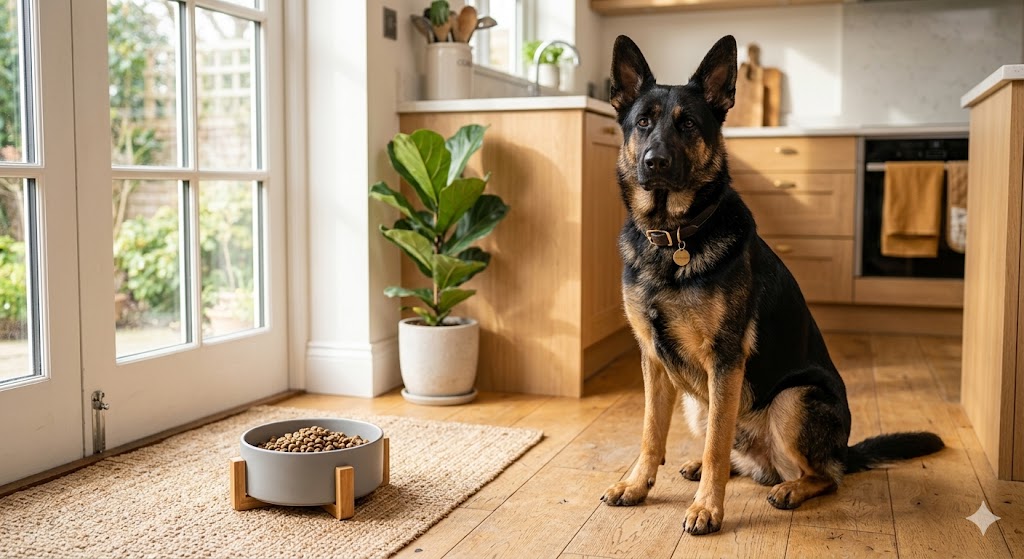
- Obesity Risk: It is incredibly difficult to track how much your dog is actually eating, making overeating almost guaranteed.
- Hiding Illness: A dog’s appetite is the first indicator of their health. If you feed them on a strict schedule, you will instantly know if they skip a meal. If you free-feed, days might pass before you notice they aren’t eating well.
- Food Freshness: Kibble left out all day goes stale, and if you are using fresh food or wet food, free-feeding is simply not an option due to spoilage.
(Curious about upgrading from kibble? Read our direct fresh dog food vs kibble comparison!)
📰 The obesity risk from free-feeding is not theoretical. The Association for Pet Obesity Prevention (APOP) 2022 Prevalence Survey found that 59% of dogs in the United States are overweight or obese—verified at petobesityprevention.org. A separate study published in Preventive Veterinary Medicine (2025) analyzing electronic medical records from 4.9 million dogs found that a dog recorded as overweight during growth had 1.85 times the odds of being overweight or obese in adulthood. Free-feeding is the single most common owner-driven contributor to this statistic—because without measured meals, daily caloric intake is impossible to track.
Already concerned your dog may be overweight? See [Dog Weight Management: Is Your Dog Overweight?] for a complete body condition assessment and action plan.
🐾 Outward Hound Fun Feeder Slow Bowl 🐾
🥣 Outward Hound Slow Feeder Bowl — Slows eating by up to 10x — reduces bloat risk, improves digestion, and extends mealtime for dogs that gulp their food. Suitable for all breed sizes.
The Senior Years (7+ Years)
As dogs enter their golden years, they become less active and their metabolism slows down significantly. This means they require fewer calories to maintain their weight. Overfeeding a senior dog leads to rapid weight gain, which puts dangerous stress on aging joints.
However, they need highly digestible proteins—not less protein overall, as muscle mass preservation becomes increasingly important. This is also the time to look for foods enriched to support those aging joints, and antioxidants to counteract cellular aging.
📰 The recommendation for maintained protein in senior dogs—rather than reduced protein— is supported by veterinary nutrition research. Protein restriction in aging dogs is only clinically indicated for dogs with confirmed kidney disease under veterinary supervision. For healthy senior dogs, adequate digestible protein is the primary dietary defense against sarcopenia (age-related muscle loss), which directly impacts mobility and quality of life. The Merck Veterinary Manual, available at merckvetmanual.com, confirms that senior dogs without kidney disease do not benefit from protein restriction and may be harmed by it.
Some senior dogs develop sensitive stomachs, dental issues, or conditions that make processing large meals uncomfortable. If your older dog struggles to finish their meals or throws up bile in the morning, your vet might recommend switching back to 3 smaller, highly digestible meals a day to keep their stomach settled.
If your dog struggles to digest their daily meals properly, it might be time for a recipe change. Explore our guide to the best dog food for sensitive stomachs for vet-reviewed options tailored to delicate digestive systems.

General senior feeding guidelines
- 7–10 years: 2 meals per day, reduced portions.
- 10+ years: 2–3 smaller meals if digestion is sensitive.
- Dental issues: Consider wet food or softened kibble mixed with warm water.
- Joint conditions: Maintain lean body weight—even 10% overweight adds significant joint stress.
(🩺 Vet’s Note: “Senior dogs often experience a decline in digestive enzyme production, making smaller, more frequent meals easier to process. If your older dog vomits bile in the morning, that’s a classic sign their stomach is too empty for too long”—LovingPetsGuide Veterinary Advisor.)
Senior dogs often benefit from targeted joint support. See our best joint supplements for senior dogs for vet-reviewed picks.
🐾 Purina Pro Plan Senior Dry Dog Food 🐾
🟤 Purina Pro Plan Prime Plus 7+ — High-protein senior formula with live probiotics, glucosamine, and EPA for joint support. Maintains protein density while adjusting calorie content for slowing senior metabolism.
🐾 Cosequin DS Plus MSM Chewable Tablets 🐾
💊 Cosequin DS Plus MSM (Joint Support) — The most clinically studied joint supplement in veterinary medicine. Double-strength glucosamine HCl and chondroitin sulfate with MSM. NASC certified. Highly palatable—accepted by most dogs without resistance.
Three Key Rules for a Successful Feeding Routine
No matter your dog’s age, adhering to these three principles will make feeding time stress-free:
| Be Consistent: Feed your dog at the same times every day. Dogs thrive on routine, and a consistent feeding schedule naturally leads to a consistent potty schedule. |
| The 15-Minute Rule: Put the bowl down. If your dog hasn’t eaten it after 15 to 20 minutes, pick the bowl up and do not offer food again until the next scheduled meal. This cures picky eating fast and establishes that you control the resources. |
| Mind the Exercise: Never feed your dog a large meal immediately before or after rigorous exercise. For large, deep-chested breeds, this can cause a fatal condition called Gastric Dilatation-Volvulus (Bloat). Wait at least an hour after a heavy run before serving dinner. |
Bloat (GDV) is a life-threatening emergency— see our [Common Dog Health Problems: Symptoms to Never Ignore] guide for warning signs across every major canine health concern.
Establishing the right feeding schedule by age isn’t just about keeping your dog full; it’s about providing structure, monitoring their health, and preventing obesity.
Not sure which type of food works best at each life stage? Our dog nutrition basics guide explains exactly what to look for.
Have questions about what foods might be dangerous while you are cooking? Our guide on human foods dogs can and can’t eat has a complete safety checklist for your kitchen.
📝 Editor’s Note: The obesity prevalence figures in this guide come from the Association for Pet Obesity Prevention’s published survey data, verified directly at petobesityprevention.org, and from a 2025 peer-reviewed study in Preventive Veterinary Medicine analyzing 4.9 million dogs at Banfield Pet Hospital. The senior protein guidance was cross-referenced with the Merck Veterinary Manual at merckvetmanual.com. The feeding frequency recommendations align with guidelines published by the American Animal Hospital Association (AAHA).

🐕 Browse dog food, treats, toys, health products, supplements, grooming and everything else your dog needs 🐾

🐕 Browse raw dog food, freeze-dried meals, chews, bones and natural treats from Indiana farms 🐾

🐕 Browse science-backed dry dog food, wet food, breed-specific formulas, and veterinary diets for your canin 🐾
(This post contains affiliate links. If you purchase through our links, we may earn a small commission at no extra cost to you. This never influences our editorial opinions.)
FAQ – Dog Feeding Schedule by Age
How often should I feed a puppy?
Puppies need frequent meals because they grow quickly.
8–12 weeks: 3 to 4 meals per day.
3–6 months: 3 meals per day.
6–12 months: 2 meals per day.
When can I switch my puppy to 2 meals a day?
Most puppies can transition to 2 meals daily around 6 months old, depending on breed and size.
How often should adult dogs eat?
Adult dogs are typically fed 2 meals per day—morning and evening—to maintain stable energy and digestion.
Should senior dogs eat more or less often?
Senior dogs usually stay on 2 meals per day, but smaller, more frequent meals can help if they have digestion issues or lower appetite.
Is free feeding (leaving food out all day) a good idea?
Free feeding is generally not recommended. It can lead to overeating, weight gain, and difficulty tracking your dog’s appetite.
Do small and large breeds have different feeding schedules?
Yes. Small breeds may need more frequent meals (especially as puppies), while large breeds benefit from controlled portions to prevent overeating and health issues.
What happens if I feed my dog only once a day?
Some adult dogs can handle one meal a day, but it’s not ideal for most. It may lead to hunger spikes, low energy, or digestive issues.
How do I know if I’m feeding my dog enough?
Check your dog’s body condition:
– You should feel ribs but not see them clearly.
– Your dog should have a visible waist.
– Energy levels should be consistent.
Should feeding times be the same every day?
Yes. Dogs thrive on routine, and consistent feeding times support better digestion and behavior.